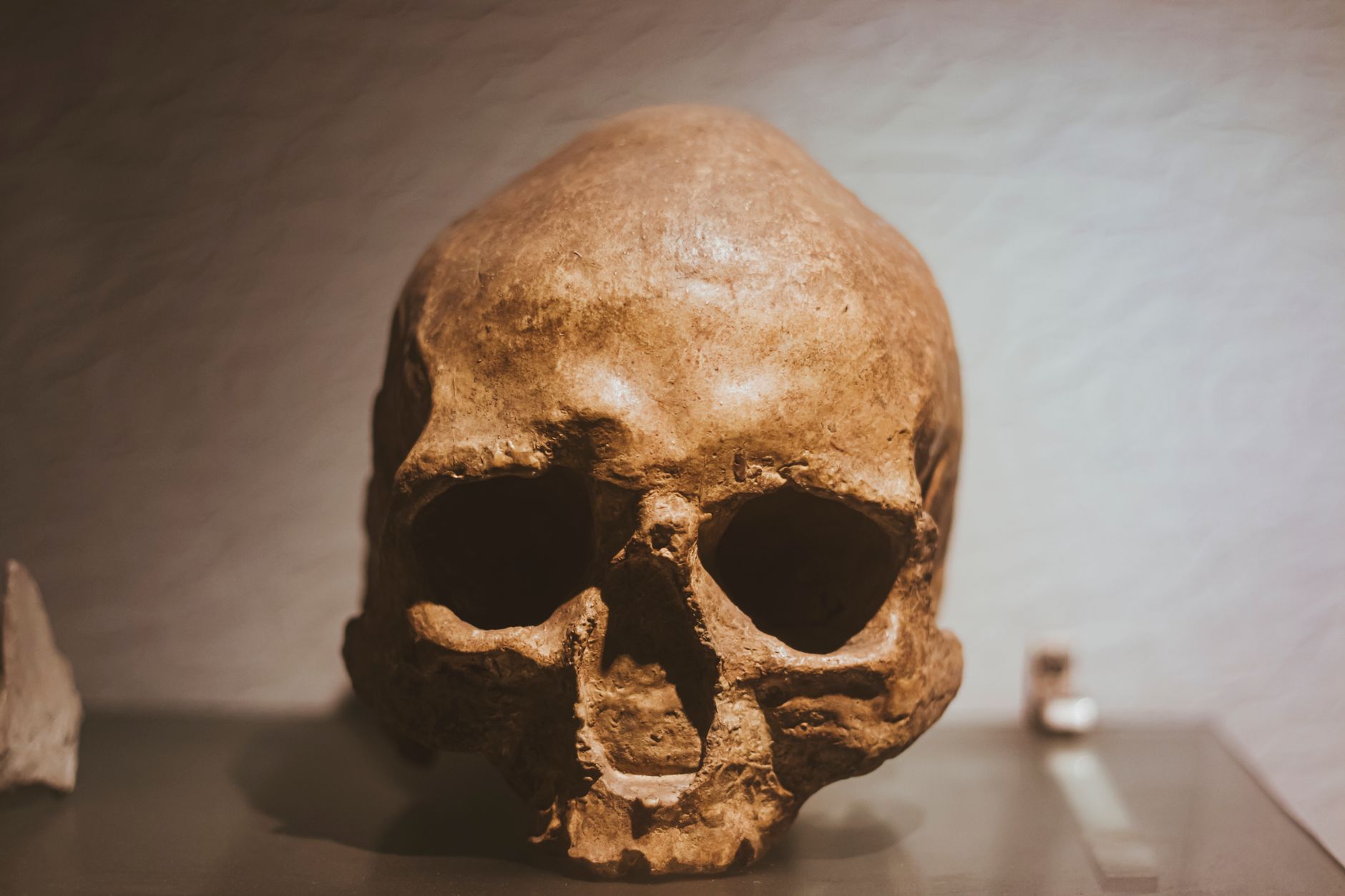
Researchers have produced a digital portrait of the oldest known Homo sapiens, a man who lived about 315,000 years ago in what is now western Morocco. The reconstruction, based on a fossilised skull uncovered in the 1960s during mineral extraction at Jebel Irhoud, was created by a team led by forensic facial reconstruction expert Cicero Moraes.
From Skull to Face
The original skull was first thought to belong to a Neanderthal, but a 2017 re‑examination identified it as the earliest recorded member of our own species. Using a three‑dimensional model generated by the Max Planck Institute for Evolutionary Anthropology in Leipzig, the team added soft‑tissue layers and anatomical detail drawn from African reference datasets. Two visualisations were produced: a greyscale version that emphasizes underlying bone structure, and a full‑colour bust depicting dark skin, hair and a beard – traits deemed plausible for a North African individual of that era.
Key Findings and Comparisons
Despite the vast time gap, the reconstructed visage bears a striking resemblance to modern humans. Moraes noted that, “If he were dressed in modern clothes in the middle of a crowd, he would likely pass unnoticed at first glance.” Subtle differences include a more robust brow ridge, greater facial projection, a wider nose, a slightly larger head circumference and a more prominent chin.
Brain volume calculations from the skull yielded a value of 1,230 cm³, virtually identical to the modern adult male average of 1,234 cm³, suggesting that overall brain size has changed little over three hundred millennia. Anatomist Prof. Francesco Galassi of the University of Pavia, a co‑author of the study, described the experience of seeing the completed face as “fantastic” and highlighted both its similarities to and deviations from today’s population.
Context of the Jebel Irhoud Site
Excavations at Jebel Irhoud have uncovered 22 hominid fossil bones representing at least five individuals – three adults, an adolescent and a child. The site also yielded stone tools such as scrapers, flakes and piercers, evidence of fire use, and animal bones bearing cut‑marks that indicate butchery of species like wildebeest, gazelles, zebra and ostrich eggs.
Because no soft‑tissue remains from Homo sapiens of this age have been found, the researchers acknowledge that muscle configurations could differ from modern patterns. However, they argue that the skull’s morphology imposes constraints that make the reconstructed appearance a reasonable approximation.
The full findings were published in the journal Heritage, adding a visual dimension to our understanding of early Homo sapiens and reinforcing the notion that many anatomical features of modern humans were already established half a million years ago.

Steve Lopez is a Senior Editorial Columnist and Health & Public Policy reporter for News Raise. Steve focuses on healthcare advancements, medical technologies, and public health policies.