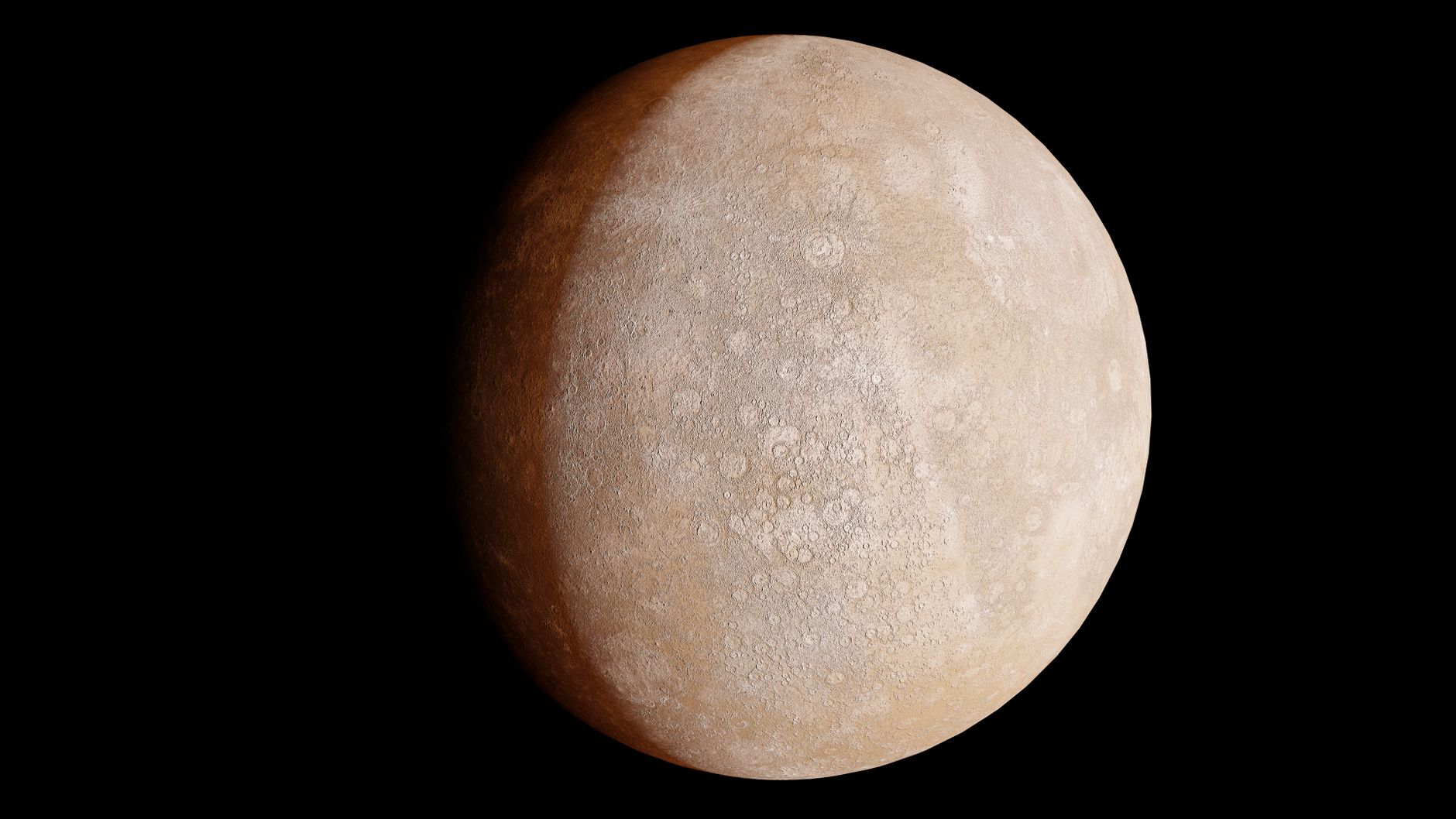
After an eight‑year interplanetary trek, the joint European Space Agency (ESA) and Japan Aerospace Exploration Agency (JAXA) mission BepiColombo has successfully entered orbit around Mercury. The achievement, announced by ESA on 21 November, makes BepiColombo only the second mission—following NASA’s MESSENGER (2011‑2015)—to place a spacecraft in orbit around the Solar System’s innermost planet.
Mission overview and orbital insertion
The ESA‑built module of BepiColombo performed the critical orbit‑insertion burn that placed it into Mercury’s gravitational sphere of influence. This maneuver marks the start of a months‑long series of orbital adjustments designed to position the spacecraft for its scientific campaign. In the weeks ahead, the mission’s two scientific probes will detach from one another, allowing each to settle into distinct orbital paths at different altitudes.
Scientific payload and pre‑arrival testing
During the cruise phase, mission scientists exercised several onboard instruments. Notably, the Mercury Imaging X‑ray Spectrometer (MIXS), an X‑ray camera mounted on the ESA probe, was aimed at the Crab Nebula—the remnant of a supernova observed on Earth in 1054. MIXS holds the distinction of being the first X‑ray imaging device ever sent on an interplanetary mission, according to Emma Bunce, a plasma physicist at the University of Leicester and one of the mission’s leading scientists.
Future orbital configuration
For the time being, the two probes remain physically conjoined. The JAXA probe, designated Mio, is scheduled to achieve its target orbit on 9 December. Mio will trace highly elliptical paths ranging from roughly 500 km to 11,000 km above Mercury’s surface, sampling the planet’s magnetic field and its interaction with the solar wind.
The ESA‑built Mercury Planetary Orbiter (MPO), which carries MIXS along with a suite of other instruments, will subsequently begin a gradual descent. By March 2027, MPO is expected to settle into a near‑circular orbit between 400 km and 1,500 km altitude. From that position, its instruments will conduct continuous observations of Mercury’s surface composition, exosphere, and interior structure.
Emma Bunce emphasized the difficulty of reaching Mercury, noting that “energetically, it takes more energy to go to Mercury than to go to the outer Solar System.” Launched in October 2018, BepiColombo has employed a series of gravity‑assist flybys and careful thrusting to lower its heliocentric orbit without overshooting the planet.
The successful insertion into Mercury orbit sets the stage for a comprehensive scientific campaign that will expand knowledge of the planet’s geology, magnetic environment, and its interaction with the Sun’s wind. The coordinated effort of ESA and JAXA underscores the growing importance of international collaboration in deep‑space exploration.

Norman Pearlstine is the Executive Editor and Co-Founder at News Raise. With over two decades of experience across financial journalism, corporate governance, and market analysis, Norman leads the editorial direction and ensures strict adherence to journalistic accuracy and ethics.