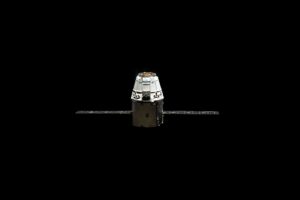
SpaceX’s 35th commercial resupply mission, designated CRS-35, concluded successfully as the Dragon cargo capsule returned to Earth after a two‑month stint at the International Space Station (ISS). The spacecraft detached from the orbiting laboratory on Friday, Nov. 20, at 12:05 p.m. Eastern Standard Time (1705 GMT) while the station was positioned roughly 260 miles (418 kilometers) above western China.
Journey back to Earth
Following undocking, the Dragon capsule began a 29‑hour trek toward the planet’s surface. On Saturday, Nov. 21, at 5:03 p.m. EST (2155 GMT), the vehicle executed a controlled splashdown in the Pacific Ocean off the coast of California. The recovery marked the end of a mission that began with a launch on Oct. 13, when the rocket carried the Dragon into orbit for NASA’s Commercial Resupply Services program.
Payload delivered and returned
During its stay at the ISS, the Dragon freighter delivered more than 6,300 pounds (2,860 kilograms) of food, scientific equipment and other essential supplies on Oct. 15. The cargo supported daily operations and a variety of research activities aboard the station. Equally important, the spacecraft returned a substantial amount of material to Earth. NASA officials noted that “thousands of pounds of cargo are returning from the space station, including research samples that could advance future space exploration and improve life on Earth.” Among the returned items was a 3D‑bioprinted blood‑vessel construct used to study vascular aging and cardiovascular disease both in microgravity and on the ground.
Unique capability among cargo vehicles
Dragon remains the only active cargo vehicle capable of safely bringing cargo back to Earth. Competing resupply spacecraft—Northrop Grumman’s Cygnus, Russia’s Progress vehicle and Japan’s HTV‑X—are designed for single‑use missions and burn up upon re‑entry, leaving no opportunity to retrieve scientific samples or hardware. The ability to return cargo makes Dragon a critical asset for experiments that require analysis after exposure to the space environment.
NASA’s update on the mission, posted on Nov. 17, highlighted the significance of the returned research and underscored the ongoing partnership between the agency and SpaceX. The story was subsequently updated on Nov. 20 to confirm the successful undocking and again on Nov. 21 after the splashdown, reflecting the real‑time nature of the operation.
The CRS‑35 flight adds to SpaceX’s growing record of reliable ISS resupply missions, reinforcing the company’s role in sustaining the continuous human presence in low‑Earth orbit and enabling a broad spectrum of scientific investigations that benefit both space exploration and terrestrial applications.

Steve Lopez is a Senior Editorial Columnist and Health & Public Policy reporter for News Raise. Steve focuses on healthcare advancements, medical technologies, and public health policies.