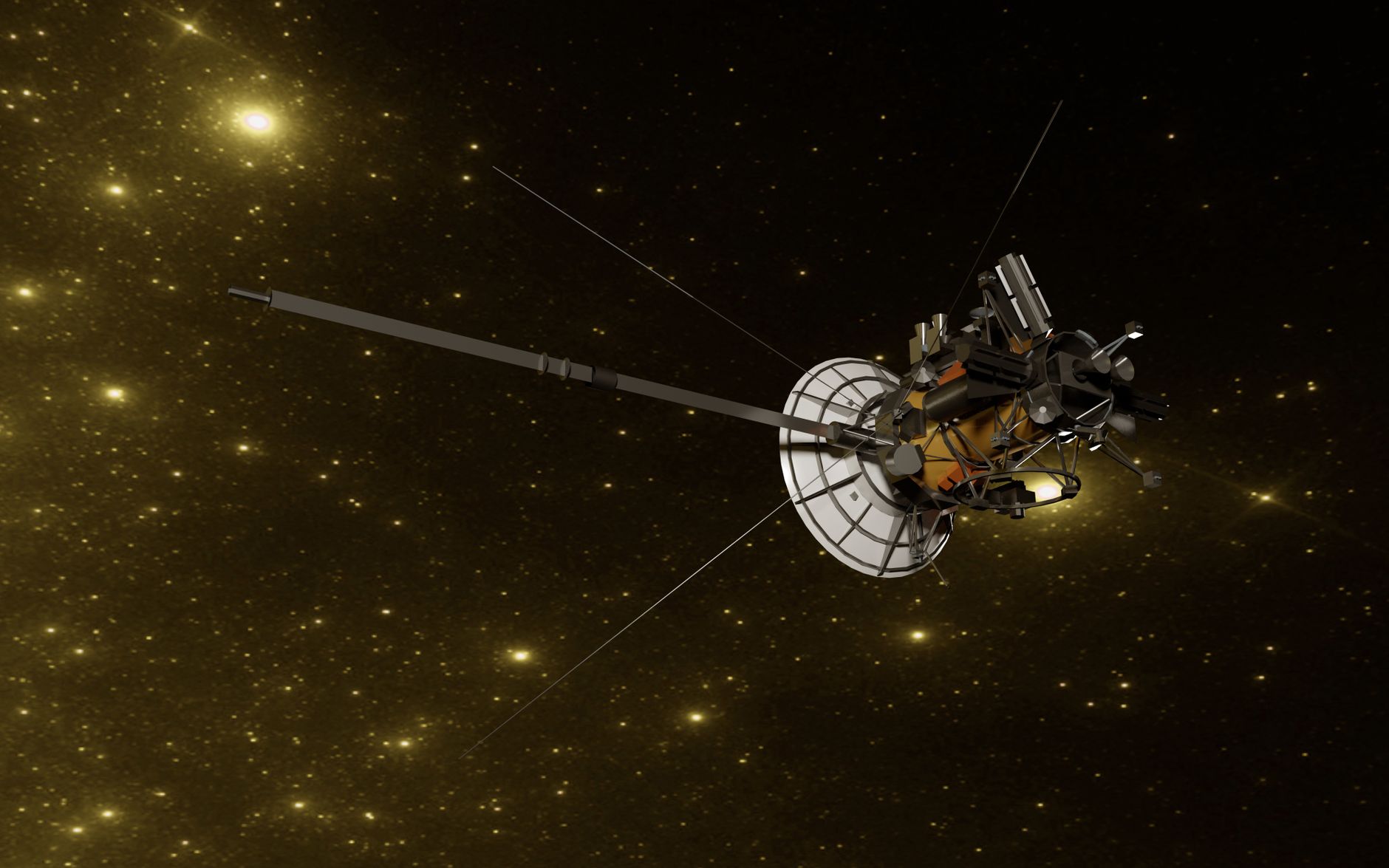
NASA’s Voyager 1 probe, now 49 years old, passed the one‑light‑day distance milestone on Nov. 18 at 5:16 a.m. ET, placing it roughly 16.1 billion miles from Earth – farther than any other human‑made object. The achievement was celebrated at the Jet Propulsion Laboratory with an hour‑long event that featured memories from mission veterans, a video montage of fan tributes and a recorded message from astronaut Jessica Watkins aboard the International Space Station.
Milestone reached, but data missing
Although the spacecraft continues to beam a steady carrier radio signal that confirms the antenna is still pointing toward Earth, the signal has carried no science or engineering information since Nov. 14. Engineers describe the condition as a loss of “frame sync,” meaning the basic carrier wave is present but the data packets that normally ride on it cannot be identified. Without frame sync, the ground team receives only dead air.
Project manager Suzanne Dodd explained, “We have an anomaly that is not something unseen before. We do have a very strong carrier signal. We currently don’t have a frame sync, so we’re not getting the science or engineering data currently.” The carrier signal, akin to a radio station’s broadcast wave, proves that the probe’s transmitter and antenna remain functional, but the onboard computer that assembles instrument readings into frames is likely at fault.
Engineering challenges and timeline
Because Voyager 1 is now a full light‑day away, any command sent from Earth requires two days for a reply, extending the time needed to diagnose and correct the problem. NASA warned that pinpointing the cause could take weeks or longer. The team has encountered a similar carrier‑only transmission in 2023, which was traced to an onboard computer; that experience is guiding current troubleshooting efforts.
Engineers are also reviewing an October episode when the probe lost all contact for about 48 hours before automatically reconnecting. Mission manager Kareem Badaruddin noted that such anomalies have become routine, saying, “An engineer with a problem is like a dog with a bone. So we are very busy and very energized to solve these problems.”
The age of the hardware adds another layer of difficulty. Original commands were issued on punch cards, and modern equipment must interface with 1970s‑era systems. Both Voyagers draw power from radio‑isotope thermoelectric generators that convert heat from decaying plutonium into electricity, losing roughly four watts per year. To conserve power, the team has already shut down several instruments over the decades.
Today Voyager 1 operates only two instruments: a magnetometer that measures magnetic fields and a plasma wave instrument that detects waves in the interstellar medium. This summer, engineers performed a risky power‑swap, turning off three devices and replacing them with lower‑power alternatives to keep the remaining instruments running through at least the 50th anniversary of the launch next summer.
Outlook for Voyager 1 and its twin
Voyager 2 remains healthy, with three instruments still functional. NASA acknowledges that both spacecraft will eventually be lost to problems that cannot be fixed, but the team intends to keep seeking workarounds as long as possible. Dodd likened the aging probe to an elderly person, saying, “All of us old people have our aches and pains, and you know sometimes it takes longer to stretch out our muscles and remember things… I’m confident that it won’t be too long, and it will send us data back.”
Despite the current data blackout, the celebration at JPL proceeded with optimism, and the mission team continues to monitor the carrier signal while working through the diagnostic process. The next steps involve sending commands, awaiting two‑day round‑trip replies, and applying lessons learned from previous anomalies to restore the flow of scientific data from humanity’s most distant emissary.

Helene Elliott is the Lead Science & Space Reporter at News Raise. She reports on aerospace missions, astrophysics discoveries, quantum research, and environmental technology.