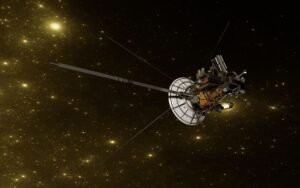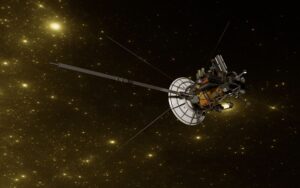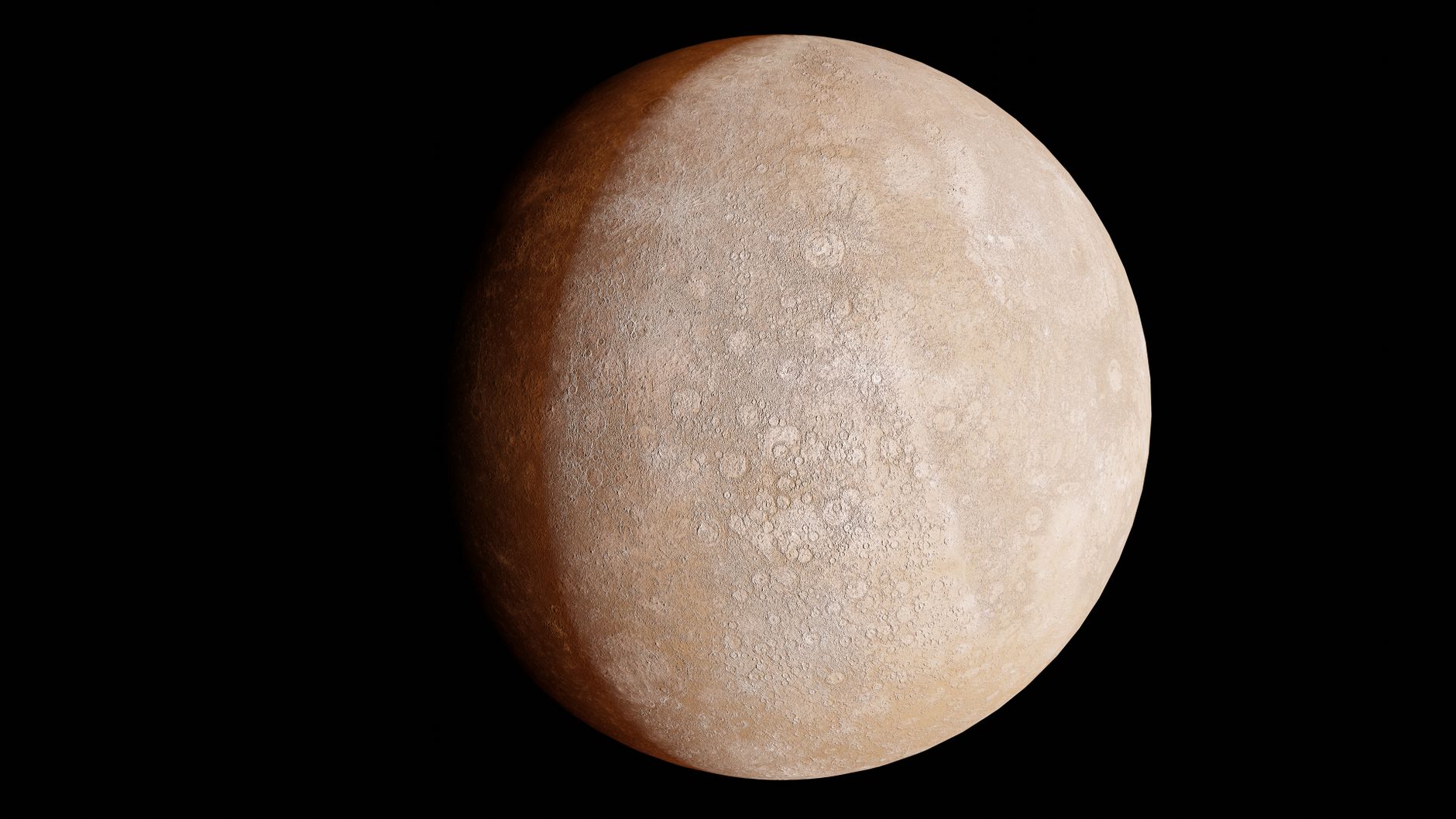
On Saturday, Nov. 21, the European Space Agency (ESA) and Japan’s Aerospace Exploration Agency (JAXA) announced that their joint BepiColombo spacecraft had achieved orbital insertion around Mercury. The maneuver, which began at 1:24 p.m. EST (1824 GMT), lasted 37 minutes and placed the probe into the planet’s gravitational embrace, making it only the second robotic visitor to orbit the solar system’s innermost world.
Mission overview and hardware
BepiColombo consists of two orbiters: ESA’s Mercury Planetary Orbiter (MPO) and JAXA’s Mercury Magnetospheric Orbiter (MMO), also known as Mio. The pair were launched together with a Mercury Transfer Module (MTM) on an Ariane 5 rocket from French Guiana in October 2018. The mission is named after Italian scientist Giuseppe “Bepi” Colombo, who contributed to early theories of Mercury’s rotation.
The spacecraft’s primary objectives include studying Mercury’s magnetosphere, its interaction with the solar wind, the planet’s internal structure—particularly its large iron core—and the origin of its magnetic field. ESA officials note that the data will help scientists understand the formation and evolution of planets that orbit close to their stars, as well as broader solar‑system history.
Journey to the Sun’s neighbor
Reaching Mercury is notoriously difficult because the planet lies deep within the Sun’s gravitational well. To be captured, a spacecraft must shed a substantial amount of kinetic energy after being accelerated by the Sun’s pull. BepiColombo’s trajectory incorporated a single Earth flyby, two Venus flybys, and six Mercury flybys over roughly seven years. An earlier issue with the spacecraft’s solar panels reduced power available to the MTM’s electric thrusters, extending the flight time by about one year.
The arrival phase began on Sept. 3, when the MTM released the MPO and Mio orbiters. The two remain physically linked and are scheduled to separate around Dec. 9. Shortly after separation, Mio will enter a highly elliptical polar orbit, while MPO will follow a less elliptical polar path after a series of engine burns, targeting a final orbit on March 10, 2027.
Orbital insertion and next steps
During the insertion burn, mission engineers observed that the thruster operation was shorter than planned due to a software issue. The team confirmed that the spacecraft is safe and that European Space Operations Centre (ESOC) staff are analyzing the telemetry to understand the anomaly. Updates were promised for the following Monday.
Confirmation of successful capture arrived several hours after the burn, with the mission team posting on X that flight dynamics had verified orbital insertion. The arrival phase, which is expected to last about six months, will continue with further checks and maneuvers before scientific observations commence.
Science operations are slated to begin on April 6, 2027. At that point, the two orbiters will collect complementary measurements from their distinct orbital configurations, providing a comprehensive view of Mercury’s magnetic environment, surface composition, and interior structure.
Before BepiColombo, only NASA’s MESSENGER probe had orbited Mercury, conducting a four‑year mission from March 2011 to April 2015. The successful entry of BepiColombo therefore marks a significant milestone in planetary exploration, extending humanity’s capacity to study the most sun‑scorched planet in our system.

Steve Lopez is a Senior Editorial Columnist and Health & Public Policy reporter for News Raise. Steve focuses on healthcare advancements, medical technologies, and public health policies.