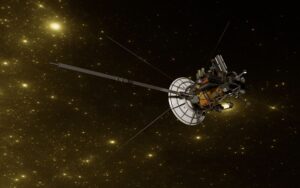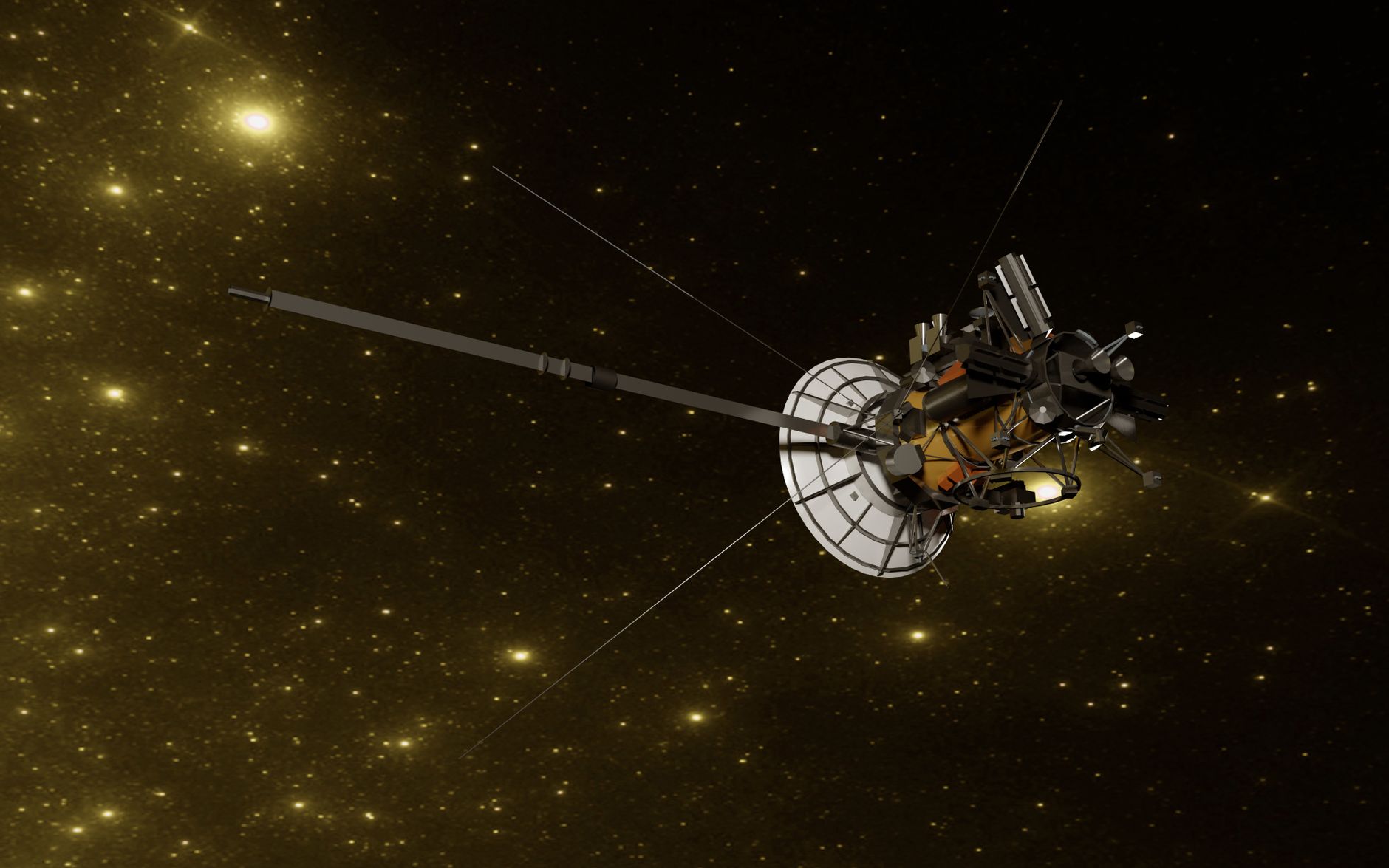
NASA announced that its Voyager 1 probe has reached a distance of one light‑day from Earth, roughly 16.1 billion miles (25.9 billion kilometres). The milestone occurred at 2:16 a.m. Pacific Time on 18 November 2026, more than 49 years after the spacecraft lifted off on 5 September 1977.
Milestone confirmed by signal delay
Because radio waves travel at the speed of light, the round‑trip time for a signal between Earth and Voyager 1 now totals about 48 hours. Engineers at NASA’s Jet Propulsion Laboratory (JPL) received the probe’s carrier signal 24 hours after the event, confirming the distance through trajectory calculations. The spacecraft has been sending only a carrier signal since 14 November, as its science and engineering data stream remains interrupted.
Voyager’s historic journey
Voyager 1 was launched to take advantage of a rare planetary alignment, allowing it to fly past Jupiter and Saturn before heading outward. During its Grand Tour, the probe discovered a thin ring around Jupiter and two new Jovian moons—Thebe and Metis—and later identified five new moons and the G‑ring at Saturn. In 2012, it became the first human‑made object to cross the heliosphere and enter interstellar space, a region beyond the Sun’s magnetic bubble. Its twin, Voyager 2, followed a different trajectory, reaching interstellar space in 2018 and later visiting Uranus and Neptune.
Traveling at about 38,000 mph (61,155 kph), Voyager 1 carries a gold‑plated copper phonograph known as the Golden Record, which contains images and sounds from Earth intended for any future discoverers.
Engineering ingenuity keeps the probe alive
The spacecraft is powered by a radioisotope thermal generator—a nuclear battery that converts heat from decaying plutonium into electricity. Each year the power output drops by roughly four watts, prompting engineers to conserve energy. Earlier this year, three onboard devices were deactivated and replaced with lower‑power alternatives, extending the probe’s ability to run its scientific instruments through its 50th launch anniversary next summer.
Communication with Voyager 1 is maintained through NASA’s Deep Space Network, a set of large antennas located worldwide. Project manager Suzanne Dodd noted that daily listening and weekly command uploads now require a full 24‑hour light‑time each way, a stark contrast to the near‑instantaneous contacts of early missions.
Commenting on the achievement, Mustafa Suleyman, chief executive of Microsoft AI, posted on X that the probe’s “incredible” status stems from its 1970s technology still “calling home,” emphasizing the role of patience in long‑duration space endeavors.
NASA officials highlighted the broader significance of the light‑day milestone. Joe Westlake, director of the Heliophysics Division at NASA Headquarters, called the Voyager mission “remarkable” for its planetary science contributions and its ongoing role in heliophysics. JPL director Dave Gallagher described the event as a testament to the teams that built, programmed, and continue to operate the spacecraft, noting that the mission inspires future human and robotic exploration.
Project scientist Linda Spilker added that Voyager 1’s data continue to reveal how far the Sun’s influence extends into interstellar space, while Caltech president Ray Jayawardhana reflected on the mission as an affirmation of humanity’s curiosity and drive to explore.
As Voyager 1 drifts farther into the cosmos, it remains humanity’s silent ambassador, a reminder that a modest probe launched over half a century ago still reaches out across the void, carrying both scientific knowledge and a message from Earth.

Helene Elliott is the Lead Science & Space Reporter at News Raise. She reports on aerospace missions, astrophysics discoveries, quantum research, and environmental technology.