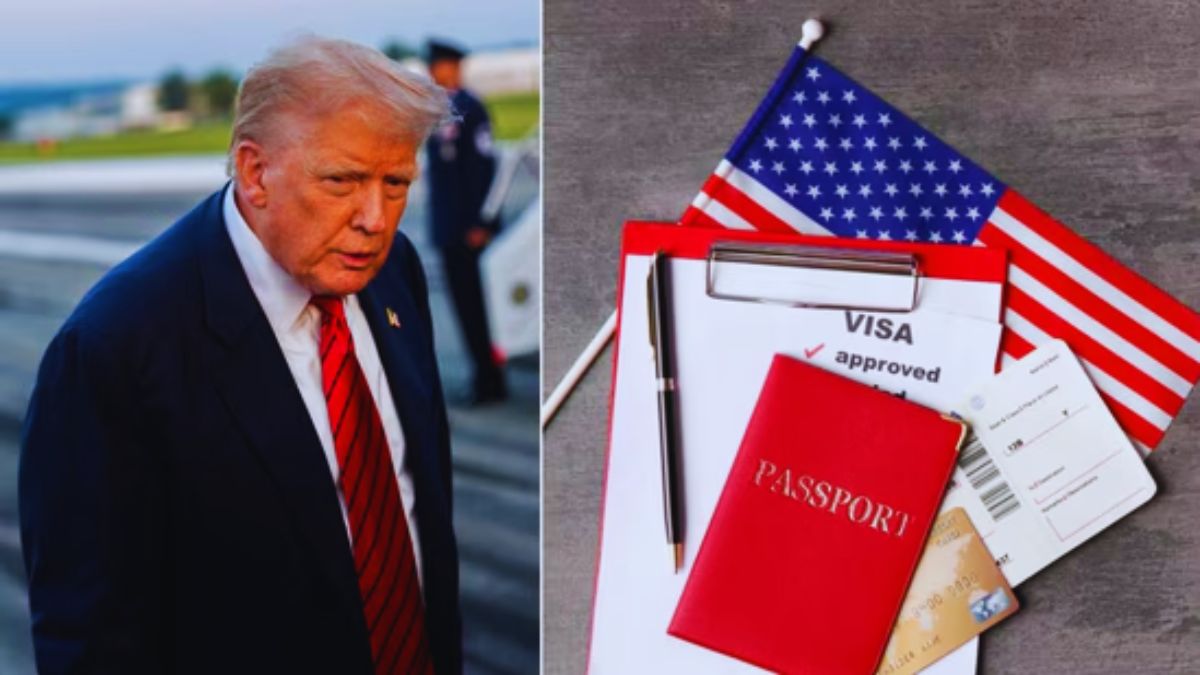
The Republican government led by Donald Trump, has been setting new policies and guidelines in matters of immigration and Visa. Yet another new visa rule has been laid out, wherein the novice visa program will apply to certain applicants for B-1 (business) and B-2 (tourist) visa types, from countries that have been deemed as ‘high-risk’ for visa overstays.
The United States will soon begin requiring certain category of foreign nationals to pay visa bonds of up to US $15,000 as part of a pilot program aimed at reducing visa overstays, the US state department announced on Monday.
- This strategic move is an integral part of US President Donald Trump’s continued push to tighten immigration controls since returning to office in January.
- This exclusive 12-month program, which begins from August 20, will apply to certain applicants for B-1 business and B-2 tourist visas from a list of specific countries.
New US Visa Program
According to a US State Department notice set to be published soon, the official dictate states, “consular officers may require covered non-immigrant visa applicants to post a bond of up to $15,000 as a condition of visa issuance.”
The minimum bond amount is US $5000, and the money will be returned if the traveller adheres to the stated visa terms. Those who remain in the US beyond the permitted duration will have to forfeit the full bond. The program also restricts the entry and exits to a list of pre-selected airports in the United States for those required to pay the bond.
Who will be Affected?
The country’s state department has stated the measure targets nationals from countries with “high visa overstay rates” as identified in a 2023 Department of Homeland Security (DHS) report.
- However, the official notice has not yet listed the countries that will be immediately affected.
- According to DHS and US customs and border protection data, cited by news agency Reuters, nations such as Chad, Eritrea, Haiti, Myanmar, Yemen, Burundi, Djibouti and Togo have shown high overstay rates and are likely to be a part of this bond program.
How Will it Work?
The alleged Visa bond is intended to act as a financial deterrent. If visa holders leave the country on time, the amount will be refunded in full. If they overstay, the money will be retained by the government.
- The pilot program will apply only to B-1 and B-2 visa applicants and will require them to travel in and out of designated airports.
What is the Trump administration’s Viewpoint?
This change in the Visa process for some exclusive countries reinforces the Trump administration’s commitment to enforcing US immigration laws and safeguarding US national security in the best interest of the state.
- Terming the program as a key pillar of Trump administration’s foreign policy, the planned new move will diminish visa overstay occurrences, a phenomenon that became quite rampant in the last decade.
- A similar pilot was introduced in November 2020 during Trump’s first term but was never fully implemented due to the COVID-19 pandemic and its impact on global travel.
A US travel association estimated the scope of the program to be relatively narrow, likely affecting only about 2,000 applicants from countries with low travel volume, as per an official news report published by Reuters. However, this new requirement could negatively impact inbound tourism and make US visitor visa fees one of the highest amongst the countries.

Helene Elliott is the Lead Science & Space Reporter at News Raise. She reports on aerospace missions, astrophysics discoveries, quantum research, and environmental technology.