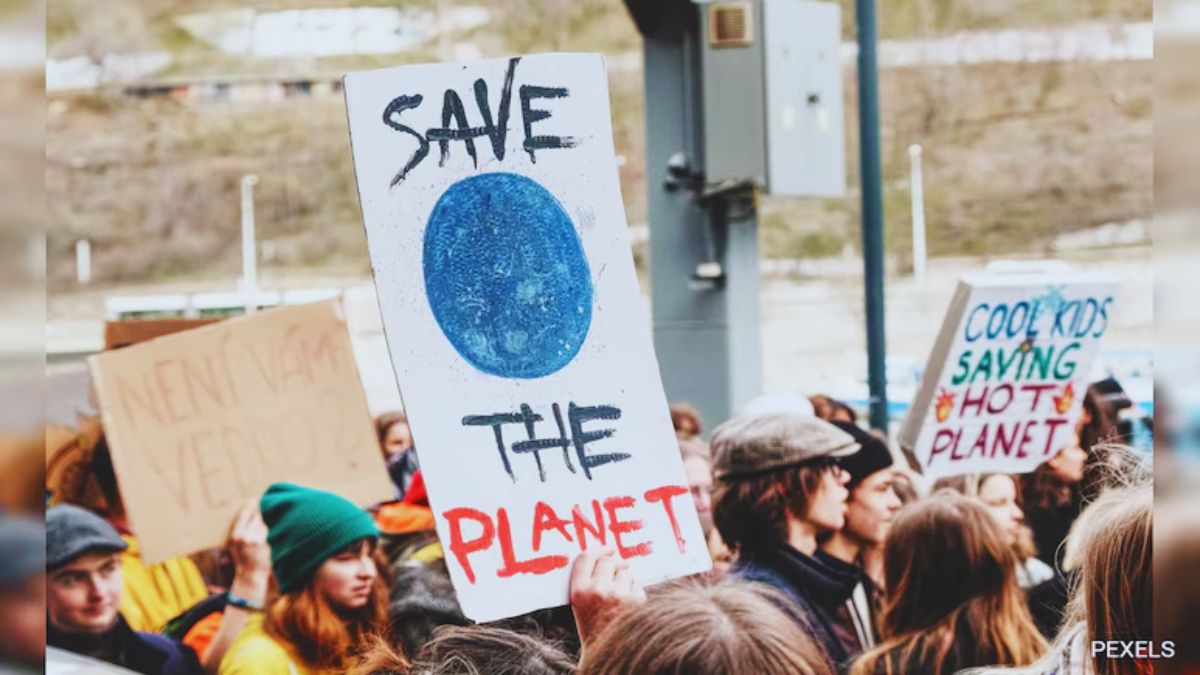
Climate change isn’t just reshaping the planet — it’s also changing how young people think about parenthood.
Across the United States, growing environmental anxiety is leading many young adults to question whether bringing a child into a warming world is ethical or sustainable. According to a 2024 study published in The Lancet, more than half (52%) of people aged 16 to 25 said they were hesitant to have children because of climate change.
The majority of respondents described themselves as “very” or “extremely” worried about the future of the planet. These concerns are deeply tied to fears of worsening extreme weather events, rising sea levels, and the long-term effects of greenhouse gas emissions from burning fossil fuels like coal, oil, and gas.
A separate Pew Research Center report found that adults under 50 without children were four times more likely than older adults to cite climate change as a factor in their decision not to have kids. Similarly, research published in the Proceedings of the National Academy of Sciences in 2025 revealed that more than half of participants said climate change made them “question” whether to start a family.
Climate Fears and Ethical Dilemmas
For many young Americans, climate anxiety is not only about protecting their future children from a changing environment but also about the ethical and environmental impact of having children. “Among all lifestyle decisions, having a child is by far the most carbon-intensive,” explained Nandita Bajaj, executive director of the nonprofit Population Balance, which studies humanity’s ecological footprint.
The concept of a ‘carbon legacy’ introduced by bioethics professor Travis Rieder of Johns Hopkins University, highlights that procreation has a multigenerational impact. An individual will engage in carbon-expensive activities like buying a bigger car or home, while also creating someone who will have their own carbon footprint for the rest of their life — and possibly pass that footprint down through generations.
Rieder clarified that while minimizing one’s environmental footprint could theoretically mean not having children, that is not his recommendation. Instead, he suggests acknowledging the environmental impact of procreation within broader discussions about sustainability.
The Wealth Factor and Global Inequality
The environmental cost of having children also depends heavily on lifestyle and wealth. “One of the strongest predictors of how carbon-expensive a person will be is their level of wealth,” Rieder noted. For instance, the United States emits 123 times more carbon dioxide than Ghana, according to the Emissions Database for Global Atmospheric Research. On a per-person basis, the average American emits over 12 times more carbon than the average Ghanaian — meaning children born in wealthy countries carry a far greater environmental burden.
Despite its importance, discussions about family size and climate impact remain rare. Experts say that’s because conversations about procreation are deeply personal and often celebratory. “If someone tells you they’re expecting, the instinct is to congratulate them — not to question their carbon footprint,” said Trevor Hedberg, a moral philosophy professor at the University of Arizona.
Another reason, Rieder added, is the historical association with overpopulation debates from the 1970s, which often carried racist and eugenic undertones. That legacy continues to make discussions about population and climate ethically sensitive today.
A Generation Redefining Parenthood
As the planet warms and uncertainty grows, young Americans are reshaping what family planning means in the 21st century. For many, it’s not just a personal choice — it’s a moral decision influenced by the weight of the planet’s future.

Helene Elliott is the Lead Science & Space Reporter at News Raise. She reports on aerospace missions, astrophysics discoveries, quantum research, and environmental technology.