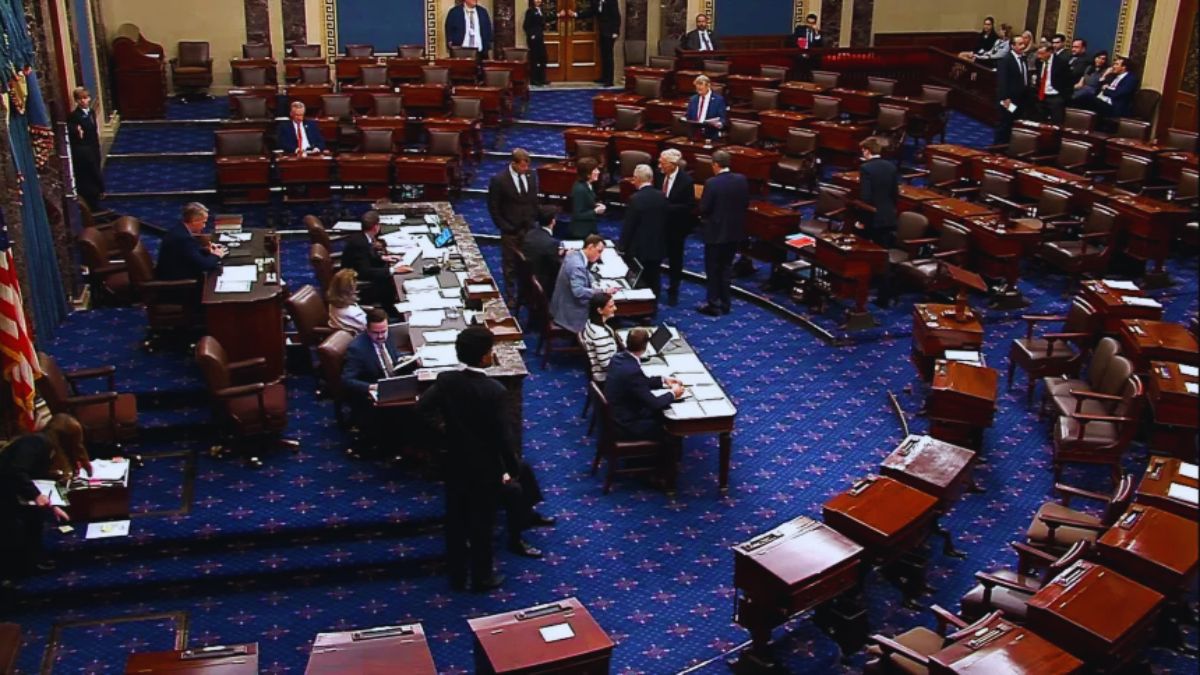
In a rare show of bipartisanship, a small group of Senate Democrats crossed party line to back a Republican-led measure aimed at reopening the U.S. federal government.
The bill passed with a 60 – 40 majority, breaking a 41-day funding impasse — the longest government shutdown in American history — but without securing Democrats’ key demand for an extension of enhanced Affordable Care Act (ACA) subsidies.
Senate Vote Breaks Deadlock
Eight Democratic senators joined Republicans to push through the funding legislation, while one Republican voted against it. The measure will now move to the House of Representatives, where GOP leaders are optimistic it could be approved as early as Wednesday. If passed, the bill would restore vital public services, including federal food assistance and veterans’ programs, and ensure back pay for hundreds of thousands of federal employees.
The White House has signaled its support, with former President Donald Trump indicating he would sign the bill once it reaches his desk. Speaking to CNN, Trump said, “I think, based on everything I’m hearing, they haven’t changed anything, and we have support from enough Democrats. We’ll be opening up our country very quickly.”
Democrats Divided Over ACA Subsidy Loss
The compromise bill has sparked internal strife within the Democratic Party. Many progressives are criticizing Senate Minority Leader Chuck Schumer for allowing centrist Democrats to strike a deal that excludes an extension of ACA subsidies — financial supports that help millions of Americans afford health insurance. Without renewal, premiums could rise for many low- and middle-income families in the coming months.
The eight Democrats who voted for the funding bill as lawmakers and fairly argued that continuing the shutdown was harming the economy and federal workers, and that securing future negotiations on health care reform would be a more strategic step forward.
Next Steps in the House
House Speaker Mike Johnson has called members back to Washington for a vote scheduled around 4 p.m. on Wednesday, according to Majority Whip Tom Emmer. The Republican majority remains divided, and Speaker Johnson may need support from Democrats — and political backing from Trump — to ensure passage.
The funding package extends resources for several key federal agencies, including those overseeing food aid, the Women, Infants, and Children (WIC) nutrition program, and veterans’ services, through the remainder of fiscal year 2026. However, the current agreement only guarantees government operations until January 30, raising concerns that another funding showdown may soon follow.
A Temporary Reprieve Amid Political Uncertainty
The 41-day shutdown has taken a political toll, with Republicans facing mounting public blame for the stalemate. While the compromise offers a temporary resolution, it has also exposed deep divisions within both parties — Democrats over their strategy on healthcare, and Republicans over fiscal priorities and Trump’s influence.
As Washington prepares for the House vote, the nation’s capital remains cautiously optimistic that this deal will bring at least short-term stability to a weary federal workforce and anxious citizens awaiting government support.
This decision ends the 41-day shutdown and paves the way for a new course of history to be laid out and making the government bounce back after a a hiatus.

Helene Elliott is the Lead Science & Space Reporter at News Raise. She reports on aerospace missions, astrophysics discoveries, quantum research, and environmental technology.