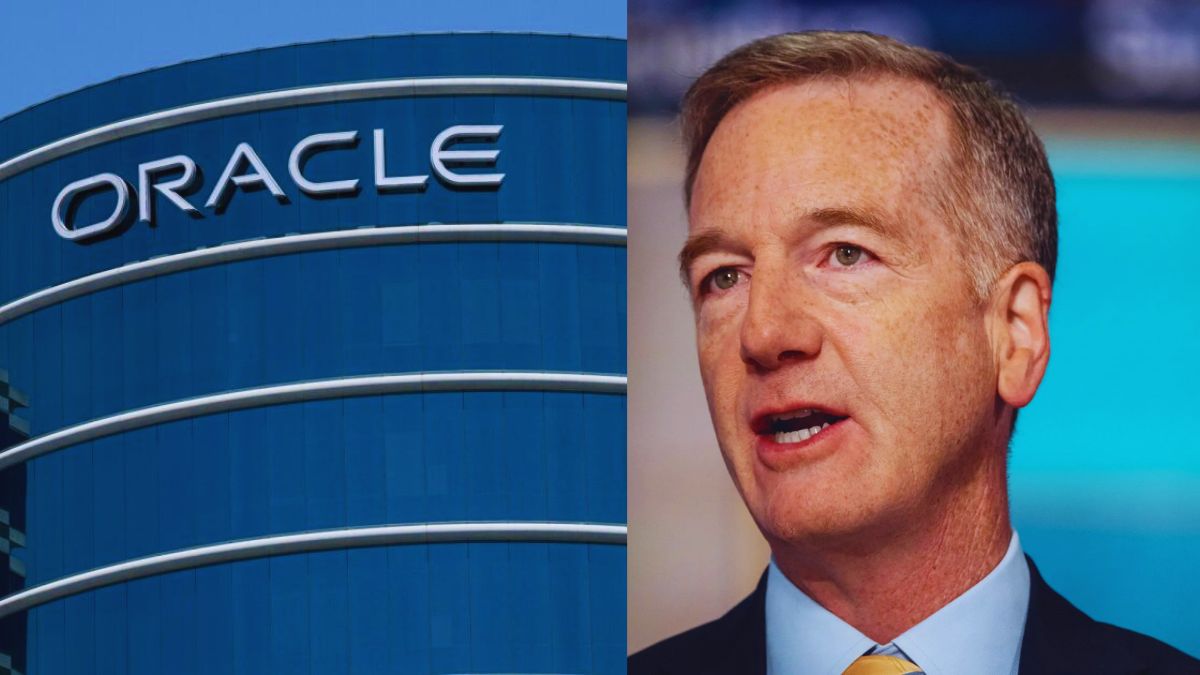
Oracle Corp. is facing a growing wave of concern in the credit markets as the cost of protecting its debt from the default state surged to its highest level in three years. According to Morgan Stanley analysts, those pressures may only increase further in 2026, unless the tech giant can reassure investors about its massive artificial intelligence (AI) investment strategy.
Throughout November, Oracle’s five-year credit default swaps (CDS) – a key gauge of corporate credit risk—climbed sharply, rising to 1.25 percentage points a year, based on data from ICE Data Services. If investor unease continues, the CDS could soon surpass the previous records set during the 2008 financial crisis.
Mounting Risks Behind the Surge
Morgan Stanley credit analysts Lindsay Tyler and David Hamburger warned that Oracle is now juggling a widening funding gap, a rapidly expanding balance sheet, and rising fears of technological saturation. These challenges are being driven largely by Oracle’s aggressive push to expand its AI and cloud data center footprint.
The analysts noted in a recent report that Oracle’s five-year CDS could breach 1.5 percentage points in the near future and could even approach 2 percentage points in 2026 if the company doesn’t provide clearer communication about how it plans to finance its growth. For context, Oracle’s CDS peaked at 1.98 percentage points in 2008.
Borrowing Binge to Fuel AI Expansion
As AI infrastructure spending intensifies across the technology sector, Oracle has become one of the credit market’s key barometers for AI-driven risk.
- The company tapped the U.S. high-grade bond market in September, raising $18 billion.
- That was followed in early November by another large financing effort: a consortium of about 20 banks arranged a project finance loan of roughly $18 billion to support construction of a new data center campus in New Mexico.
- Oracle is expected to take over that campus as a tenant once construction is completed.
In addition, lenders recently committed a massive $38 billion loan package to help build data centers in Texas and Wisconsin for Vantage Data Centers. These facilities are closely tied to Oracle’s cloud expansion efforts, further fueling investor scrutiny.
Why Credit Default Swaps Are Surging
According to Morgan Stanley, banks involved in these large construction loans are likely driving much of the recent increase in CDS trading. When banks extend significant amounts of credit, they often hedge their exposure by buying credit default swaps – essentially insurance against the borrower defaulting. This hedging activity inflates demand for CDS, pushing up prices.
The analysts added that while some of these hedges may be unwound once banks sell portions of the loans to other investors, new hedges could emerge later as additional funding needs arise. Oracle’s data center projects, they warn, are far from complete.
Near-Term Credit Pressure Expected
Morgan Stanley believes that continued uncertainty around Oracle’s financing plans will likely lead to more hedging by bondholders, lenders, and other market participants. As a result, they have shifted their own strategy.
“We are closing the ‘buy bond’ portion of the basis trade and keeping the ‘buy CDS protection’ position,” the analysts wrote. As per the financial analysts, they believe trading CDS directly is the cleaner option and offers more potential for spread movement.

Helene Elliott is the Lead Science & Space Reporter at News Raise. She reports on aerospace missions, astrophysics discoveries, quantum research, and environmental technology.