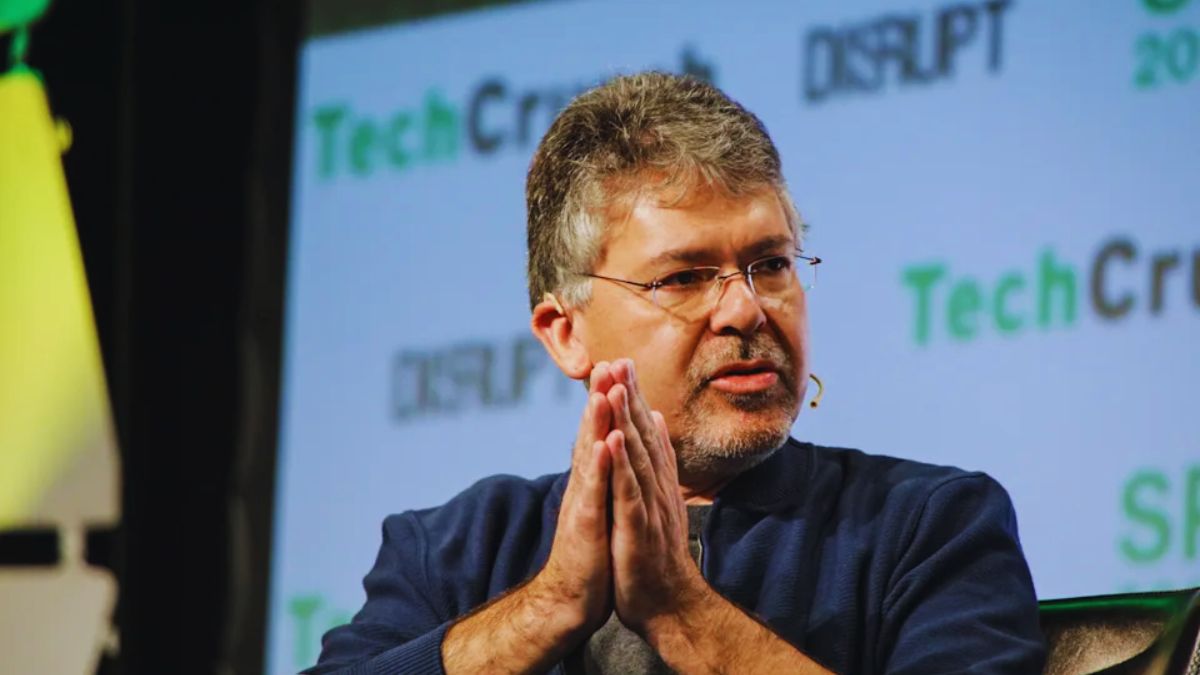
Apple announced a major leadership change on December 1, confirming that John Giannandrea, the company’s Head of Artificial Intelligence since 2018, is stepping down from his role and will leave Apple entirely after serving as an adviser through spring. His exit marks a major moment for the company at a time when its AI strategy is under heavy scrutiny.
Replacing him is Amar Subramanya, a Microsoft Executive with deep roots in Google’s AI ecosystem. Subramanya, who previously led engineering for the Gemini Assistant, brings years of competitive insight – a strategic advantage for Apple as it tries to regain footing in a fast-evolving AI landscape.
A Leadership Change Years in the Making
Inside Apple, the shift is being viewed as a big shake-up. While the timing may seem sudden, industry insiders say the change has become unavoidable, as Apple Intelligence, the company’s flagship AI initiative, stumbled repeatedly after its October 2024 debut.
Siri Overhaul Delays Added Pressure
The problems didn’t end there. Apple had heavily promoted a major Siri overhaul, but according to a Bloomberg investigation published in May 2025, the project was far from ready behind the scenes. When Craig Federighi, Apple’s senior vice president of software engineering, tested the updated Siri shortly before its planned April launch, he reportedly found that numerous features were still non-functional.
The launch was postponed indefinitely, sparking class-action lawsuits from iPhone 16 buyers who had purchased devices based on expectations of an AI-powered Siri experience. By this time, Giannandrea’s influence had already waned. Bloomberg reported that CEO Tim Cook had reassigned key responsibilities—including Siri and Apple’s secretive robotics division—to other leaders’ months earlier.
Internal Tensions and Talent Losses
Bloomberg’s reporting revealed deeper internal issues: misalignment between AI, marketing, and engineering teams; budgeting problems; and communication breakdowns. Several employees even nicknamed Giannandrea’s organization “AI/MLess”, poking fun at its perceived stagnation. This atmosphere contributed to a wave of resignations, with top AI researchers leaving for competitors like Google, OpenAI, and Meta.
One of the most surprising developments is that Apple is now reportedly planning to use Google’s Gemini AI models to power future versions of Siri – a dramatic twist given the long-standing rivalry between the companies across mobile OS, search, app ecosystems, maps, cloud platforms, and now, generative AI.
A Crossroads for Apple’s AI Strategy
Giannandrea joined Apple after leading machine intelligence and search at Google. At Apple, he oversaw AI strategy, machine learning platforms, and Siri’s evolution. Subramanya will now inherit these responsibilities, reporting directly to Federighi, with a clear mandate: help Apple catch up in the AI race.
Apple’s AI approach has long emphasized on-device processing, prioritized user privacy and leveraging the power of Apple Silicon. While this offers security advantages, it also limits model size and capability compared to the massive cloud-based AI systems run by rivals. Apple’s insistence on minimal data collection has also forced engineers to rely more heavily on licensed and synthetic datasets, potentially slowing model improvements.
As Apple transitions leadership and refines its AI roadmap, the big question remains: Can its privacy-first philosophy deliver competitive AI experiences, or has the company fallen too far behind?

Helene Elliott is the Lead Science & Space Reporter at News Raise. She reports on aerospace missions, astrophysics discoveries, quantum research, and environmental technology.