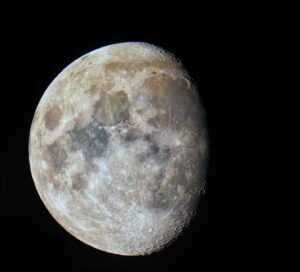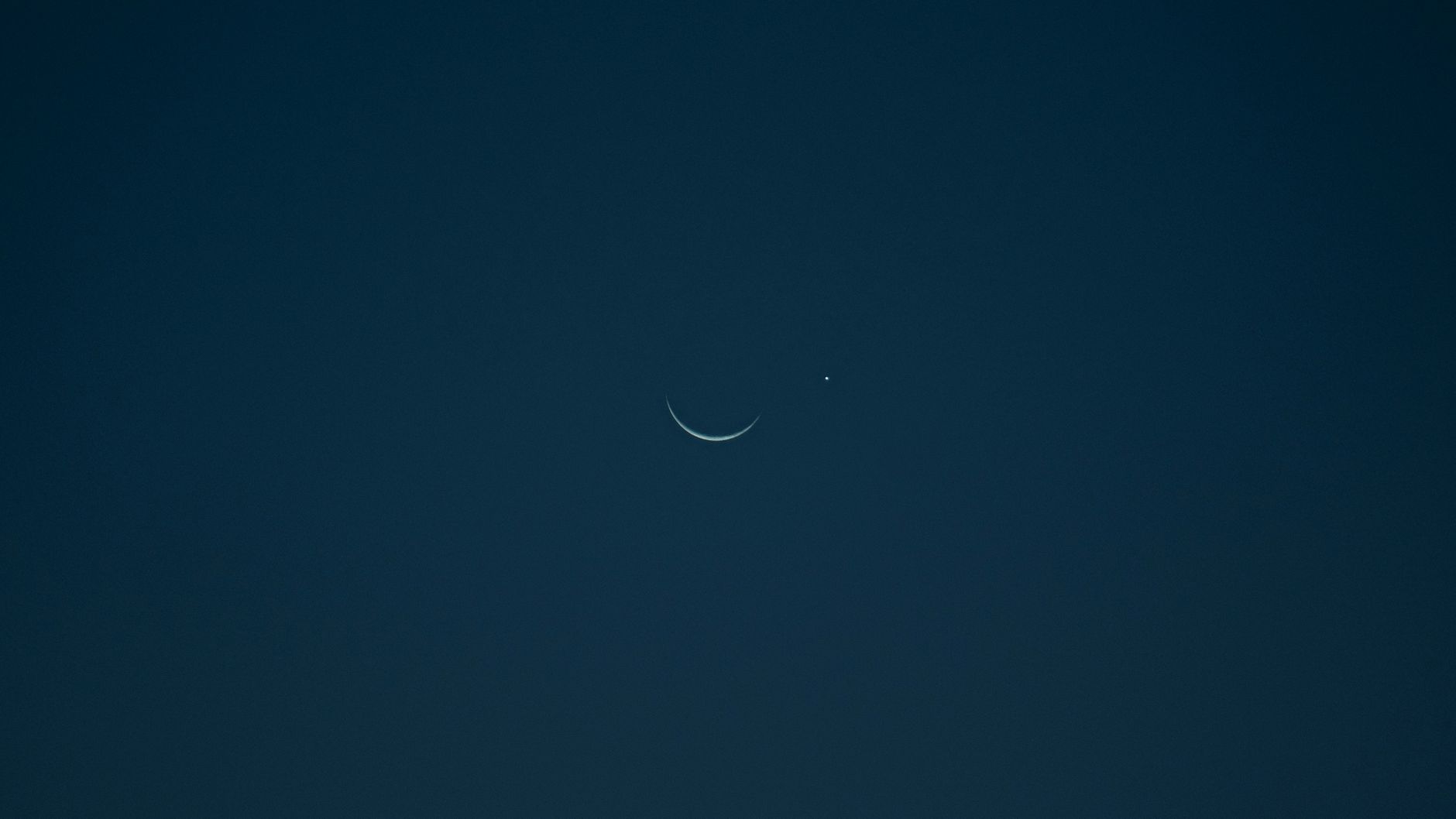
Skywatchers in North America will have the opportunity to witness a rare celestial event on June 17, 2026, when the moon passes directly in front of Venus during daylight hours. This phenomenon, known as an occultation, is described as one of the month’s most unusual and technically challenging skywatching opportunities.
Daytime Disappearance Act
The occultation is expected to occur between approximately 3:30 p.m. and 5:00 p.m. Eastern Daylight Time. During this period, the sun will still be high in the sky, with the moon and Venus positioned about 38 degrees away from it. For the event to be observable, clear and deep blue skies are necessary.
The moon will appear as a very thin waxing crescent, estimated to be two to three days old and only 11% to 14% illuminated. Venus, however, will be exceptionally bright, shining at magnitude -4.0. While Venus is theoretically visible to the naked eye during the day for those with perfect vision who know precisely where to look, the bright daylight washes out much of the contrast, making it difficult to spot.
Binoculars or a telescope are highly recommended for viewing the occultation. The crescent moon will serve as a guidepost to help locate Venus, and optical aid will provide a clear view of the planet disappearing behind the moon’s unilluminated edge. Observers using telescopes may witness the striking image of Venus being consumed by the jagged, dark edge of the lunar crescent against the blue daytime sky.
Safety Precautions for Daytime Viewing
A significant safety concern accompanies this daytime event. Anyone using binoculars or a telescope must exercise extreme caution to avoid accidentally pointing their instrument at the sun. Such an action can cause immediate and permanent eye damage. It is crucial never to sweep the daytime sky with optical equipment without knowing the sun’s exact position. A recommended safety measure for using a telescope is to position it in the physical shadow of a building, ensuring the sun is completely blocked by the structure’s roofline.
Evening Sky Alternative
For those who prefer not to engage in daytime skywatching, an alternative celestial display will be available in the evening sky. The waxing crescent moon will be situated near the Beehive Cluster (M44) in the constellation Cancer. This conjunction will be visible once the sky darkens, approximately 45 to 60 minutes after sunset. The Beehive Cluster, appearing as a faint, fuzzy patch of light to the naked eye, transforms into a sparkling collection of dozens of faint blue-white stars when viewed through binoculars.
The cluster and the crescent moon are expected to fit within the same binocular field of view, creating a noteworthy spectacle. The bright, sunlit portion of the moon will be brilliant, while the remainder of its disk may be visible due to earthshine—sunlight reflected from Earth’s oceans and clouds back onto the moon, giving it a three-dimensional appearance. This pairing also presents an opportunity for astrophotography, potentially capturing both the Beehive stars and the earthshine on the moon.

Norman Pearlstine is the Executive Editor and Co-Founder at News Raise. With over two decades of experience across financial journalism, corporate governance, and market analysis, Norman leads the editorial direction and ensures strict adherence to journalistic accuracy and ethics.