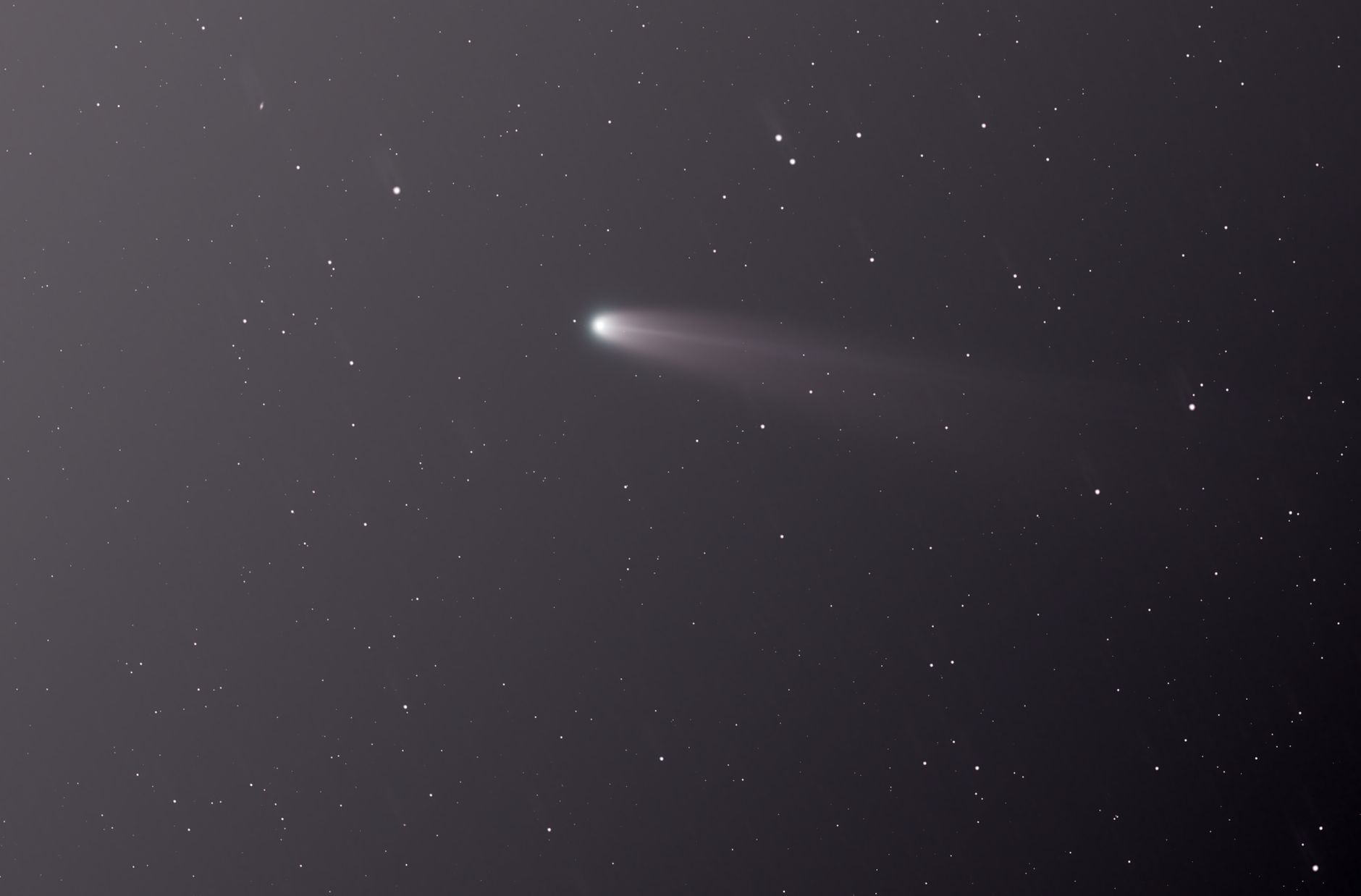
Astronomers using NASA’s James Webb Space Telescope (JWST) have gathered detailed chemical data from the interstellar comet 3I/ATLAS, revealing clues about its ancient origins far beyond our solar system. The comet, which is the third confirmed object from outside our solar system to be observed, offered a unique opportunity for study as it moved away from the Sun in December 2025.
The comet’s recent close pass by the Sun had warmed its ancient ice, converting it into a gas coma that was ideal for observation by Webb’s Near-Infrared Spectrograph (NIRSpec) instrument. The data collected showed chemical ratios, particularly of carbon and deuterium (heavy hydrogen), that are not typically found in comets originating within our solar system. These findings surprised researchers and provided insights into the environment where 3I/ATLAS formed.
Unusual Chemical Signatures
NIRSpec detected exceptionally high levels of deuterium in 3I/ATLAS, approximately 30 times more than observed in solar system comets. This suggests that the comet may have formed in a very cold environment early in the galaxy’s history. The abundance of deuterium, often referred to as “heavy water,” indicates that the material comprising 3I/ATLAS was likely exposed to significant radiation but not sustained warmth that would have reprocessed its ice.
Additionally, the comet showed only trace amounts of carbon-13 compared to the lighter carbon-12 isotope. This ratio also points to a very ancient origin, as stellar systems tend to become enriched with carbon-13 over time through successive generations of star birth and death. Our own Sun, which formed approximately 4.5 billion years ago, has higher levels of carbon-13.
Distant Formation
Based on these chemical signatures, researchers estimate that 3I/ATLAS could have formed as long as 10 to 12 billion years ago. This timeframe aligns with the period known as “cosmic noon,” when star formation in the universe was at its peak. The comet’s nascent system was likely situated within a dense, cold cloud, and its formative years were spent in a deeply frozen state, preserving its unique isotopic composition.
Martin Cordiner of NASA’s Goddard Space Flight Center, the lead author of the study published in the journal Nature, described the observation as a “unique opportunity to study an ancient object from the distant galaxy, probably pre-dating our Sun and solar system.” He added that the findings offer direct insight into that distant time and place and highlight how unusual our own solar system might be.
The research team’s findings are complemented by a separate study using the European Southern Observatory’s Very Large Telescope, which analyzed varieties of carbon and nitrogen in the form of cyanide. Stefanie Milam of NASA Goddard, a co-author of the study, noted the significance of these rare isotopes for understanding the possibilities of prebiotic chemistry elsewhere in the galaxy. She emphasized that analyzing interstellar objects like 3I/ATLAS is a crucial step in determining how common the conditions necessary for the evolution of life are throughout the universe.

Helene Elliott is the Lead Science & Space Reporter at News Raise. She reports on aerospace missions, astrophysics discoveries, quantum research, and environmental technology.