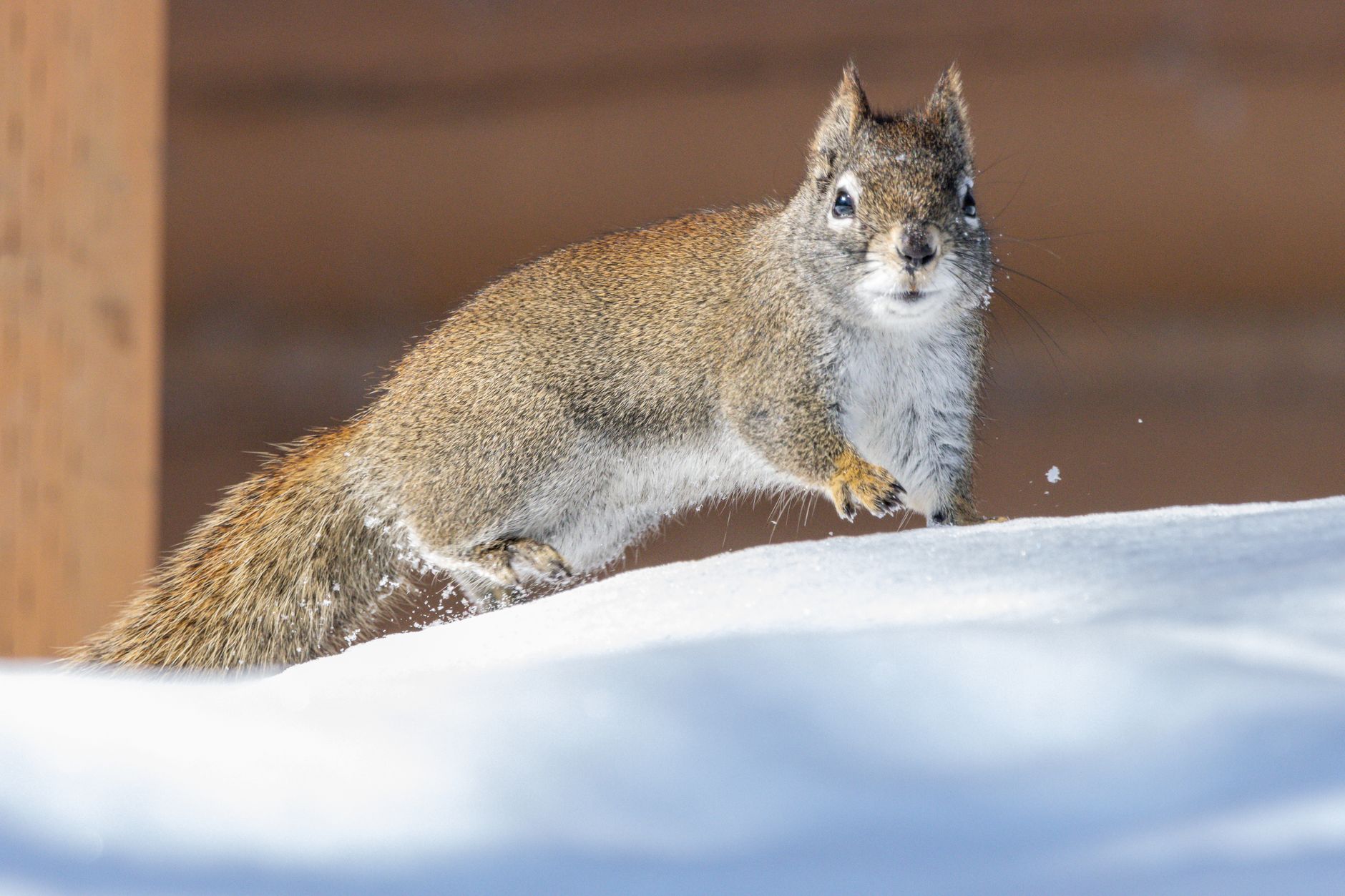
The remarkable ability of Arctic ground squirrels to survive body temperatures as low as -2.9C (27F) during hibernation is offering new insights that could revolutionize emergency medical care, potentially aiding in the treatment of heart attacks, strokes, and brain injuries.
These rodents, native to Canada, Alaska, and Siberia, can endure eight months of hibernation underground as ambient temperatures plummet to -20C (-4F). During this state, their body temperature drops dramatically, with their brains cooling to 0C (32F) and their abdomens to -2C (28F), a level of cold tolerance unmatched by any other mammal.
Slowing Metabolism for Medical Benefit
Scientists have been studying these squirrels for decades, seeking to understand the biological mechanisms behind their hibernation. The ultimate goal is to apply this knowledge to human medicine, enabling doctors to slow human metabolism. This could provide crucial extra time for treating conditions where oxygen deprivation damages vital organs, such as during heart attacks, strokes, and traumatic brain injuries. Inducing beneficial cooling could protect these organs.
“Their physiology is just so different,” said Cory Williams, a physiological ecologist at Colorado State University. “At the same time, you can see [how] if you could harness this attribute and apply it to humans, there could be real practical function.”
Current medical practices sometimes involve cooling patients with ice or medications to protect organs after a heart attack or stroke. However, this approach can be challenging as the body naturally resists cooling by attempting to warm itself, often through shivering. Researchers hope that by identifying ways to wind down a patient’s metabolism, the body’s temperature could naturally decrease without triggering this resistance.
Sarah Rice, a hibernation scientist at the University of Alaska Fairbanks, noted that when studying the squirrels, their bodies are so cold and their vital signs so slow that “sometimes it’s hard to tell if they’re alive or not.”
Adenosine and Thermoregulatory Inversion
Research has identified adenosine, a naturally occurring molecule, as a key trigger for hibernation in Arctic ground squirrels. In studies, injecting adenosine-like compounds has induced hibernation-like states in the animals, significantly slowing their metabolism and lowering their body temperature. Remarkably, similar effects have been observed in ordinary rats, suggesting that the molecular machinery for hibernation may be conserved across different mammalian species.
However, directly translating these findings to human emergency medicine faces hurdles. Injecting drugs directly into the brain is too invasive for urgent situations, and administering adenosine via blood infusions could lead to dangerous side effects like blood sugar fluctuations or heart failure. Furthermore, human tissues have special mechanisms for super-cooling that are not yet fully understood or replicable to the extent seen in Arctic ground squirrels.
Another promising avenue involves exploring a phenomenon called “thermoregulatory inversion.” Research suggests that by blocking specific nerve cells in the hypothalamus, the brain region controlling body temperature, it might be possible to induce a state where the body actively seeks to lower its temperature. This could lead to a regulated, hibernation-like state in humans for therapeutic purposes, a strategy being investigated by neurophysiologist Domenico Tupone of Oregon Health and Science University and the University of Bologna.
This research, partly funded by the US Army Research Office and the Department of Defense, could also have implications for preserving organs for transplantation for longer periods and protecting cancer patients from the harmful effects of radiation. For individuals in remote areas or soldiers on battlefields, slowing metabolism could buy critical time following severe injuries or medical emergencies.

Helene Elliott is the senior reporter for News Raise. She covers Science news. She also has a keen interest in photojournalism. Helene holds a nomination for the prestigious Red Smith Award. She is married to author Dennis D’Agostino, a former publicist with the New York Mets.