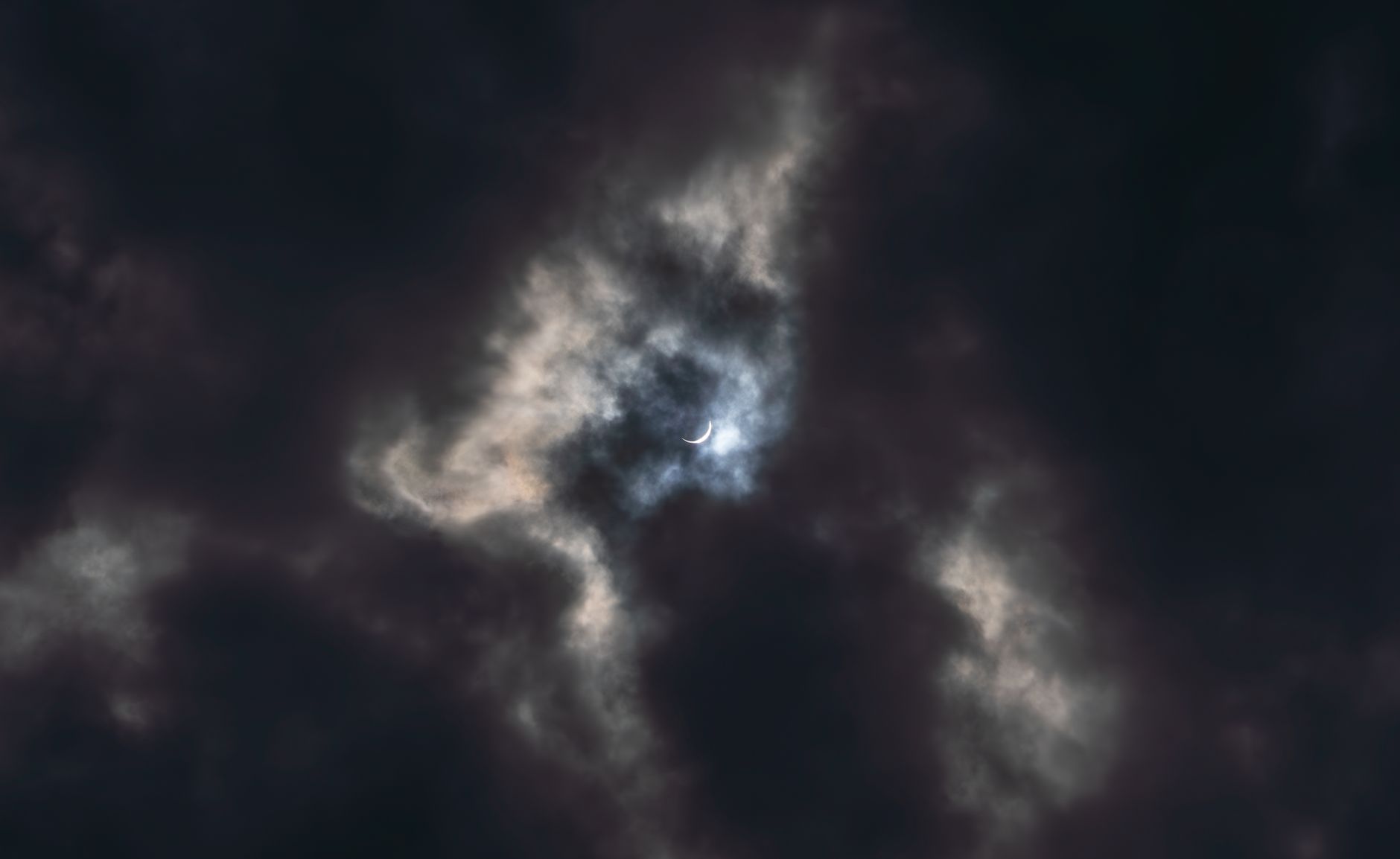
On August 12, a partial solar eclipse will sweep across portions of the United States, offering residents from Alaska to North Carolina a brief view of the Moon crossing the Sun. While the event will be total for locations in Greenland, Russia and the North Atlantic, American observers will see only a portion of the Sun obscured, according to information released by NASA.
Geographic reach and timing
The eclipse will be visible in a swath that includes the entire state of Alaska, the New England states of Maine and Massachusetts, as well as Washington, D.C., and several Mid‑Atlantic and Mid‑western cities. In Alaska, the phenomenon will occur in the early morning, whereas most of the continental United States will experience it between late morning and mid‑afternoon.
NASA provides specific coverage figures for ten U.S. locations. Fairbanks, Alaska, will see the greatest obscuration at 37 % of the Sun’s disk, with the event beginning at 7:37 a.m. and ending at 9:18 a.m., peaking at 8:27 a.m. Anchorage will experience 28 % coverage from 7:36 a.m. to 9:09 a.m., with maximum at 8:21 a.m. In the lower 48, Bangor, Maine, will have 24 % coverage between 12:54 p.m. and 2:49 p.m., reaching its peak at 1:53 p.m. Portland, Maine, follows closely with 19 % coverage. Further south, Boston will see 16 % coverage from 1:01 p.m. to 2:46 p.m., peaking at 1:55 p.m. New York City will have a modest 9 % coverage, while Philadelphia and Washington, D.C., will see 7 % and 4 % respectively. Detroit’s coverage will be the lowest among the listed cities at 3 %.
How to view safely
NASA stresses that looking directly at the Sun, even during a partial eclipse, can cause serious eye injury. Viewers should employ certified solar filters such as eclipse glasses, handheld solar viewers, or other approved solar‑filter devices. For those who prefer indirect observation, simple pinhole projectors can be constructed using household items like cereal boxes, scissors, tape, and aluminum foil.
The agency notes that only during the brief moments of totality—when the Moon completely covers the Sun—may the unaided eye be used safely. Because the August 12 event is partial for U.S. observers, protective eyewear will be required throughout the entire viewing window.
Live broadcast and additional resources
NASA will stream the eclipse live beginning at 1:15 p.m. Eastern Time on August 12. The broadcast will be available on multiple platforms, including Amazon Prime, Facebook, Instagram, NASA+, Twitch, X and YouTube, allowing those outside the path of visibility to watch the event in real time.
For further details, the agency’s website offers maps, timing tables and safety guidelines. The upcoming eclipse marks the first opportunity for U.S. sky‑watchers to see a solar eclipse since the total event of 2020, providing a chance to experience a celestial alignment that, while partial, still offers a striking visual display.

Steve Lopez is a Senior Editorial Columnist and Health & Public Policy reporter for News Raise. Steve focuses on healthcare advancements, medical technologies, and public health policies.