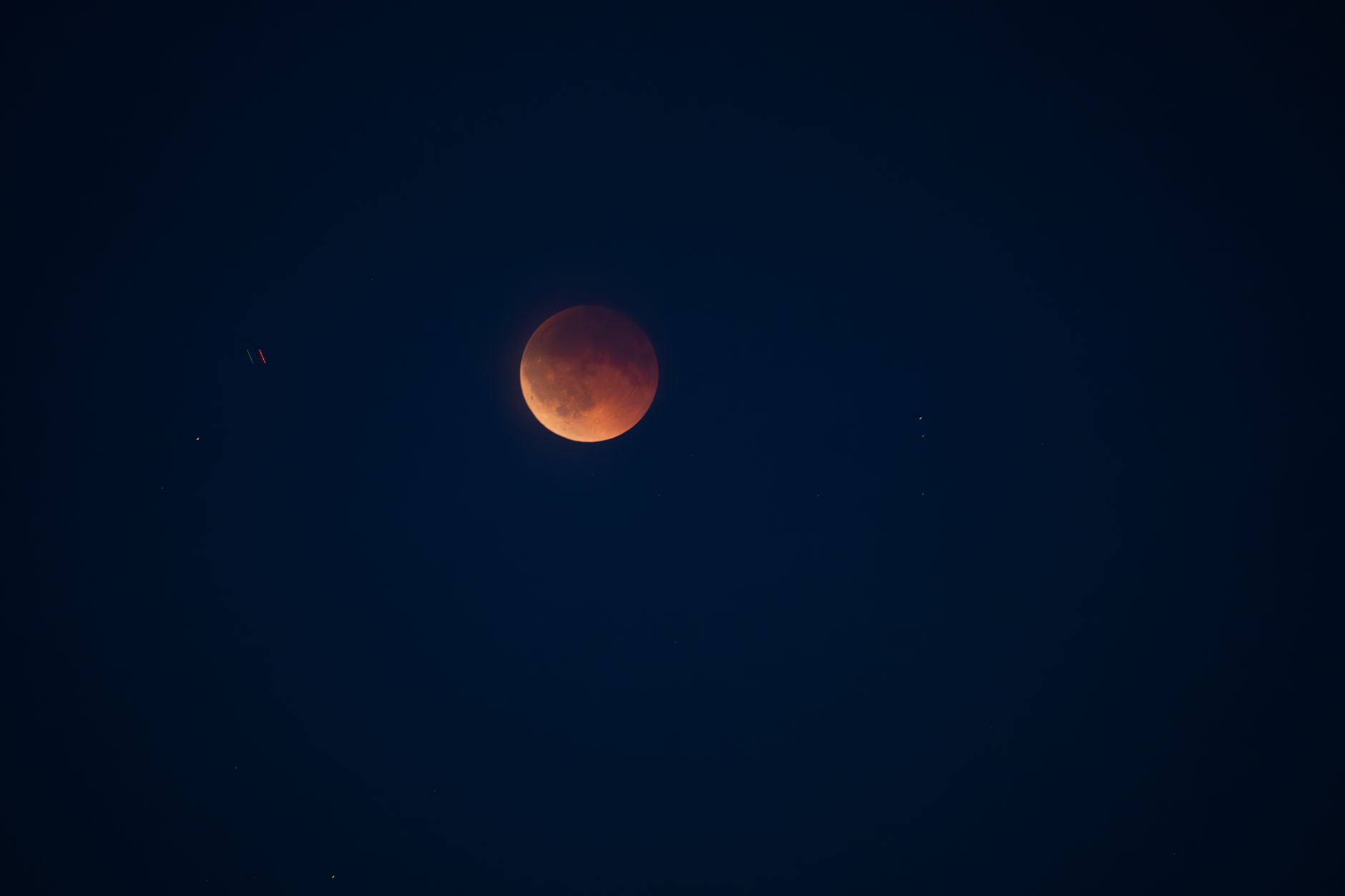
On Thursday night, a near‑total lunar eclipse will sweep across the sky for observers in the continental United States and much of the Americas. At the eclipse’s peak, 96.2% of the Moon’s surface will be immersed in Earth’s shadow, creating a deep reddish‑orange glow often called a “blood moon.”
Timing and Visibility
The eclipse begins at 9:23 p.m. Eastern Time (ET) when the Moon first contacts the outer penumbral shadow. The more dramatic phase starts at 10:33 p.m. ET as the darker umbral shadow starts to bite into the lunar disk. The maximum coverage occurs at 12:12 a.m. ET, when more than 96% of the Moon is hidden. The event concludes at 3:01 a.m. ET as the Moon exits the penumbra.
Most locations in North and South America, except for Alaska and the far northern reaches of Canada, will be able to see the entire sequence from start to finish. In Europe and Africa, the eclipse will begin early on Friday, but the Moon will set before the event completes, limiting visibility of later stages.
What to Expect
During a lunar eclipse, Earth’s atmosphere bends sunlight and filters out blue wavelengths, casting a reddish hue on the Moon’s surface. This natural coloration is why total lunar eclipses are sometimes referred to as “blood moons.” Unlike solar eclipses, lunar eclipses can be observed safely with the naked eye; binoculars or telescopes can enhance detail and color contrast.
Skywatchers in the United States can expect a clear view of the eclipse’s progression, provided local weather cooperates. The event offers a rare chance to observe the Moon transition from a bright disk to a deep copper tone and back again within a few hours.
Context and Upcoming Eclipses
This lunar eclipse follows a total solar eclipse that occurred two weeks earlier, which darkened skies over southern Europe, parts of Portugal, Greenland, Iceland and northern Russia. Solar and lunar eclipses often appear in pairs because of the geometry of the Sun‑Earth‑Moon system: a solar eclipse happens at new moon, and roughly two weeks later, when the Moon is on the opposite side of Earth, a lunar eclipse occurs at full moon.
The next solar eclipse is slated for February 6, visible from portions of South America and Africa. The following lunar eclipse will take place overnight from February 20 to 21, with visibility spanning North and South America, Europe, Africa, Asia, Australia and Antarctica, according to NASA.
Both eclipses underscore the precise alignment required for these phenomena. The Sun is about 400 times farther from Earth than the Moon, yet also roughly 400 times larger in diameter, making the Sun and Moon appear nearly the same size in the sky. This coincidence enables the Moon to completely cover the Sun during a total solar eclipse and allows Earth’s shadow to envelop the Moon during a lunar eclipse.

Steve Lopez is a Senior Editorial Columnist and Health & Public Policy reporter for News Raise. Steve focuses on healthcare advancements, medical technologies, and public health policies.