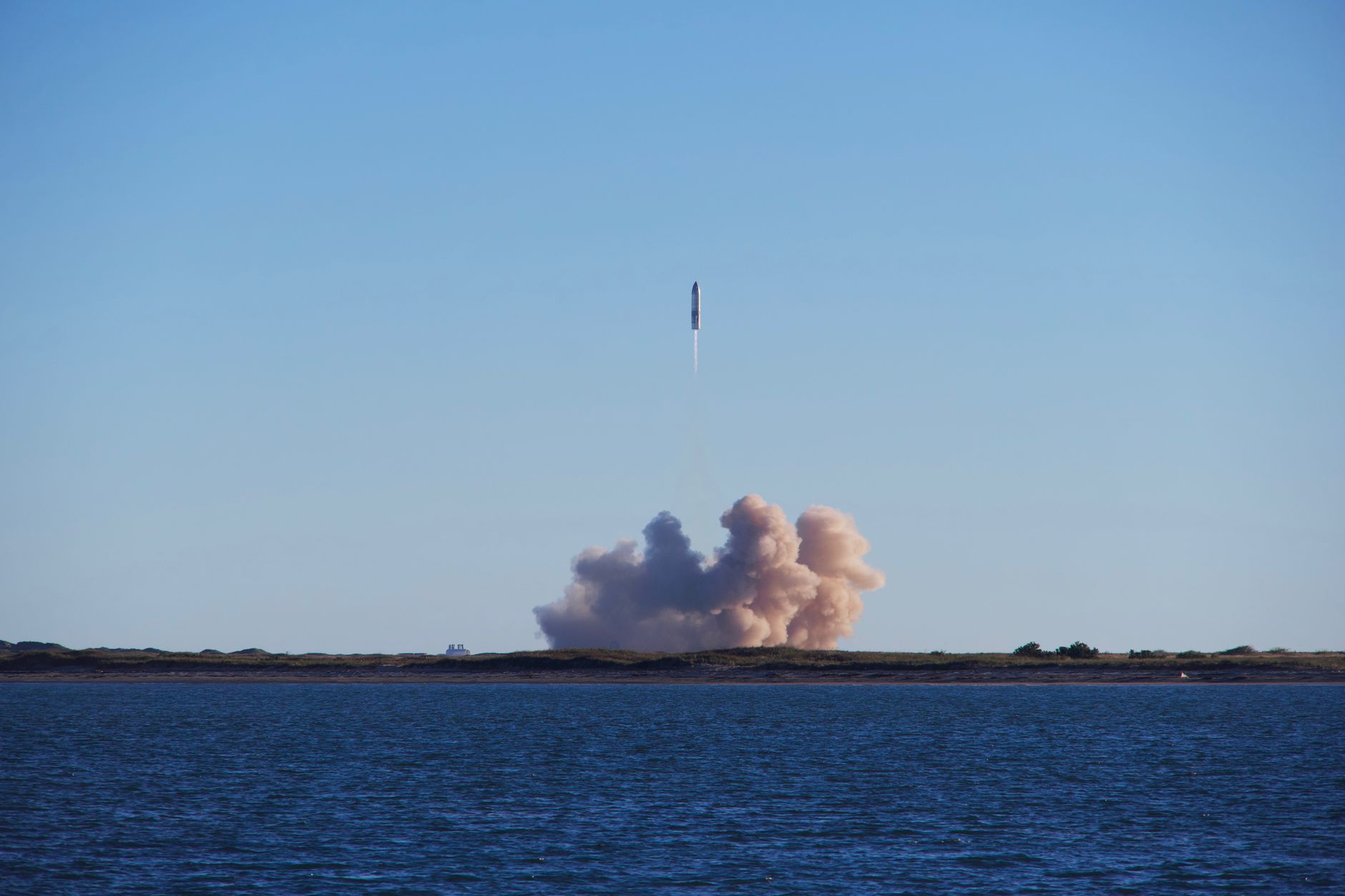
NASA successfully launched its new Nancy Grace Roman space telescope from the Kennedy Space Center in Florida on Sunday morning. The observatory, described by agency officials as a “giant leap forward,” is designed to conduct sweeping surveys of the cosmos, focusing on dark energy, dark matter, black holes and planets beyond our solar system.
Mission profile and capabilities
After a roughly 30‑minute ascent, the Roman telescope separated from its SpaceX launch vehicle and began a 100‑day cruise to a stable orbit about one million miles from Earth. Once positioned, the telescope will start its primary science operations, which include mapping billions of galaxies and characterising thousands of exoplanets.
Roman’s field of view is projected to be 100 times larger than that of both the Hubble Space Telescope and the James Webb Space Telescope, allowing it to capture panoramic images of the sky in a single exposure. Its infrared instruments are placed far enough from Earth and the Moon—about four times the lunar distance—to minimise thermal interference, a point emphasized by astronomer Jenifer Millard.
Scientific goals and expectations
NASA administrators anticipate that Roman could discover tens of thousands, possibly up to 100,000, new exoplanets. “One of our main goals at NASA is answering the question, ‘Are we alone in the universe?'” said Nicky Fox, a NASA administrator, during the post‑launch briefing. The telescope’s ability to resolve the atmospheres of distant worlds is expected to provide clues about their habitability.
Beyond exoplanet hunting, Roman will conduct “crisp, sweeping surveys” aimed at probing the nature of dark energy and dark matter, which together are thought to comprise roughly 95 % of the universe’s total mass‑energy content. By creating detailed cosmic maps that trace galaxy distribution over time, scientists hope to peel back layers of cosmic history and better understand the forces driving the universe’s accelerated expansion.
Additional objectives include studying black holes, charting objects within our own solar system, and extending observations to the farthest reaches of the observable universe. The mission is planned for a five‑year primary lifespan, with an aspiration to operate for a decade.
Leadership, legacy and public response
The telescope is named after Nancy Grace Roman, NASA’s first chief astronomer in the 1960s and a pioneering advocate for the Hubble Space Telescope. Roman’s legacy includes securing congressional approval for Hubble and highlighting dark energy as a key scientific frontier.
Project manager Jackie Townsend called the launch “glorious” and praised the performance of the launch vehicle, noting that the ride placed the telescope exactly where engineers intended. President Donald Trump joined the news conference by phone, congratulating the team and emphasizing the United States’ leadership in space exploration.
With its unprecedented field of view and advanced infrared capabilities, the Roman telescope is poised to expand humanity’s cosmic perspective, delivering data that could reshape theories of galaxy formation, cosmic expansion and the prevalence of life‑bearing worlds beyond Earth.

Norman Pearlstine is the Executive Editor and Co-Founder at News Raise. With over two decades of experience across financial journalism, corporate governance, and market analysis, Norman leads the editorial direction and ensures strict adherence to journalistic accuracy and ethics.