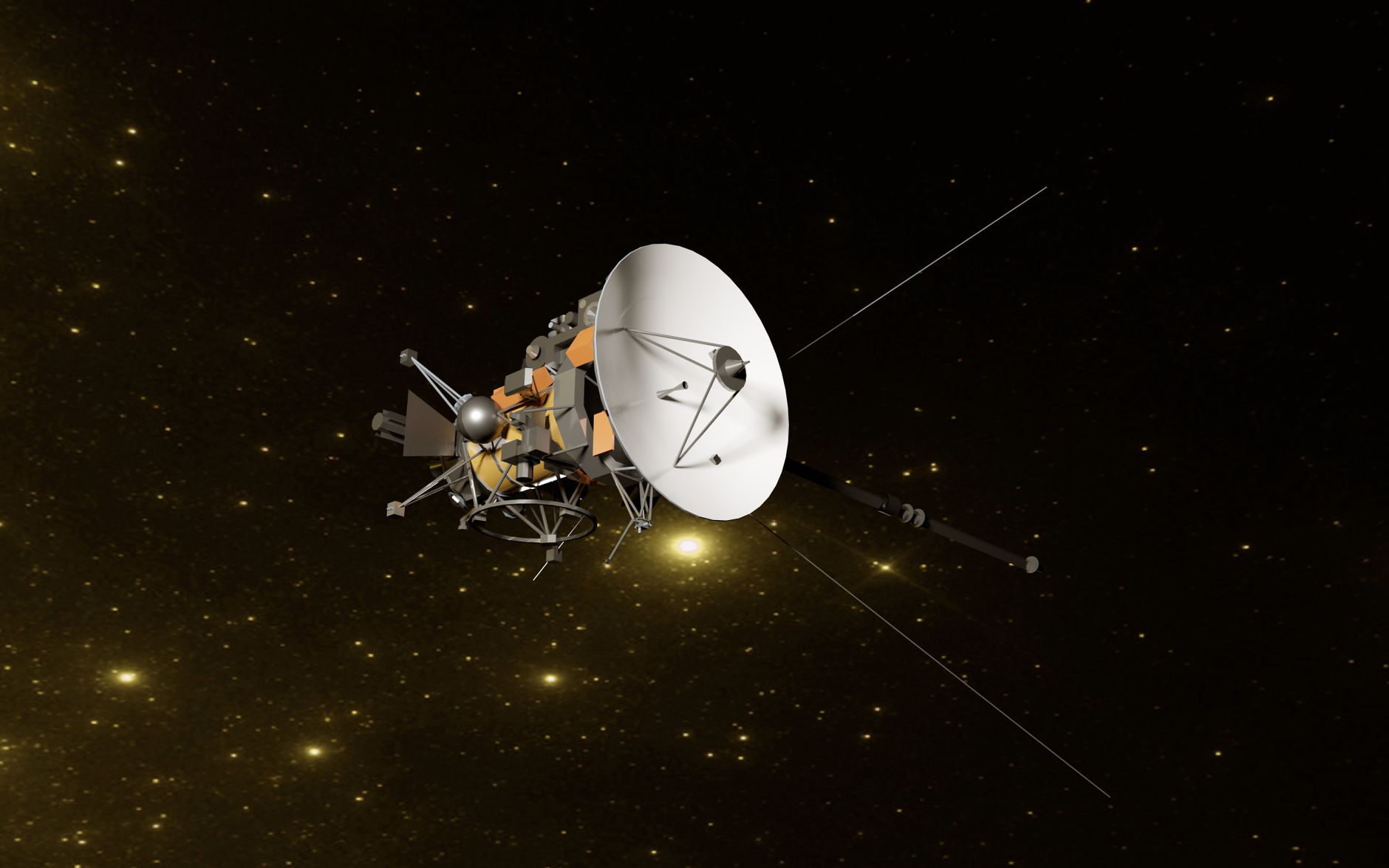
NASA announced that Voyager 1 will cross the one‑light‑day threshold on Wednesday at 5:16 a.m. ET, marking the farthest distance ever achieved by a human‑made object. A light‑day equals the distance light travels in 24 hours—more than 16 billion miles. The spacecraft, launched on 5 September 1977, will have been traveling for 49 years, two months and 11 days when it reaches this milestone.
Milestone and public celebration
To commemorate the achievement, NASA is running a symbolic event called “Shine Bright for Voyager’s Light‑Day.” The agency is asking people worldwide to flash the probe’s call sign—V‑G‑R—in Morse code using any blinking light source, such as a flashlight or a phone torch. The pattern calls for three quick flashes followed by a long one for “V,” two long flashes then a quick one for “G,” and a quick‑long‑quick sequence for “R.” The outreach is scheduled for Tuesday night, giving the public a chance to participate in a collective light display aimed at the distant voyager.
Voyager’s historic journey
Since its launch, Voyager 1 has completed landmark flybys of the outer planets. In 1979 it discovered a faint ring encircling Jupiter, and in 1980 it captured detailed images of Saturn’s rings and moons. On 17 February 1998 the probe overtook Pioneer 10, becoming the most distant human‑made object in existence. Both Voyager 1 and its twin, Voyager 2, are the only spacecraft to have operated beyond the heliosphere—the protective bubble created by the Sun’s solar wind.
The spacecraft entered interstellar space in 2012, exiting the Sun’s heliosphere and beginning an extended mission to study the environment beyond. Its instruments continue to record magnetic fields, charged particles and plasma waves that characterize the interstellar medium. Earlier this year NASA turned off the Low‑energy Charged Particles (LECP) experiment to conserve power, a decision that scientists said could extend the probe’s operational life. Two scientific instruments remain active: one that measures magnetic fields and another that listens for plasma waves.
Legacy and the Golden Record
Voyager 1 also carries the Golden Record, a gold‑plated phonograph disc intended as an interstellar time capsule. The record holds 115 images, a collection of natural sounds such as surf, wind and animal calls, and spoken greetings in 35 languages. Symbolic instructions for playing the disc and information about the spacecraft’s origin are etched in pictograms, offering any potential extraterrestrial listeners a snapshot of Earth’s diversity.
Reaching a light‑day from Earth underscores the probe’s longevity and the durability of its engineering. At more than 16 billion miles away, Voyager 1 continues to send data back to Earth, albeit at a reduced rate, while its legacy inspires future deep‑space missions. The upcoming light‑day milestone serves as both a scientific landmark and a public moment of reflection on humanity’s reach into the cosmos.

Norman Pearlstine is the Executive Editor and Co-Founder at News Raise. With over two decades of experience across financial journalism, corporate governance, and market analysis, Norman leads the editorial direction and ensures strict adherence to journalistic accuracy and ethics.