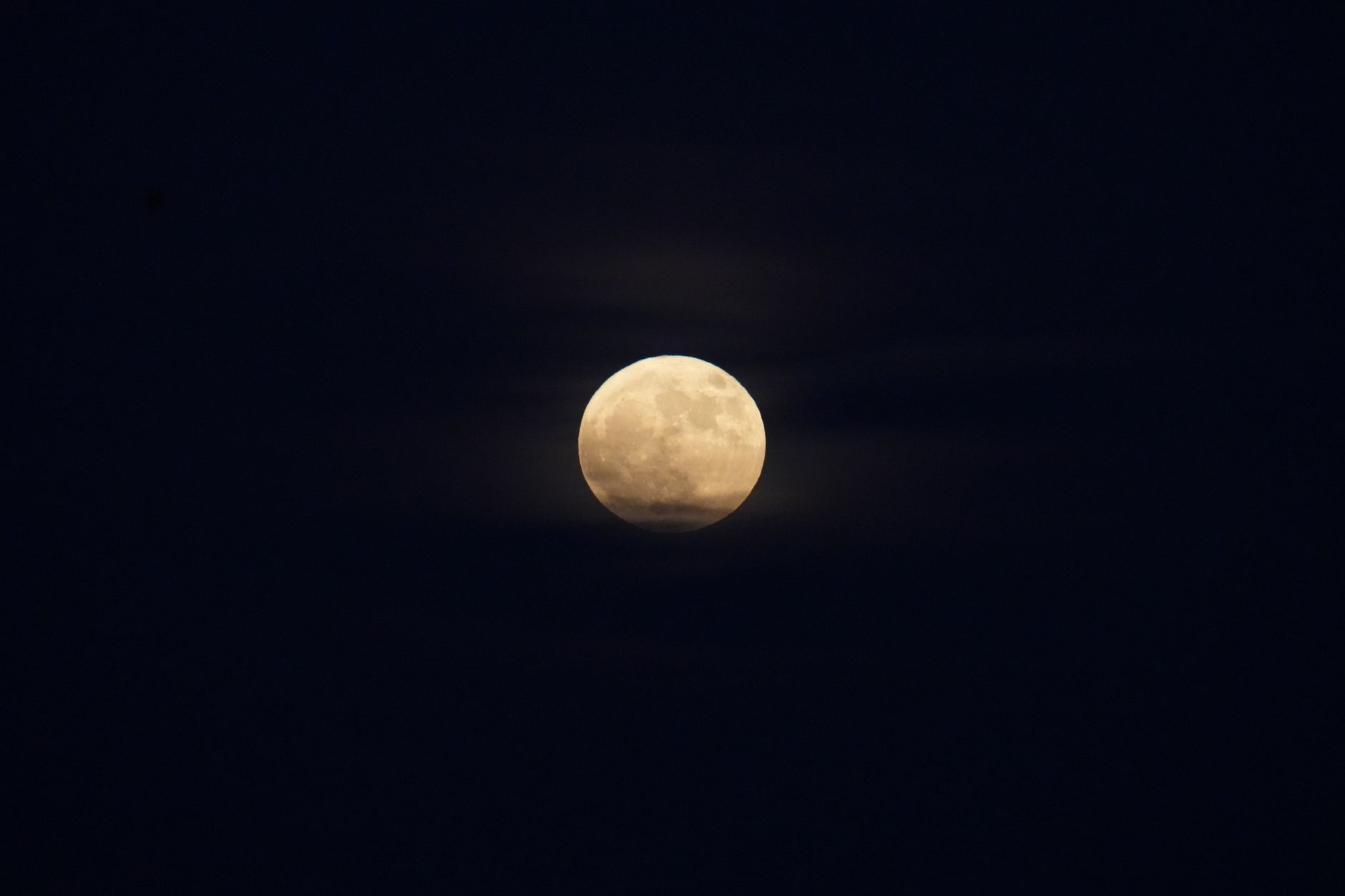
The full moon that appears on November 24 is being highlighted as the “Beaver Moon” and also as the first of a rare stretch of four consecutive supermoons. Astronomers note that the moon will reach its maximum illumination at 9:53 a.m. Eastern Time, marking the moment it is 100 percent illuminated. While the technical peak occurs at that exact time, the visual difference for most observers between the peak moment and the rest of the night is negligible.
When to view the Beaver Moon
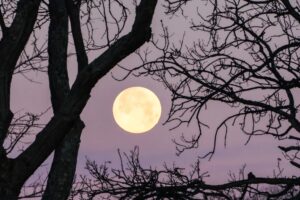
Because of the psychological effect known as the “moon illusion,” the moon appears larger and brighter when it is low on the horizon. Consequently, observers are advised to watch the moon shortly after moonrise, when it is near the eastern horizon, to experience the most striking view. The peak illumination time is provided for reference, but the best visual impact will come from low‑angle sightings rather than the precise moment of full phase.
Four back‑to‑back supermoons
The November full moon initiates a sequence of four supermoons that will occur roughly once each month. The second supermoon is scheduled for December 24, aligning with Christmas Eve. The third follows on January 22, 2027, and the final one lands on February 20, 2027, which is also known as the Snow Moon. This pattern of three to four supermoons in a year is typical, and the current run represents the longest uninterrupted series in the near term.
Folklore, naming and weather lore
The name “Beaver Moon” has deep roots in Native American, colonial American and European traditions. Historically, beavers become especially active in late autumn, felling trees and gathering food before waterways freeze. The increased beaver activity in November gave rise to the moon’s name. Another explanation ties the name to the fur trade: beaver pelts reach peak thickness in winter, and November marked the start of the trapping season when pelts were weighed and traded.
Alternative names for the same November full moon include the Frost Moon, Freezing Moon and Snow Moon, reflecting the onset of early frosts. Indigenous groups also had distinct titles: Cherokee peoples called it the Trading Moon, Dakota and Lakota referred to it as the Deer Rutting Moon, and the Algonquin named it the Whitefish Moon.
Beyond cultural naming, the Beaver Moon has been linked to weather prediction in old lore. A halo surrounding the moon was thought to herald snow or rain within a couple of days, while a clear, sharp‑edged moon suggested a cold, dry spell. Meteorologist Jonathan Erdman acknowledges a kernel of scientific truth in this rule of thumb. He explains that a lunar halo typically indicates the presence of thin cirrus clouds containing ice crystals, which often precede precipitation. Conversely, a crystal‑clear sky usually signals high‑pressure, dry conditions for the near future.
Overall, the Beaver Moon offers both an astronomical spectacle and a window into centuries‑old cultural narratives. Whether observed for its brightness, its place in a string of supermoons, or its folkloric significance, the November full moon continues to capture public imagination.

Helene Elliott is the Lead Science & Space Reporter at News Raise. She reports on aerospace missions, astrophysics discoveries, quantum research, and environmental technology.