
A new study analyzing the vocalizations of great apes suggests that laughter, a behavior common to the species, may have originated in primate ancestors 15 million years ago.
Posts published in “Science”

China's Tiangong space station may become the only permanently crewed outpost in Earth orbit if the International Space Station retires as planned and commercial successors are not ready.

NASA has selected 41 proposals from 37 American companies to advance technologies for long-term lunar presence and human Mars exploration. These partnerships leverage NASA's resources to mature commercial space solutions.

NASA is investing $30 million in a novel rescue mission to extend the life of the nearly 22-year-old Swift Observatory, an instrument crucial for detecting gamma-ray bursts.

NASA's TESS mission has identified two unusually low-density planets, dubbed 'cotton candy' worlds, in the same star system, offering new insights into planetary evolution.

New research analyzing laughter across great apes suggests its rhythm evolved along a continuum, with humans showing the most variability and context sensitivity, indicating a path towards speech and language.
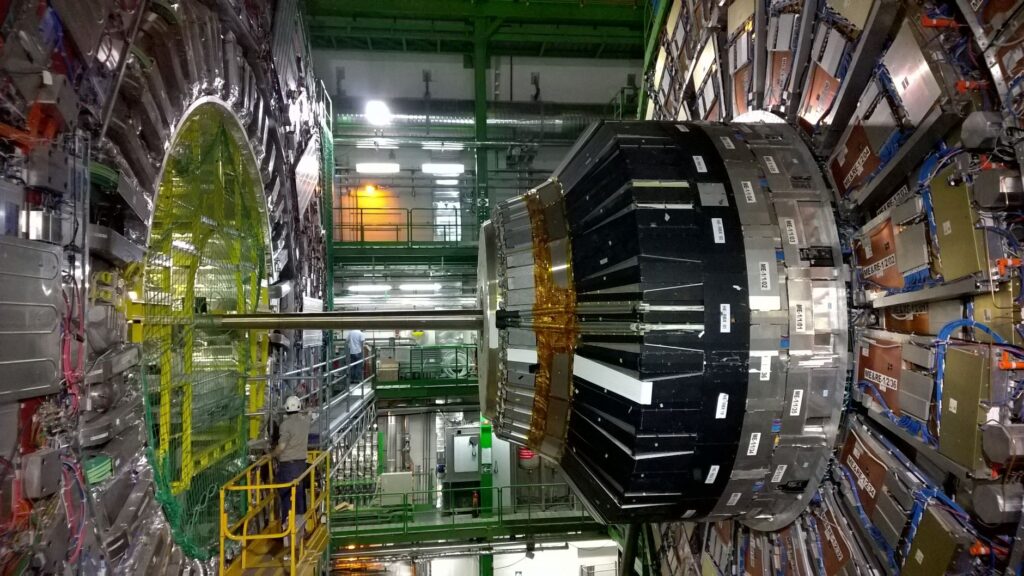
Decades of experiments using massive, deep underground detectors have begun to unravel the mysteries of neutrinos, elusive particles that can pass through matter virtually unimpeded.

Analysis of 20 Homo naledi teeth suggests all known skeletons of the ancient hominin species are female, a unique finding in human evolution studies. The discovery challenges previous assumptions and raises new questions about the species' biology and behavior.

Astronomers have identified two giant exoplanets, described as "super-puffs," that are the largest discovered with a density less than cotton candy. Orbiting a star 1,110 light-years away, these planets are the lightest known for their size.

NASA's James Webb Space Telescope has captured an unprecedented view of the starburst galaxy Messier 82, revealing millions of individual stars and intricate details previously obscured by dust.