The Indian currency market, also known as the foreign exchange (Forex) market, is where currencies are traded by people. This article talks about the currency exchange in India, through the two listed stock exchanges – National Stock Exchange (NSE) and Bombay Stock Exchange (BSE).
Currency trading involves buying and selling currencies from different countries to make a profit through the exchange process and charges levied on these transactions. The US Dollar is the most widely traded currency in India, and probably one of the most powerful currencies globally. Some other popular currencies traded widely in the Indian market are the Euro, Japanese Yen, Australian Dollar, Singapore Dollar and British Pound.
The concept of currency transaction is to buy and sell currencies at different prices, selling them at higher prices or buying them back at a lower price. A difference between the buying and selling prices is called a ‘spread’, which is what traders can make a profit on. A better understanding of how to trade currency in India is explained in the article, which can serve as a guide, especially in the present times when the US Dollar and Indian Rupee pricing is so dynamic.
Understanding the Currency Market for Trade Currency
A global market that serves as the trading platform for currencies is called as a currency market, also known as a foreign exchange market. In general, the global currency market operates on two levels-
- Over the Counter– In this level, companies and individuals are allowed to trade in any of the currencies. Anyone can participate in a currency trading activity by means of a broker and an online trading platform.
- The Interbank Market– As the name suggests, world’s leading banks exchange currencies with one another in level, and they conduct large transactions among themselves. Such banks become prominent players in the currencies market.
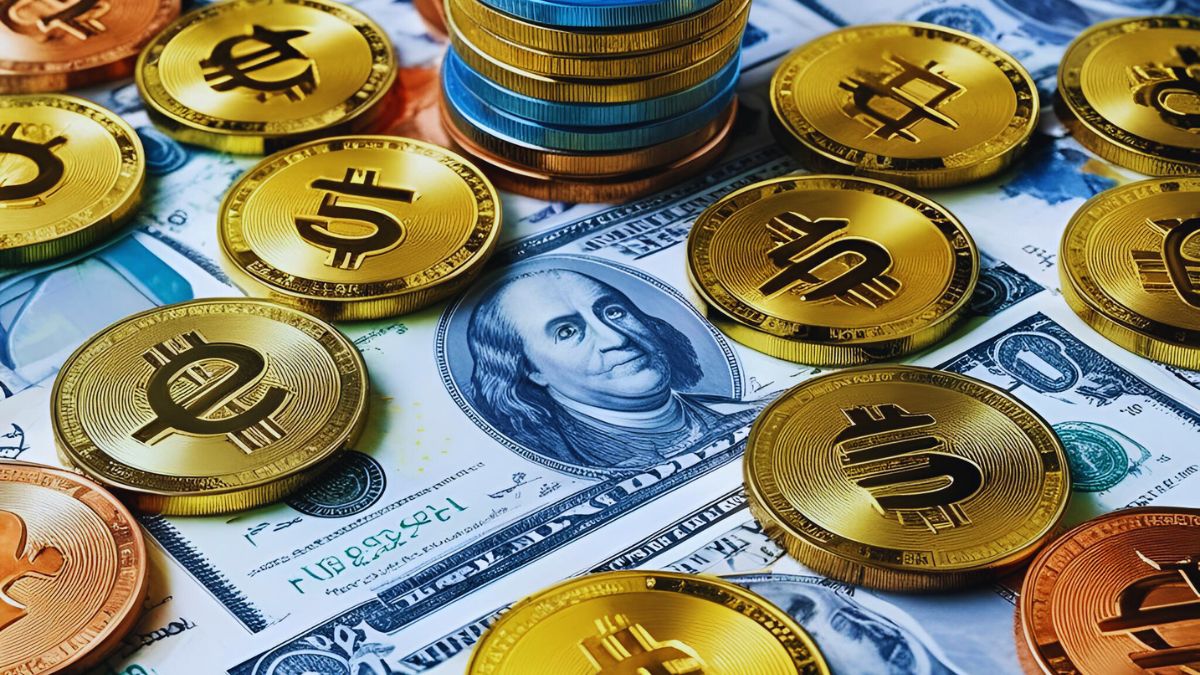
In the currency market, buying and selling currencies are always done in pairs. The exchange rate, which is the price of one currency as compared to another, decides the value of these transactions. Every currency is governed by a specific symbol which denotes the currency type and basis that exchange between two currencies is carried out.
For example, the Indian Rupee is represented by INR (₹), and USDs represent the US Dollar ($). The deal would be indicated as INR/USD if you wanted to exchange Indian Rupees for US Dollars.
Key Features of the Indian Currency Market:
Presently, the Indian rupee has been quite volatile, owing to the stringent regulations and trade tariff laws set by US President Donald Trump. While the Indian rupee has always been a weaker currency as compared to the US Dollar.
In any currency pair transaction, there is a base currency and the second is called as a quote currency. Generally, the INR is the quote currency, and the USD is the base currency in trades involving Rupees and Dollars. So, when you are writing USD 1 to INR = ₹ 85.2, the USD is the base currency, and the INR is a reference currency which has a value of ₹ 85.
The rupee’s current unpredictability against the dollar is not completely because of the changing trade tariff guidelines released P.O.T.U.S but also a combination of other factors, including economic uncertainty, global risks and Reserve Bank of India (RBI) interventions. While U.S. trade policies can largely influence the dollar’s value and indirectly impact the rupee for carrying out any exchanges, other factors like market sentiment, global economic conditions, and RBI’s actions also play a significant role.
Larger Implications in Indian Market:
While a minimal share of foreign exchange is done for actual usage, a great majority of it is carried out to book profits. Because of the large volume of money exchanged every day, the price fluctuations of some currencies make it highly volatile.
For individuals and companies, it is permissible to trade forex on Indian exchanges such as the Bombay Stock Exchange (BSE) and National Stock Exchange (NSE). However, the high liquidity and changing situation, one can hit it big or lose it all in fractions of a second. The potential benefits are there (diverse currency pairs to trade in, high returns can be expected, and there is flexibility to operate during the operational hours of the exchanges). The rewards can be fulfilling if done correctly and at the right time, with both parties benefitting from such transactions.
But there are some downsides too, which may come across as perceived risks, if not adhered to. Undoubtedly, there is a high-risk element in such transactions, there are regulatory restrictions put forth by SEBI to monitor the transactions and complexity of the market also possess certain challenges at different stages.






Be First to Comment