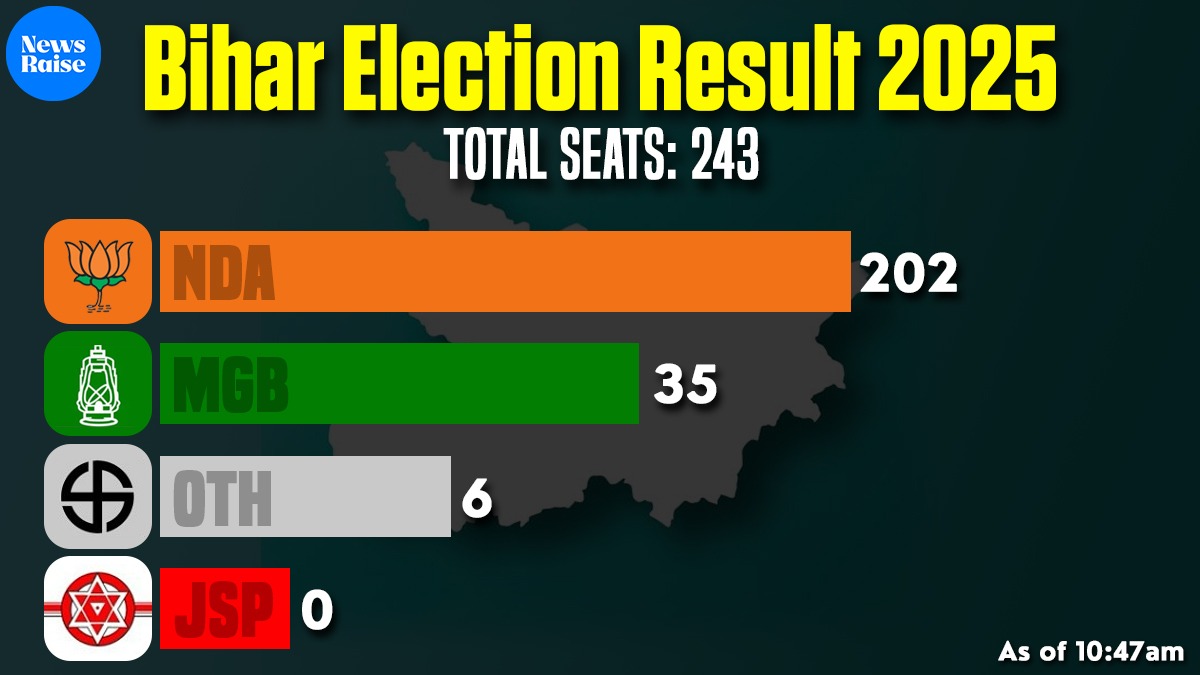
In an interesting twist in the 2025 Bihar Assembly elections, the Rashtriya Janata Dal (RJD) found itself in a rather unpleasant position.
Despite delivering an underwhelming performance in terms of seats won, the party still managed to secure the highest vote share among all political contenders. However, this numerical advantage did not translate into electoral victories, raising questions about how vote share works and why a party can still lose despite widespread support.
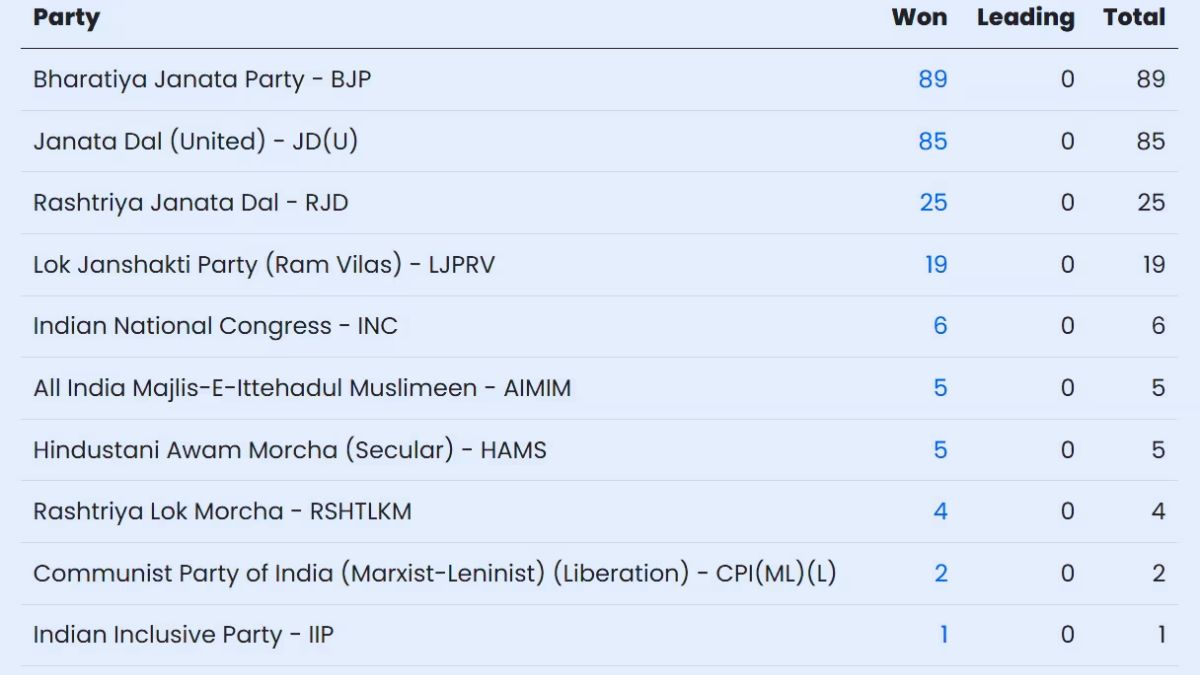
The RJD, which headed the Mahagathbandhan alliance alongside the Congress, contested in 143 constituencies as part of the seat-sharing agreement. Yet, the party won only 25 seats, marking a disappointing outcome for a party that once dominated Bihar’s political landscape.
Interestingly, this election saw the RJD garner 23% of the total votes cast, the highest vote share for any single party. While this marks a slight dip from the 23.11% vote share it secured in the 2020 elections, the number still indicates strong grassroots support. The Bihar Election 2025 turned out to be a rather glittery affair, as NDA’s thumping victory has gone down as one of its finest performances in recent times, especially in a state like Bihar.
What Is Vote Share?
Vote share refers to the percentage of total votes a party receives across all constituencies, irrespective of the number of seats won. It reflects the overall popularity or acceptability of a party amongst the voters. However, vote share alone does not determine electoral success – because eventually what matters is whether those votes translate into victories at the constituency level.
Why RJD Lost Despite a High Vote Share
The RJD’s disappointing performance can be explained through several factors:
-
Scattered Support Without Seat Conversions
A party may accumulate large numbers of votes across many seats but still lose if it does not secure plurality in individual constituencies. In many cases, the RJD finished second or third with sizeable vote numbers. These votes counted toward its overall vote share but did not help win seats. -
Wasted Votes in Losing Constituencies
In several constituencies, the RJD either lost narrowly or won by thin margins. The votes it collected in constituencies it lost added to its vote share but did nothing to increase its seat tally. -
Higher Number of Seats Contested
Compared to the BJP and JD(U), which contested 101 seats each, the RJD contested in 42 more constituencies. Naturally, contesting in more seats allowed the party to gather more votes, even if many of those contests did not result in victories. This inflated the actual vote share without improving the final seat count. -
Underperformance of Alliance Partners
The Mahagathbandhan (MGB) overall suffered major setbacks. The Congress won only 6 out of 61 seats, while the CPI(ML)L secured two seats, CPI(M) won 01, and the CPI failed to win any. The entire alliance managed only 35 seats, which significantly weakened RJD’s prospects in several regions.
NDA’s Dominant Performance
On the other hand, the National Democratic Alliance (NDA) achieved a decisive victory with 202 seats. The BJP emerged as the largest contributor with 89 seats, followed by the JD(U) with 85 seats. The Lok Janshakti Party (Ram Vilas) led by Chirag Paswan won 19 seats, Jitan Ram Manjhi’s HAM secured 5, and Upendra Kushwaha’s Rashtriya Lok Morcha (RLM) claimed 4 seats.






Be First to Comment