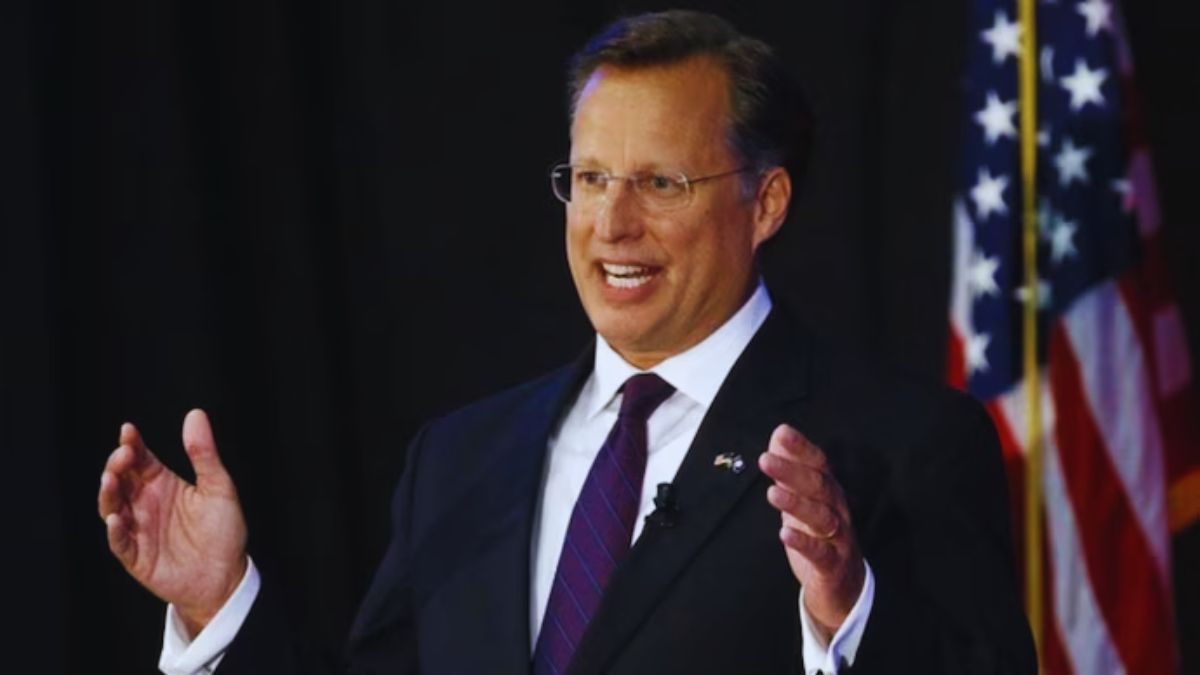
The H-1B visa programme — long considered a crucial entry point for global skilled talent into the US — is once again under the spotlight after former US Representative and economist Dr. Dave Brat alleged that the system has been overtaken by industrial-scale fraud.
His comments come at a time when the Trump administration and its allies are tightening their focus on employment-based visas and foreign worker programmes. Brat claimed that visa allocations from India had grown to levels far exceeding the annual statutory cap.
Seventy-one per cent of H-1B visas come from India, and only 12 per cent from China. According to him, the numbers processed in India’s Chennai consular district were ‘far beyond‘ what the programme allows. “There’s a cap of 85,000 H-1B visas, yet somehow one district in India — the Chennai district — got 220,000. That’s around 2.5 times the cap Congress has set. So that’s the scam, framing the issue as a direct threat to American workers.
Brat further argued that the programme is being misused to bring in individuals who may not meet the specialized-skills requirement. “When someone comes in claiming they’re skilled — many aren’t. That’s the fraud. They’re taking away your family’s job, your mortgage, your house,” he alleged.
Former US Diplomat Revives Concerns About Document Fraud
Brat’s remarks have received sharp critical diligence from Mahvash Siddiqui, an Indian-origin US Foreign Service Officer who served at the Chennai consulate roughly two decades ago. In previous interviews, Siddiqui said she processed more than 50,000 non-immigrant visas between 2005 and 2007 and claimed that fabricated documents and proxy applicants were widespread.
According to her, 80–90 per cent of the H-1B applications she encountered during that period involved forged educational credentials, false job letters or applicants who did not meet the required skill level. She also described Hyderabad — particularly the Ameerpet training hub — as a hotspot for visa-related fraud, alleging the existence of shops that openly sold fake degrees, fraudulent employment documents and even fabricated marriage certificates.
Siddiqui further claimed that some applicants attempted to avoid interviews conducted by American officers, and that certain hiring managers in India were allegedly involved in bribery schemes linked to visa-supporting job offers.
A Programme Critical to the US Tech Workforce
Despite recurring allegations, the H-1B programme remains vital for American employers, especially in the technology and engineering sectors. The US consulate in Chennai alone processed more than 220,000 H-1B applications and an additional 140,000 H-4 dependent visas in 2024, making it one of the busiest visa-issuing posts globally.
The programme has also increasingly become a political flashpoint. MAGA-aligned figures have criticised both H-1B and F-1 student visa routes, arguing that they depress wages and displace American workers.
Trump Signals Continued Support for Skilled Immigration
Despite the political friction, former President Donald Trump recently signalled a more flexible stance. In a Fox News interview, he indicated support for keeping the H-1B channel open, arguing that the US must remain competitive by attracting high-skill global talent. His comments suggest that while fraud allegations continue to dominate headlines, the programme’s economic importance remains a compelling counterweight.
As investigations and political debates intensify, the future of the H-1B programme appears poised at a complex intersection of labour needs, immigration policy and ongoing concerns about systemic abuse.



Be First to Comment