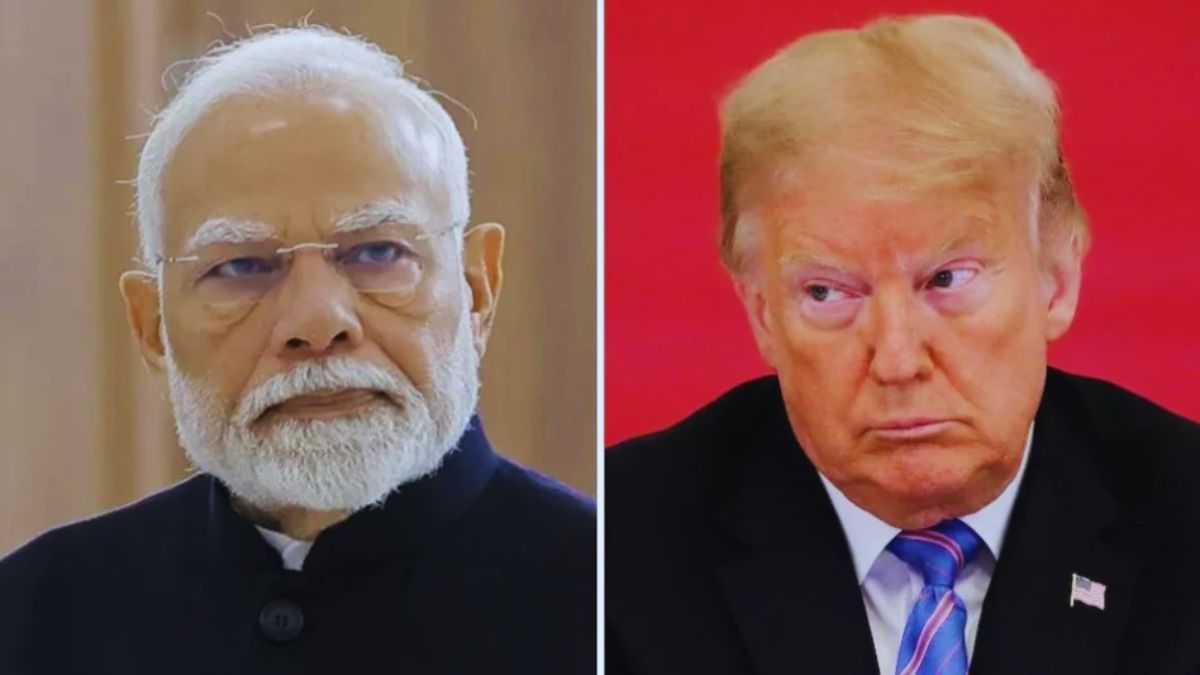
The ongoing tariff dispute between the United States and India has escalated sharply after the Donald Trump administration unveiled plans to impose a 50% tariff on Indian imports, a move widely seen as an attempt to pressure New Delhi over its continued purchase of Russian crude oil amid the Russia-Ukraine conflict.
According to a draft notice released by the US Department of Homeland Security on August 26, the increased tariffs would take effect from August 27, 2025, targeting Indian goods “entered for consumption or withdrawn from warehouse for consumption” from that date onward. This development marks a significant shift in US trade policy, doubling the tariff rate from the existing 25% to 50%, and is being justified by Washington as part of its strategy to force Russian President Vladimir Putin into peace negotiations with Ukrainian President Volodymyr Zelensky, even though past efforts to bring the two leaders together have failed.
US President Donald Trump has defended the aggressive tariff plan, arguing that tariffs serve not only as an economic weapon but also as a tool to “stop wars,” citing examples from his previous tenure where he claimed trade restrictions helped avert military conflicts. He also expanded his warning to European nations and other countries implementing digital service taxes and regulatory barriers on US tech giants, threatening “substantial additional tariffs” and even curbs on US chip and technology exports if such policies were not withdrawn.
Trump emphasized on Truth Social that American companies would no longer be treated as the “piggy bank” or “doormat” of the world. Vice President JD Vance reinforced the administration’s stance, stating in a televised interview that India’s inclusion in the secondary sanction’s framework was part of Washington’s broader strategy to weaken Moscow’s oil-dependent economy and reduce global reliance on Russian energy.
However, the US move has triggered a strong response from Indian Prime Minister Narendra Modi, who while addressing a gathering in Ahmedabad after launching new development projects, declared that India would not compromise on its national economic interests, farmers’ welfare, small-scale industries, and swadeshi producers, even in the face of mounting global pressure. Modi urged Indian citizens and businesses to support domestic manufacturing and self-reliance, reiterating his government’s commitment to safeguarding rural and small-scale sectors from external economic shocks.
Stressing resilience, he remarked that while international pressure may intensify, India would bear it all in the interest of its people. The dispute highlights the growing friction between Washington and New Delhi as the US intensifies its dual-front economic offensive—tightening sanctions on Russia while simultaneously targeting trade practices and policies of allied nations it views as unfair to American businesses. The planned tariff escalation comes at a time when US-India trade relations were showing signs of growth, but the sharp increase in duties threatens to disrupt key sectors such as textiles, agriculture, pharmaceuticals, and small-scale exports.
Analysts note that while the US aims to leverage economic power to reshape global trade and geopolitical alignments, India’s firm stance under Modi signals that New Delhi is prepared to withstand external pressure in order to maintain strategic autonomy, safeguard domestic producers, and pursue independent foreign policy decisions in the complex landscape of global trade wars, sanctions, and energy security.






Be First to Comment