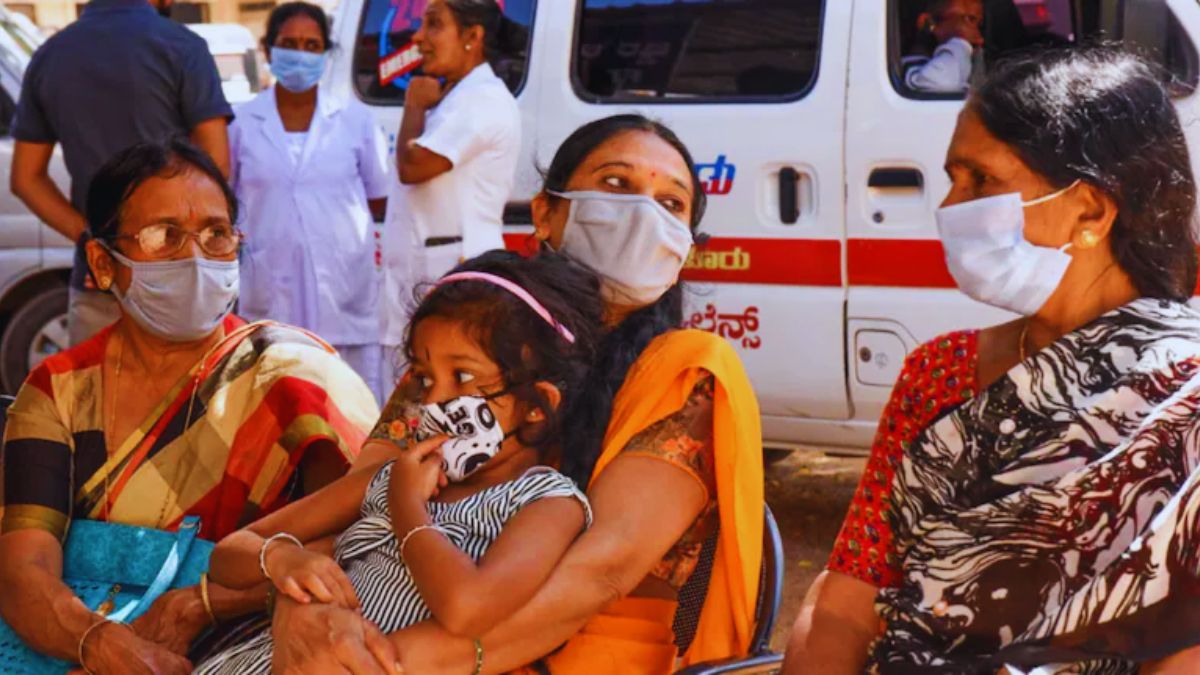
With Kerala currently as the worst-hit state, tops the figures with over 1,435 active cases, followed by Maharashtra (506), Delhi (483), Gujarat (338) and West Bengal (331). Health ministry advises to follow safety norms and maintain calmness.
As much as one dreads to admit, covid cases in India have been on a rampant rise in the last week, with the dashboard figures only going higher. The current count has gone past the 3950-figure, with 203 new infections and four deaths reported in the past 24 hours, according to the Ministry of Health and Welfare’s latest update received on June 2, Monday.
Kerala, currently the worst-hit state, accounts for almost 1435 cases, followed by Maharashtra at 506, Delhi at 483, Gujarat at 338 and West Bengal at 331. Other states with rising numbers include Karnataka (253), Tamil Nadu (189), Uttar Pradesh (157), and Rajasthan (69).
Covid-19 Cases Increase
The spike in the number of active cases has been rather sharp. From around 257 active cases on May 22, the count jumped to 1010 by May 26, and subsequently tripled to 3961 by Monday (June 2).
The four deaths reported included one each from the states of Delhi, Tamil Nadu, Kerala, and Maharashtra.
- Odisha’s Director of Public Health, Mr. Nilakantha Mishra, has notified on the active Covid-19 cases in the state getting increased to 12. All patients reportedly have mild symptoms and are in isolation.
- Gurugram has also witnessed a spike in Covid-19 cases after a hiatus of over two years. The medical officers have urged people not to ignore any flu-like symptoms and get a test conducted at the nearest health centre.
- Punjab currently has six active Covid-19 cases, five of which are from Ludhiana. One death has been reported.
Of the new cases, West Bengal reported 44 infections, followed by Delhi with 47, Kerala with 35, Maharashtra with 21, and Gujarat with 18 cases, as per the data showed made available by the union health ministry. As per the latest update, almost 370 people have been discharged from hospitals over the past 24 hours post recovery and complete negation of the symptoms.

Health Officials have urged the public to not create panic, stating that most cases remain mild. The four subvariants identified are LF.7, XFG, JN.1, and NB.1.8.1, with the first three being more prevalent. As of May 2025, the World Health Organization (WHO) has listed the LF.7 and NB.1.8 Covid subvariants as ‘Variants Under Monitoring’, one level below being designated as Variants of Concern or Interest.
States Increase Preparedness
To counter this surge, several states and UTs across the country have come out with advisories asking both government and private hospitals to ensure preparedness in terms of available beds, oxygen cylinders, antibiotics, and other required drugs. According to the Indian Council of Medical Research (ICMR) findings, the collected samples from the western and southern regions indicate the rise is driven by subvariants of Omicron, which so far appear to be mild in nature.
Union Minister of State for Health & AYUSH, Prataprao Jadhav, in his press meet has assured India’s citizens that the central government is fully equipped to handle any emerging covid-19 situation. But all must abide by the regular hygiene norms in interest of their own health longevity.
Citizens Must Follow Safety Norms
Whilst the situation is being monitored and examined on a continuous basis and the CMs of different states have also been advocating the need to maintain safety and hygiene, staying alert and vigilant with all precautionary measures is the general advice mandated by the health authorities.
The efficacy of the vaccines on the new identified variants have been under close monitoring to check for gaps/slags. The current symptoms of Covid-19 in India are found to be mild and subtle.
General Safety Tips
Prevention is better than cure. Following simple effective strategies can safeguard from the virus and boost the immunity higher.
- Wear a mask (preferably N95 or KN95) in crowded or enclosed spaces.
- Maintain appropriate social distance, especially in public areas and transport modes.
- Experts have advised to take a rapid antigen or RT-PCR Test if any of the symptoms persist beyond 3-4 days.
- Avoid crowded places as an extra measure of caution, to maintain a stable health state, especially for people with low immunity bandwidth, infants, senior citizens with health ailments and pregnant women.
- Consume immunity-building food items and herbal beverages to produce more anti-bodies.
Situation Ahead
With the number of cases crossing the 3900-mark, the situation is being controlled and so far, no major concern has been reported. However, every individual must adhere to the health protocols for own benefit and in case any of the symptoms are felt, consult a doctor to ensure timely recovery.



Be First to Comment