Ever since Donald Trump assumed office and took charge as the 47th President of the United States, he has been relentless and fiercely aggressive in his approach to introduce an array of transformations and turnaround the existing policies through his radical ideas.
From proposing a ban on admitting forging students at Harvard University, to deliberate nuclear deal talks with Iran, from holding mediation talks with Ukraine and Russia to signing multiple trade deals with European and Asian countries, his diverse range of actions to put ‘America first’ has been a constant strategic placement.
Amongst the multiple ideations, one such bold step undertaken by Trump administration has been to rapidly deport the whole bunch of migrants to their native countries other than the United States and not give rise to any claims of being persecuted, tortured or killed there. In order to fulfil this requirement, it has asked for intervention from the U.S. Supreme Court and pass the necessary orders for it.
The administration said that the third-country process is critical to removing migrants who commit crimes and filter the land by transferring people to their countries. The Justice Department has requested that the justices lift Boston-based US District Judge Brian Murphy’s injunction, that states migrants also have an equal chance to seek legal relief from deportation before they are sent to the so-called ‘third-world countries.’
While the litigation process is currently underway, the Trump led administration has detailed in its filing that the third-country filtration process is critical to removing migrants who commit crimes because their countries of origin are often unwilling to take them back. “As a result, criminal aliens are often allowed to stay in the United States for years on end, victimizing law-abiding Americans in the meantime,” it told the justices.
The filing represented the administration’s latest trip to the nation’s highest judicial body, as it seeks the approval to have a free hand in pursuing the crackdown on immigration and contest the lower court decisions that have served as an impediment in the Republican president’s policies so far. The administration believes Murphy’s injunction, which refers to an official court order, is preventing potentially hundreds of pending deportations.
The injunction “disrupts sensitive diplomatic, foreign policy and national security efforts,” it said in its latest court filing. The Department of Homeland Security moved in February to determine if people granted protections against being removed to their home countries could be detained again and sent to a third country. Subsequently, the immigrant rights’ groups proceeded with a class action lawsuit on behalf of a group of migrants seeking to prevent rapid deportation to newly identified third countries without notice and a chance to bring front the potential harm they could face.
In March, Donald Trump’s administration issued guidance that if a third country has given credible diplomatic assurance that it will not persecute or torture migrants, individuals may be deported there without the need for further procedures. Without such assurance, if the migrant expresses remote amount of fear of removal for his or her country, US authorities would assess the likelihood of persecution or torture and refer the case to an immigration court.
Due process protections generally require the government to provide notice and an opportunity for a hearing before taking certain adverse actions. As with previous cases challenging Trump’s far-reaching executive actions and initiatives, the case raised further questions over whether the administration is defying court orders. Judge Murphy on May 21 alleged that Trump’s administration had violated his court order by attempting to deport migrants to South Sudan.
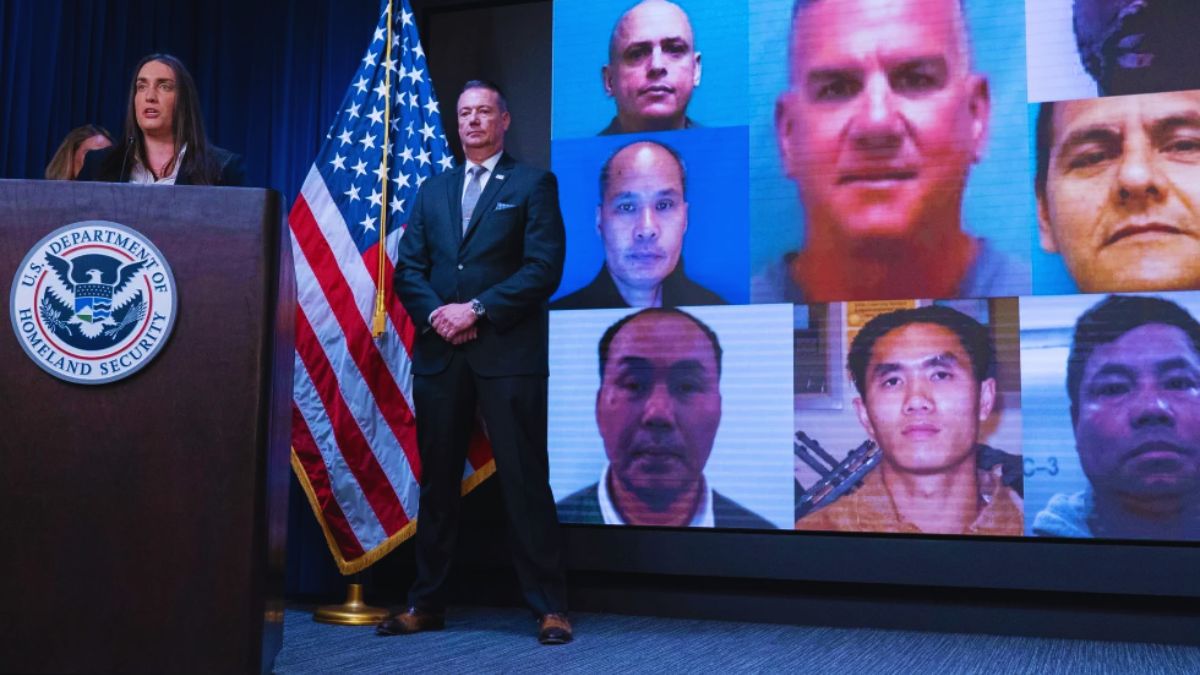
The injunction requires due process before deporting migrants to third countries, including those “where the State Department has documented systemic human rights abuses and violence against foreign nationals.” The migrants who are presently held at a military base in Djibouti, have committed heinous crimes on the US land, including murder, arson and armed robbery, the administration told the Supreme Court.
Murphy has also ordered those non-citizens be given at least 10 days to raise a claim that they fear for their safety. In another action, Murphy modified his injunction to protect against the possibility of the Department of Homeland Security (DHS) handing over the control of migrants to other agencies and execute the deportations as rapidly as possible.
- The US Defence Department had flown out 4 Venezuelans held at Guantanamo Bay in Cuba to El Salvador, following Murphy’s initial ruling.
- Earlier the US military was reportedly bound to deport a group of migrants for the first time to Libya, which was a clear violation of Justice Murphy’s ruling.
- The administration has repeatedly emphasized the criminal history of identified men in the U.S. and portrayed them as national security threats.
- As of the latest information available, Trump administration has been exploring other third countries for deportations apart from the North American region of Panama, El Salvador and Costa Rica.
The Trump administration has increasingly relied on third countries to take immigrants who cannot be sent to their home countries for various reasons. Some countries simply refuse to take back their citizens being deported while others take back some but not all of their citizens. And some cannot be sent to their home countries because of concerns they’ll be tortured or harmed.
Whether the temporary stay order by US Judge stays valid or gets challenged and removed by POTUS Donald Trump and his cabinet, the migrants who have caused trouble may soon be wiped out from the US land.

Helene Elliott is the Lead Science & Space Reporter at News Raise. She reports on aerospace missions, astrophysics discoveries, quantum research, and environmental technology.