Pakistan and Saudi Arabia have entered into a new phase of military cooperation by signing a landmark Strategic Mutual Defense Agreement, declaring that an attack on one would be treated as an attack on both. The pact, sealed on September 17, reflects shifting alliances in the region just days after an Israeli air strike targeted Hamas leaders in Qatar’s capital, Doha.
Details of the Defense Agreement
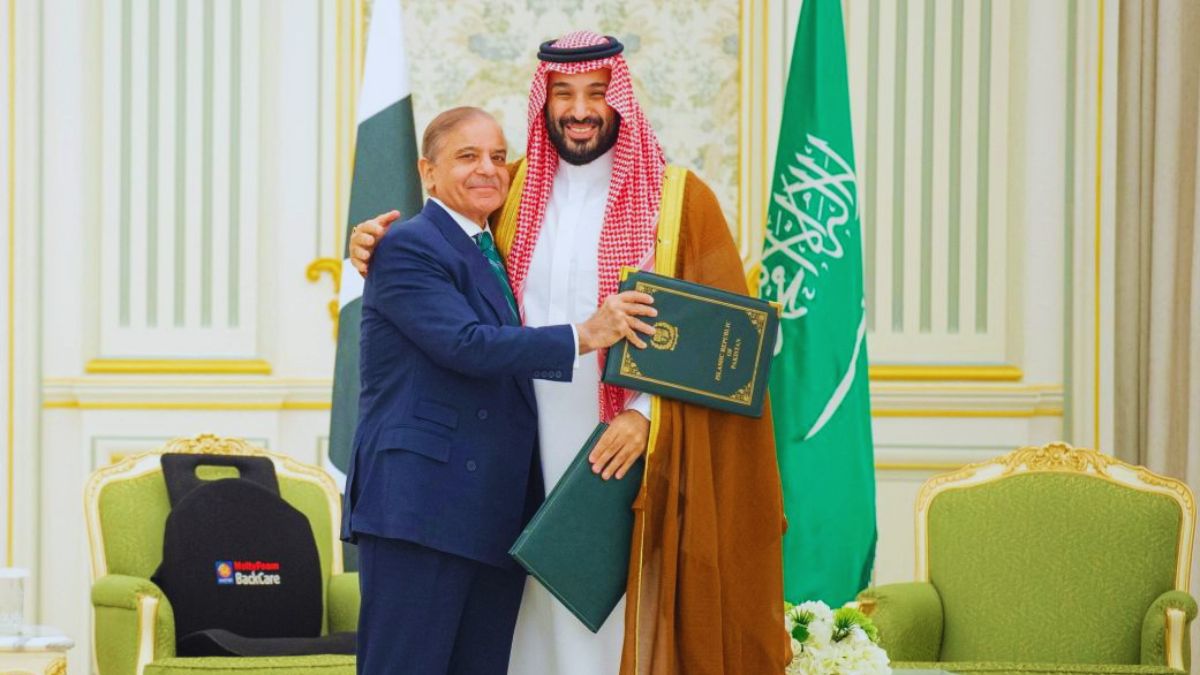
The agreement was signed in Riyadh between Saudi Crown Prince Mohammed bin Salman and Pakistan’s Prime Minister Shehbaz Sharif, who arrived in the kingdom on the crown prince’s invitation. According to a statement carried by the Saudi Press Agency, the pact seeks to expand defence cooperation and “strengthen joint deterrence against any aggression.”
The clause that any aggression against either country would be considered an attack on both underscores the seriousness of the security commitment. Analysts say this aligns Pakistan more deeply with Saudi Arabia at a time when Gulf states are recalibrating their security arrangements.
Regional Context and Israel’s Doha Strike
The signing comes in the aftermath of an unprecedented Israeli strike in Doha, Qatar, which targeted Hamas political leaders. The air strike killed six people, including a Qatari security officer. Qatar condemned the assault as an act of “state terrorism,” while Israel’s Prime Minister Benjamin Netanyahu’s office insisted it was a “wholly independent Israeli operation” against Hamas leadership.
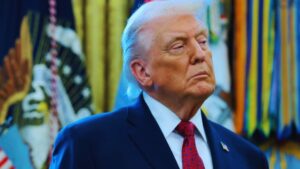
The United States, traditionally a key security guarantor in the Gulf, criticized the unilateral nature of the Israeli operation. President Donald Trump said he had not been informed in advance by Netanyahu about the strike. Washington described the move as not advancing either American or Israeli strategic interests.
Pakistan–India Conflict in the Backdrop
This pact also follows months of heightened military tensions between Pakistan and India. Earlier this year, India launched Operation Sindoor in retaliation to the April 22 terror attack in Jammu and Kashmir’s Pahalgam region that killed 26 people. Militants linked to Pakistan were blamed for the assault, sparking a four-day conflict. The fighting ended only after Pakistan’s Director General of Military Operations requested a cessation of hostilities with India.
Shifting Alliances in the Gulf
Meanwhile, Qatar is also moving closer to the United States. US Secretary of State Marco Rubio revealed that Doha and Washington are close to finalizing an enhanced defence cooperation agreement. This suggests that Gulf security frameworks are undergoing rapid transformation, with parallel alliances emerging.
A New Chapter in Security Cooperation
For Pakistan and Saudi Arabia, the Strategic Mutual Defense Agreement signals a stronger alignment at a time of growing instability in the Middle East and South Asia. With Israel intensifying its campaign against Hamas, India–Pakistan hostilities simmering, and Gulf states reassessing reliance on Washington, the pact marks a significant step in reshaping regional security architecture.

Helene Elliott is the Lead Science & Space Reporter at News Raise. She reports on aerospace missions, astrophysics discoveries, quantum research, and environmental technology.