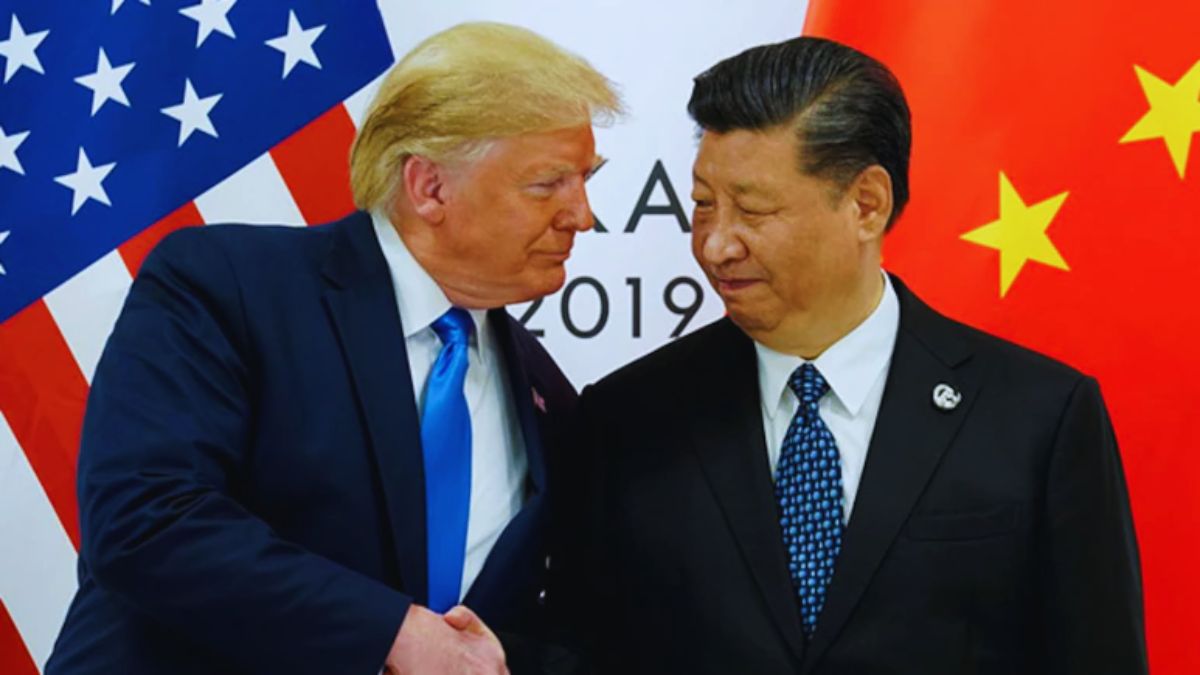
The stage is set for a critical conversation between US President Donald Trump and Chinese President Xi Jinping this week, their first direct exchange since June. With tensions simmering around trade, technology, and geopolitics, the two leaders are expected to address contentious issues ranging from TikTok and Boeing aircraft to rare earth magnets and Taiwan.
This call comes ahead of a possible in-person summit at the Asia-Pacific Economic Cooperation (APEC) meeting in South Korea in late October. The discussion could pave the way for breakthroughs after months of tit-for-tat measures involving tariffs, export controls, and investment restrictions.
Ahead of the leaders’ exchange, senior officials have been working behind the scenes. Treasury Secretary Scott Bessent and US Trade Representative Jamieson Greer met Chinese counterparts in Madrid to discuss a framework addressing the latest sell-or-be-banned deadline for TikTok’s US operations. Meanwhile, Defense Secretary Pete Hegseth and Secretary of State Marco Rubio held talks with their Chinese peers last week, underscoring the breadth of issues at stake.
Where Do US-China Relations Stand in Trump’s Second Term?
Trump has maintained a complex relationship with Xi, often praising him as a “strong leader,” even while pushing aggressive trade measures. In his second term, Trump has adopted policies resembling Xi’s state-driven economic model, floating government stakes in major US firms like Nvidia and Intel.
He has also taken a nuanced approach on sensitive issues: holding off on banning TikTok, speaking positively about welcoming Chinese students to American universities, and refraining from imposing secondary sanctions on China for its Russian oil purchases—while penalizing India for similar activity.
Still, Trump has applied sweeping tariffs under his “liberation” campaign, aimed at correcting trade imbalances not only with China but also with other US partners. At their peak, tariffs on Chinese goods climbed as high as 145%. Although the two sides have suspended the harshest measures, deadlines for fresh duties loom in mid-November. One notable penalty remains: a 20% tariff imposed due to what Trump views as insufficient Chinese action against fentanyl trafficking.
Key Priorities for a Trade Deal
Both nations are entering talks with firm priorities. Trump wants to secure the supply of rare earth magnets—vital for American manufacturing—from China, which has previously leveraged this as a bargaining tool. Semiconductors are another flashpoint: Washington recently blacklisted 32 Chinese firms, prompting Beijing to launch investigations into US chipmakers.
China, meanwhile, seeks relief from elevated US tariffs that continue to weigh heavily on its slowing economy. Officials in Beijing are pushing for a rollback of duties as part of any agreement, while also navigating domestic pressures to maintain growth.
What Lies Ahead
The upcoming Trump-Xi dialogue marks a pivotal moment for US-China relations. If progress is made, their planned APEC summit could set the tone for trade and technology cooperation heading into 2026. However, with strategic industries, tariffs, and geopolitical rivalries on the line, any deal will require significant compromises from both sides.

Helene Elliott is the Lead Science & Space Reporter at News Raise. She reports on aerospace missions, astrophysics discoveries, quantum research, and environmental technology.