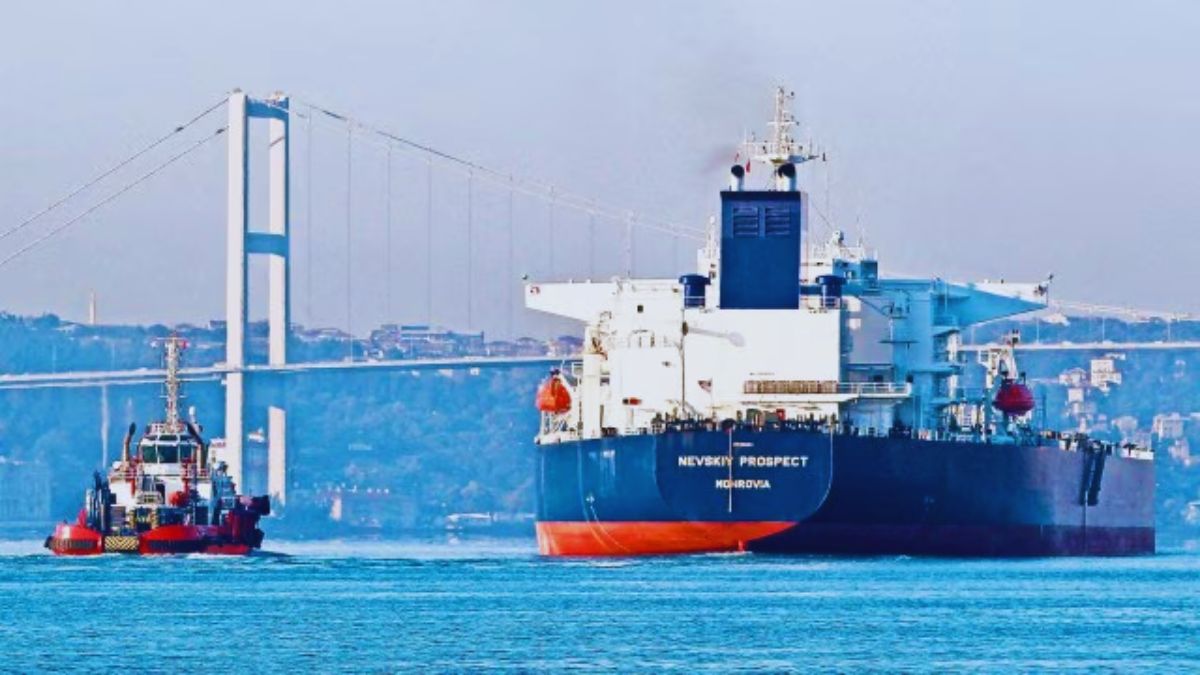
India’s crude oil imports from Russia have seen a sharp decline after the United States imposed sanctions on two of Moscow’s biggest energy companies—Rosneft and Lukoil on October 22.
The sanctions, announced by the Trump administration as part of efforts to curb Russia’s revenues from oil exports amidst the ongoing Russia-Ukraine conflict, have made Indian refiners cautious about future purchases.
According to provisional vessel-tracking data from global commodity analytics firm Kpler, Russia’s crude oil exports to India averaged 1.19 million barrels per day (bpd) in the week ending October 27, down significantly from 1.95 million bpd recorded in the previous two weeks. This marks one of the steepest week-on-week declines in Russian oil flows to India since 2023.
The drop is largely attributed to reduced shipments from Rosneft and Lukoil, which together account for more than half of Russia’s total crude output and previously supplied over two-thirds of India’s Russian oil imports. Data shows that Rosneft’s exports to India fell to 0.81 million bpd in the week ending October 27, compared with 1.41 million bpd the week before. Meanwhile, Lukoil recorded no shipments during the same period, down from 0.24 million bpd earlier.
Industry experts, however, caution that it may take another month to get a clearer picture of the long-term impact of these sanctions. Many believe refiners are taking a wait-and-watch approach ahead of November 21, when the sanctions officially take effect.
Impact on Indian Refiners
The sanctions are already influencing procurement strategies. Indian refiners such as HPCL-Mittal Energy (HMEL) have suspended Russian oil imports, while the country’s largest refiner, Indian Oil Corporation (IOC), has announced that it will comply with U.S. sanctions.
Analysts estimate that Russian crude flows to India will likely remain between 1.6 – 1.8 million bpd until the sanctions come into force, before tapering off as refiners avoid potential exposure to the U.S. Office of Foreign Assets Control (OFAC). Even so, complete disengagement from Russian crude remains unlikely in the near term.
What Lies Ahead
Experts suggest that Indian refiners may continue sourcing Russian oil through unsanctioned intermediaries or alternative trading channels, albeit with greater caution and more complex financial and logistical arrangements. Imports during December and January are expected to dip further as refiners adjust their supply chains and assess the evolving sanctions landscape.
Despite short-term disruptions, energy analysts believe that Russian oil will continue to play a crucial role in India’s energy mix, given its competitive pricing and favorable refining margins. Unless Indian refiners face direct sanctions or the Government of India imposes formal restrictions—both considered unlikely—Russian barrels will keep flowing, albeit at a slower and more cautious pace.
For now, India’s energy security remains intact, but the coming months will be critical in determining how refiners balance affordability, compliance, and geopolitical pressure in a rapidly shifting oil market.

Helene Elliott is the Lead Science & Space Reporter at News Raise. She reports on aerospace missions, astrophysics discoveries, quantum research, and environmental technology.