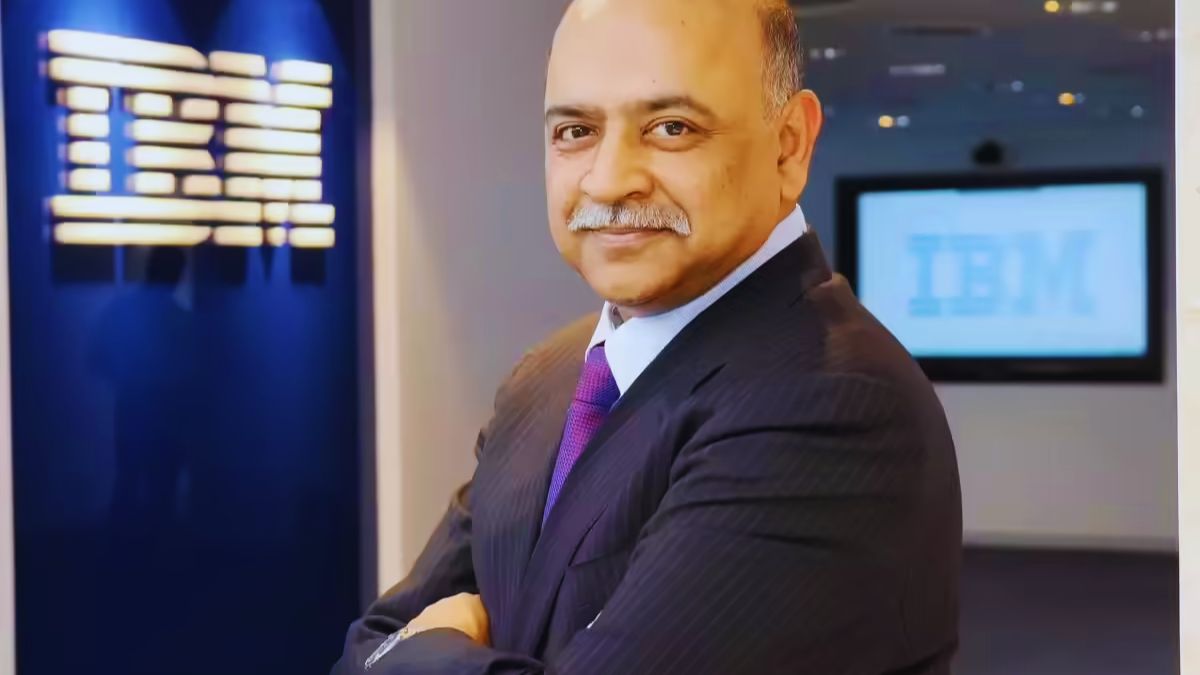
As major tech giants like Google and Amazon boast about record-breaking investments in artificial intelligence infrastructure, IBM CEO Arvind Krishna is raising serious doubts about whether the industry’s spending spree will ever pay off. Speaking on the Decoder podcast, Krishna warned that the current numbers simply don’t add up and that the enormous energy demands and rapid pace of chip innovation may make these bets unsustainable.
According to Krishna, even a basic calculation shows that today’s data-center expansion plans are economically unrealistic. His assessment comes as companies race to secure more compute power to train and deploy increasingly advanced AI models, a trend that has driven global investments to unprecedented levels.
Data Center Power Demand Expected to Surge
This year, Goldman Sachs estimated that the world’s data centers currently consume around 55 gigawatts of power. Only 14% of that is tied to AI workloads, but demand is expected to skyrocket as companies integrate AI into everything from cloud services to enterprise productivity tools. By 2027, data centers could require 84 gigawatts, Goldman noted—a dramatic surge in only three years.
Yet Krishna argues that the cost of meeting this demand is staggering. Building a facility capable of using a single gigawatt of power now costs roughly $80 billion, he said. If a single tech company attempted to roll out 20 to 30 gigawatts of capacity, the bill could stretch to $1.5 trillion, roughly the size of Tesla’s market capitalization.
Expanding that figure across all the major hyperscalers – Google, Amazon, Microsoft, Meta, and others—Krishna estimates they could collectively push for as much as 100 gigawatts of new capacity. But that would require an eye-watering $8 trillion in capital spending.
“There’s No Way You’re Going to Get a Return on That”
Krishna didn’t mince words when describing the financial reality:
“There’s no way you’re going to get a return on that, because $8 trillion of capex means you need roughly $800 billion as profit just to pay for the interest,”. The IBM chief also emphasised that data-center hardware has a short lifespan. Rapid advances in AI chips and accelerators mean today’s state-of-the-art infrastructure becomes outdated fast.
AGI Race May Be Fueling an Unsustainable Spending Boom
Part of the motivation behind this massive capital push, Krishna added, is the competition to achieve AGI—artificial general intelligence capable of surpassing human abilities. While tech firms chase that milestone, Krishna believes we are nowhere close to reaching it using today’s large language model-driven trajectory.
He puts the probability of achieving true AGI with current technology at around 1%. Still, he stressed that modern AI delivers immense enterprise value, predicting ‘trillions of dollars in productivity’ unlocked for businesses – even if AGI remains far off.
Big Tech Continues to Ramp Up AI Investment
Despite his warnings, hyperscalers are accelerating their spending. AI infrastructure investment is expected to hit $380 billion this year alone. Google parent Alphabet recently increased its 2025 capital-spending forecast to $91–93 billion, up from $85 billion, citing rising infrastructure needs. Amazon also raised its annual capex estimate for the third quarter, projecting $125 billion, up from $118 billion.
For now, Big Tech remains committed to building ever larger AI engines—despite growing questions about whether the economics will hold.

Helene Elliott is the Lead Science & Space Reporter at News Raise. She reports on aerospace missions, astrophysics discoveries, quantum research, and environmental technology.