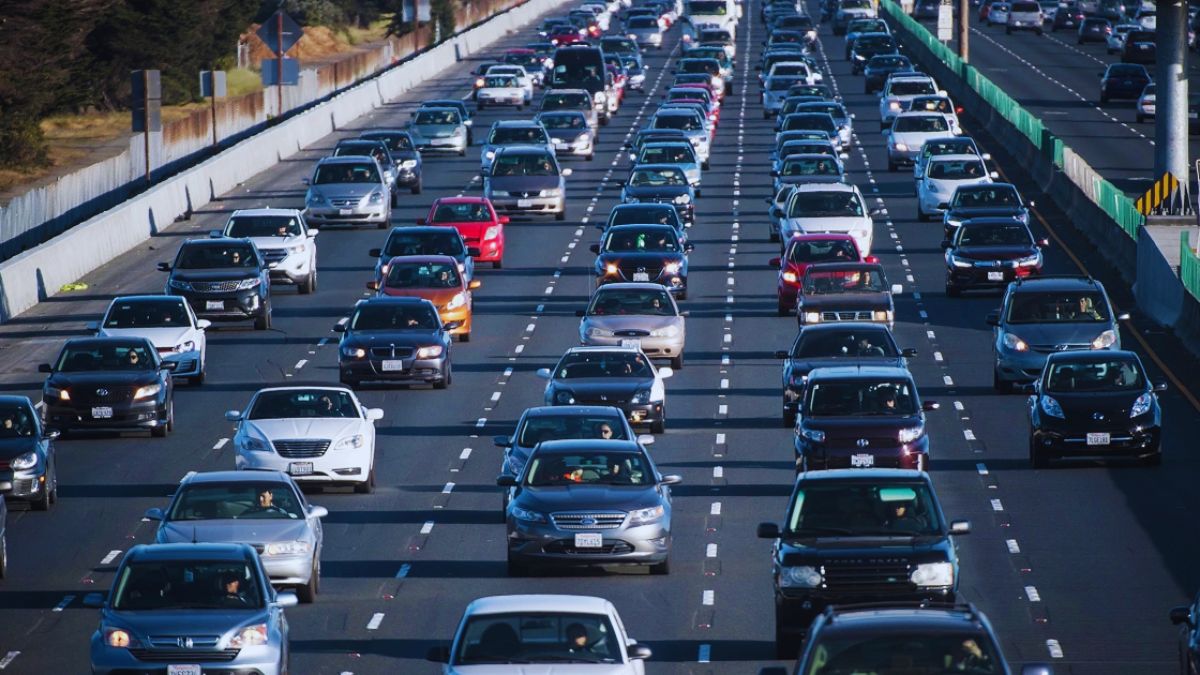
Former President Donald Trump has rolled back the fuel economy rules, earlier put in place by the previous Biden administration, claiming the standards created a de facto “EV mandate.” The move dramatically lowers the efficiency targets that automakers must meet over the next decade and aims to make it easier for manufacturers to continue producing gasoline-powered vehicles.
Under the new proposal, automakers will now be required to reach an average of 34.5 miles per gallon by 2031, a sharp drop from the 50.4 mpg standard finalized under President Biden. The announcement, delivered at an event attended by top automotive executives, marks one of Trump’s most sweeping reversals of Biden’s climate and clean-energy policies.
Trump Says Cheaper Cars Are the Goal
Trump argued that cutting the fuel economy target will help bring down car prices for American buyers, claiming that consumers could save “at least $1,000” per vehicle compared to what they might have paid under the previous rules.
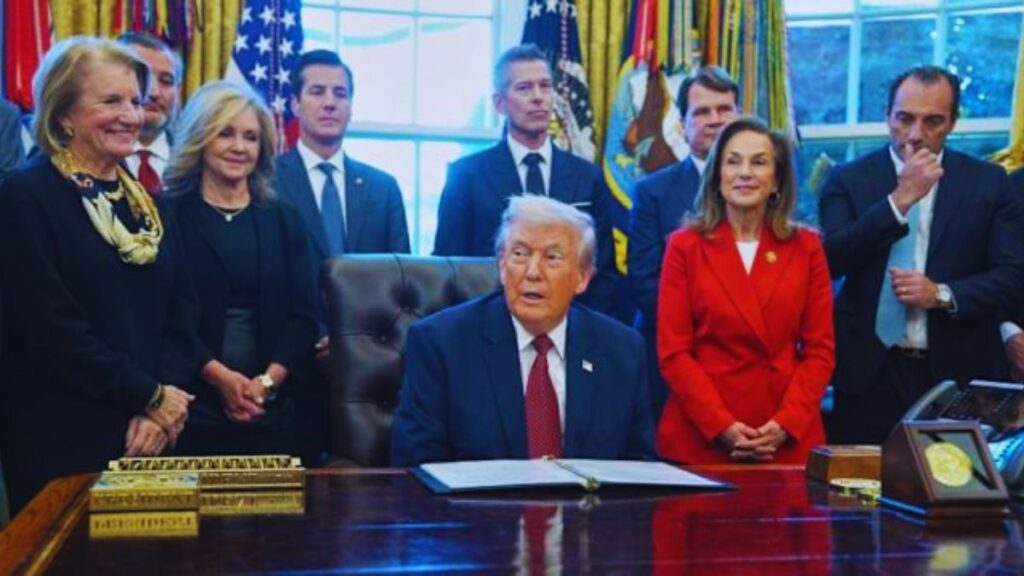
Executives from major automakers, including Ford CEO Jim Farley and Stellantis CEO Antonio Filosa, appeared alongside Trump and welcomed the move. “Today is a victory for common sense and affordability,” Farley said. “This decision allows us to put more investment into truly affordable cars that customers want.”
The rollback follows a ruling earlier this year from the Department of Transportation and Secretary Sean Duffy, who argued that the Biden administration exceeded its authority by assuming rapid EV adoption when setting corporate average fuel economy (CAFE) targets.
 End of Fuel Economy Penalties and Credit Trading
Trump also highlighted legislation he signed earlier this year that effectively ended fuel economy penalties for automakers. The National Highway Traffic Safety Administration (NHTSA) stated that companies would face no fines dating back to the 2022 model year—undoing a key revenue stream for EV-focused companies like Tesla, which had earned billions selling emissions credits to other manufacturers.
Under the new proposal, NHTSA also plans to end credit trading among automakers by 2028, arguing that it unfairly benefits companies that exclusively build electric vehicles. Additional credits for certain fuel-saving technologies would also be eliminated.
The Alliance for Automotive Innovation, a major industry trade group, responded cautiously. Its president, John Bozzella, said the industry is reviewing the announcement but welcomed the effort to craft new standards. As per popular opinion, the market realities state that EV sales have slowed and make Biden’s rules ‘extremely challenging’ to meet.
Environmental Advocates Warn of Higher Costs and Emissions
Environmental groups condemned the rollback, arguing that weaker standards will ultimately cost Americans more money and damage the country’s climate progress. According to Public Citizen, the original Biden-era rules would have saved consumers $23 billion in fuel costs and reduced national fuel consumption by 70 billion gallons.
The policy advocate for zero-emission vehicles, Will Anderson has noted that two-thirds of consumers say fuel efficiency is important when choosing a car. Anderson accused the administration of directing benefits toward oil and gas allies at the expense of the public.
Higher Fuel Use Expected Under New Standards
NHTSA’s own projections show that the reduced standards would increase fuel consumption by 100 billion gallons through 2050 and add up to $185 billion in total fuel costs for consumers. Carbon dioxide emissions would rise by roughly 5% over the same period. Despite these warnings, Trump defended the rollback as a move that aligns federal regulations with what he believes Americans want: more affordable gasoline cars.

Helene Elliott is the Lead Science & Space Reporter at News Raise. She reports on aerospace missions, astrophysics discoveries, quantum research, and environmental technology.