Ford Shifts Strategy Toward Extended-Range EVs, Takes $19.5 Billion Charge
Ford Motor Company has announced a major overhaul of its electric vehicle strategy, pivoting away from an aggressive push toward fully electric vehicles in favor of extended-range electric vehicles (EREVs), hybrids, and profitable gas-powered trucks. The strategic reset will result in $19.5 billion in charges, reflecting canceled products, asset impairments, and large-scale restructuring across manufacturing and battery operations.
Ford CEO Jim Farley said the move reflects changing market realities and a renewed focus on capital efficiency and higher-return segments.
Why Ford Is Moving Away from Full EVs
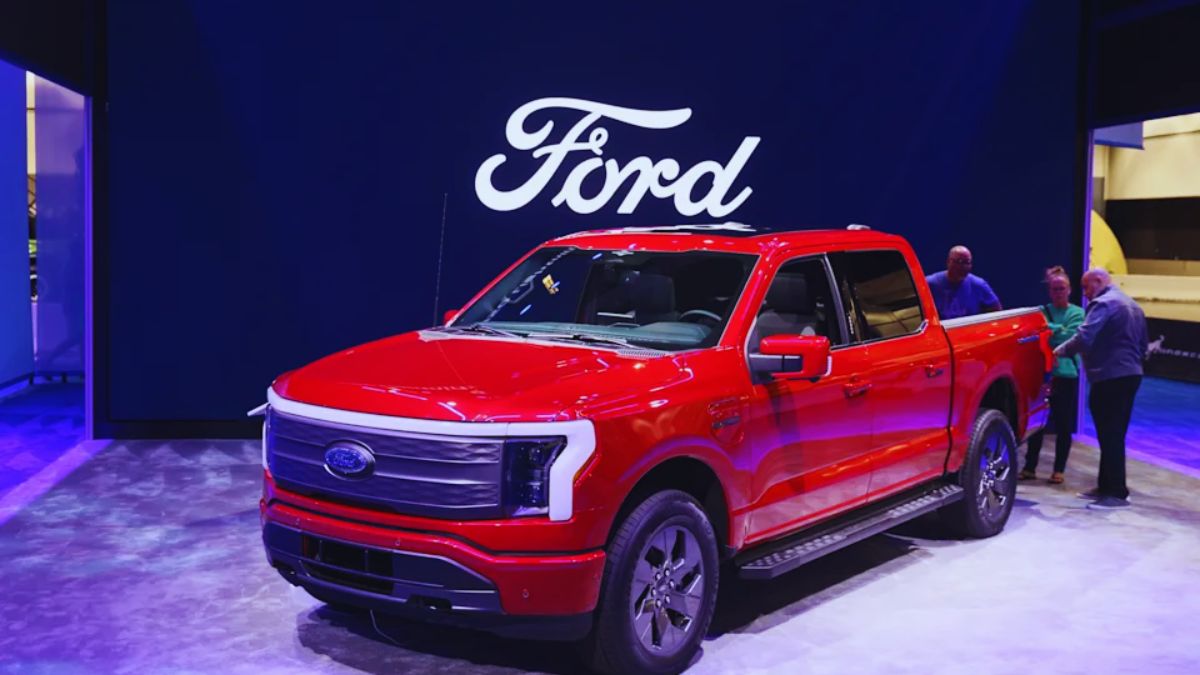
According to Farley, Ford is reallocating capital toward areas that deliver stronger margins and consistent demand. These include Ford Pro’s commercial vehicle business, its core truck and van lineup, hybrid technology, and a newly launched battery energy storage business. As part of the shift, Ford has ended production of the current-generation F-150 Lightning, redeploying employees to support increased output of gas and hybrid F-150 trucks at the Dearborn Truck Plant.
What EREVs Mean for Ford’s Future
Extended-range electric vehicles function primarily as EVs but include an onboard gasoline engine that acts as a generator to recharge the battery when needed. This approach helps reduce range anxiety while lowering dependence on charging infrastructure – an issue that has slowed EV adoption in North America.
Ford confirmed that the next-generation F-150 Lightning will move to an EREV architecture, assembled at the Rouge Electric Vehicle Center in Michigan.
New Universal EV Platform and Vehicle Plans
Ford will now concentrate North American EV development around its Universal EV Platform, a flexible, lower-cost architecture designed for smaller and more efficient electric vehicles.
- The first model based on this platform will be a fully connected midsize pickup truck, scheduled for production at Ford’s Louisville Assembly Plant beginning in 2027.
- This shift reflects Ford’s effort to broaden its customer base rather than focusing on higher-priced EVs with limited demand.
Manufacturing Realignment Across the US
Several manufacturing facilities will be repurposed as part of Ford’s restructuring:
- The Tennessee Electric Vehicle Center will become the Tennessee Truck Plant, producing new gas-powered truck models starting in 2029.
- Ford’s Ohio Assembly Plant will serve as a central hub for Ford Pro, assembling a new gas and hybrid commercial van and Super Duty chassis cabs beginning in 2029.
- Workforce adjustments were also influenced by disruptions at the Novelis aluminum plant, which impacted gas-powered F-150 production.
Ford’s Battery Energy Storage Business
Rather than leaving EV battery capacity idle, Ford will launch a battery energy storage system business, using existing battery plants in Kentucky and Michigan. Lisa Drake, Ford’s vice president of technology platforms, said the move targets grid-scale utilities, data centers, and commercial customers, with potential residential applications using smaller battery systems.
Ford recently restructured its battery joint venture, assuming full ownership of two Kentucky plants while SK On took full control of the Tennessee facility.
Financial Impact of the Strategic Reset
Ford expects to record $19.5 billion in special charges, with $12.5 billion recognized in the fourth quarter and the remaining $7 billion spread across 2026 and 2027. These include:
- $5.5 billion in cash charges tied to cancelled vehicles and related costs
- $8 billion in asset impairments, primarily EV-related
- $6 billion in restructuring costs, including battery plant ownership changes
Despite the charges, Ford raised its 2025 adjusted EBIT guidance to approximately $7 billion, citing cost improvements and business resilience. The company also reaffirmed its adjusted free cash flow outlook at the upper end of its $2 billion to $3 billion range. While the company declined to break out the exact mix, the message is clear – flexibility, profitability, and customer demand will define Ford’s automobile path moving forward.

Helene Elliott is the Lead Science & Space Reporter at News Raise. She reports on aerospace missions, astrophysics discoveries, quantum research, and environmental technology.