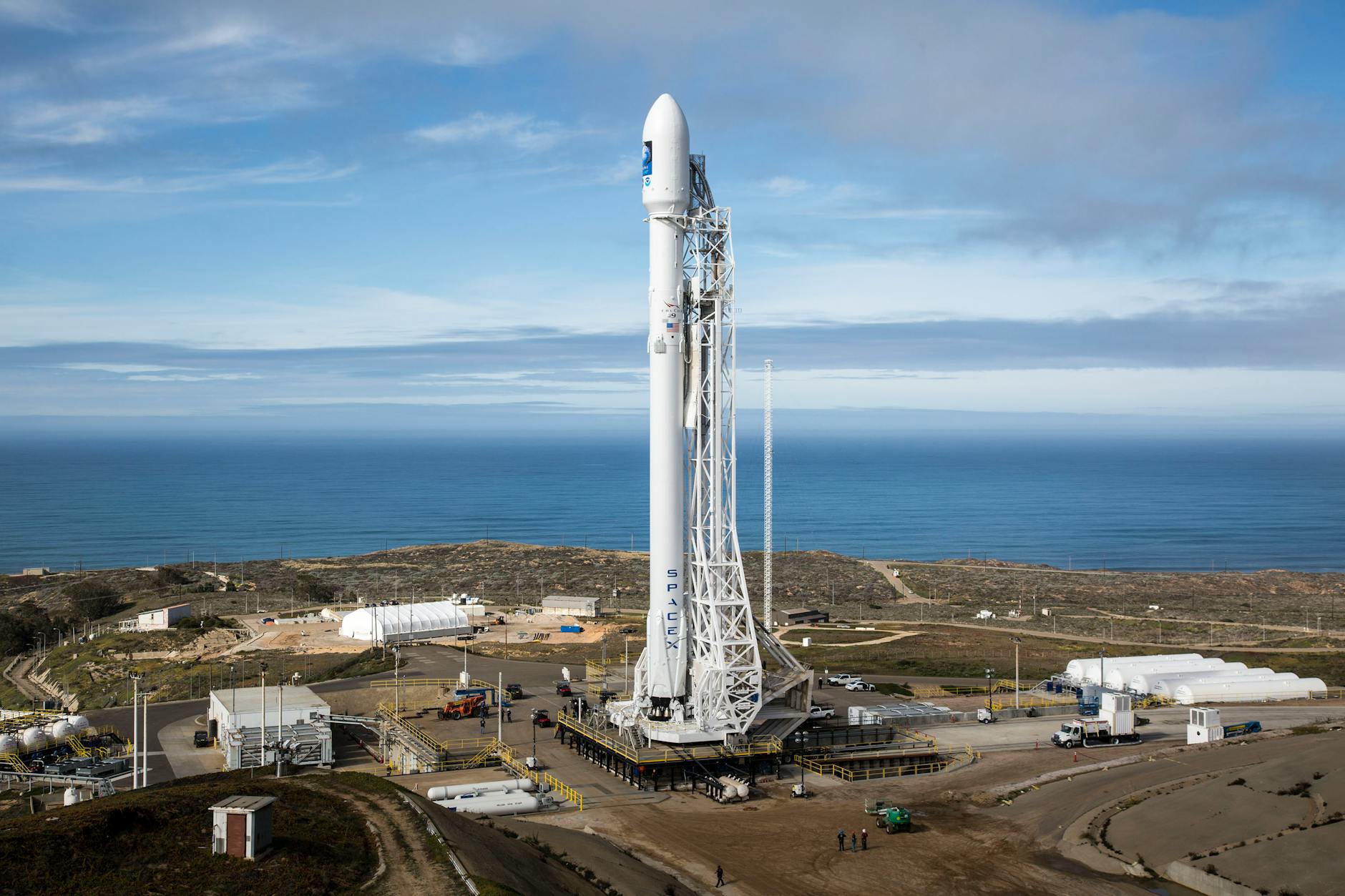
SpaceX has achieved a significant milestone in spaceflight, successfully launching and landing a Falcon 9 rocket booster for the 35th time. This accomplishment sets a new record for booster reusability, underscoring the company’s commitment to reducing the cost of space access through rapid reuse of its orbital-class rockets.
The reusable first stage of the Falcon 9 rocket is a cornerstone of SpaceX’s operational strategy. Following each launch, the booster performs a series of maneuvers to return to Earth, typically landing vertically on a drone ship at sea or back on a landing pad at the launch site. This ability to recover and refurbish boosters allows SpaceX to deploy them on subsequent missions with significantly reduced turnaround times and lower manufacturing costs compared to expendable rockets.
Advancing Reusable Rocket Technology
This latest record-setting launch and landing demonstrates the increasing reliability and durability of the Falcon 9’s first stage. Over its operational history, SpaceX has refined the design and operational procedures for its boosters, enabling them to withstand multiple flights. The 35th flight of a single booster is a testament to the engineering and rigorous testing involved in developing robust reusable rocket technology.
The Falcon 9 rocket has been instrumental in supporting a wide range of missions, including the deployment of SpaceX’s Starlink satellite constellation, resupply missions to the International Space Station, and the launch of various commercial and government payloads. The ability to reuse boosters dramatically lowers the per-launch cost, making space access more frequent and affordable.
Impact on Space Exploration and Industry
The continuous success in booster reuse not only benefits SpaceX’s business model but also has broader implications for the space industry and scientific exploration. It enables more ambitious missions, such as large-scale satellite constellations and potentially future crewed missions to the Moon and Mars. The economic efficiencies gained from reusability can accelerate the pace of innovation and open up new possibilities for space-based commerce and research.
The company’s Starshield satellites, a more capable version of its Starlink satellites designed for government customers, have also been part of recent launch campaigns, showcasing the versatility of the Falcon 9. The ongoing cadence of launches, facilitated by reusable boosters, is critical for building out and maintaining these constellations.
SpaceX’s pioneering work in rocket reusability has pushed the boundaries of aerospace engineering. The ability to achieve such a high number of flights for a single booster is a critical step toward a future where space travel is more sustainable and accessible.

Steve Lopez is a Senior Editorial Columnist and Health & Public Policy reporter for News Raise. Steve focuses on healthcare advancements, medical technologies, and public health policies.