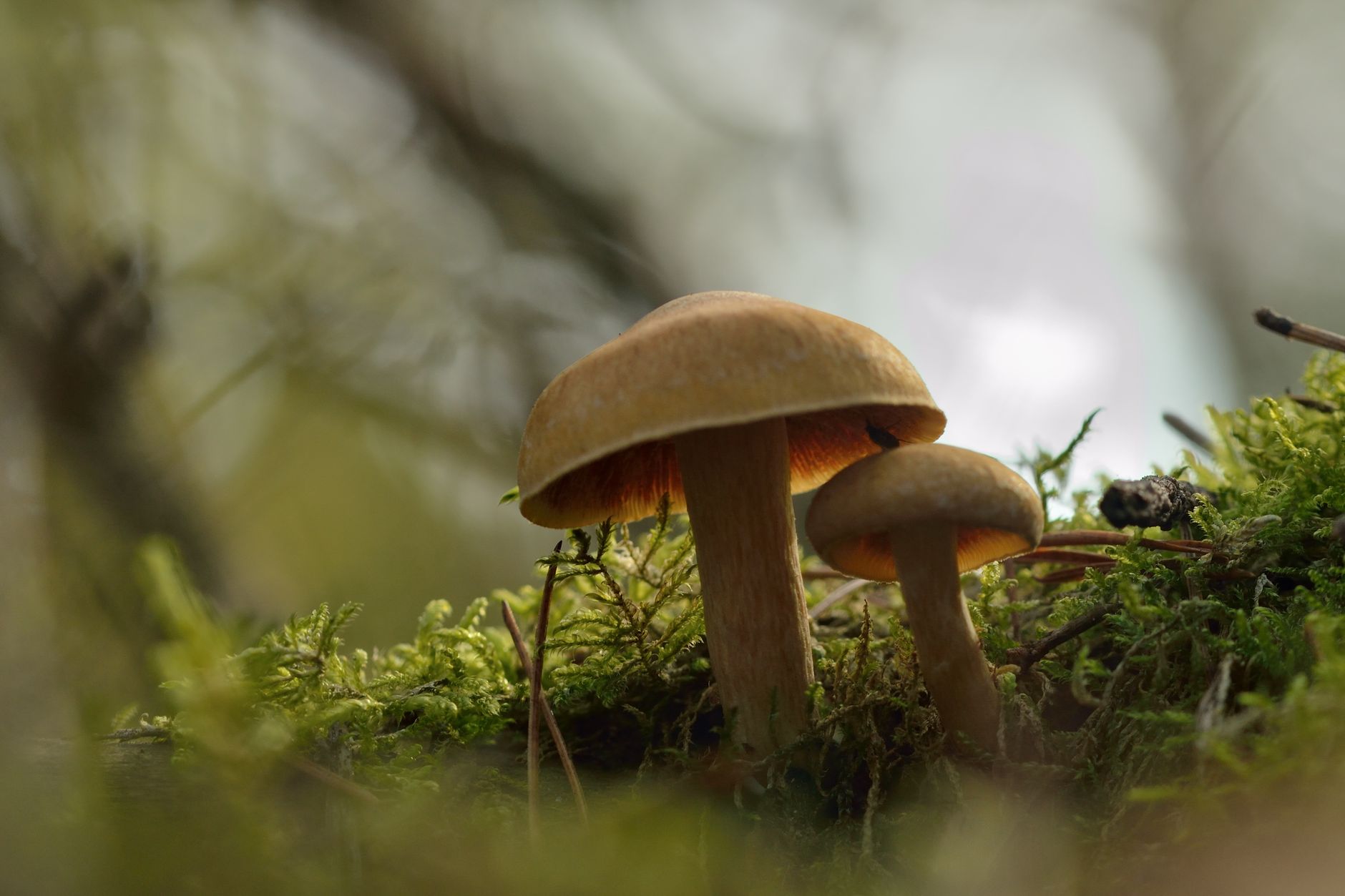
For the first time, scientists have created a global map detailing the distribution and density of underground fungal networks, revealing their immense scale and ecological importance. These networks, formed by arbuscular mycorrhizal fungi, are vital partners to most of the world’s land plants, facilitating the exchange of nutrients like nitrogen and phosphorus for carbon.
A Fungal ‘Forest’ Underfoot
The study, published in the journal Science, estimates that if all the thread-like structures (hyphae) making up these fungal networks were laid out in a straight line, they would stretch approximately 68 quadrillion miles (110 quadrillion kilometers). This distance is equivalent to about 10% of the width of the Milky Way galaxy. These networks act as conduits, channeling nutrients to plants and carbon back to the fungi.
“This is the most dense fungal forest on Earth, and they’re under wild grasslands,” said Justin Stewart, an evolutionary biologist at the Society for the Protection of Underground Networks and lead author of the study. “It’s changing the way that we’re discussing how life is distributed on Earth.”
The research indicates that these fungi play a significant role in the global carbon cycle, absorbing an estimated 4.3 billion tons (3.9 billion metric tons) of carbon dioxide equivalent annually, a figure comparable to about 11% of global fossil fuel emissions in 2021.
Grasslands and Agriculture’s Impact
The mapping effort revealed that the top 6 inches (15 centimeters) of soil in undisturbed grasslands, particularly high-altitude or flooded varieties like those found in the Everglades, contain approximately 40% of the global fungal biomass. These grasslands are highlighted as essential and reliable carbon sinks.
Conversely, the study found that agricultural practices are significantly impacting these networks. The topsoil in croplands showed roughly 50% lower fungal densities on average compared to other areas. While the specific agricultural methods causing the most damage were not identified, the authors suggest that the use of fungicides and fertilizers containing phosphorus and nitrogen could contribute to this reduction.
“I hope this builds into the conversation for their protection because wild grasslands are going away quite quickly,” Stewart urged. “These are areas that people are really ripping up because it’s much easier to rip up a grass than it is to rip up a tree.”
Mapping an Invisible World
To construct the first global map, Stewart and colleagues analyzed data from 16,669 soil cores collected across all continents and nine different biomes. They then utilized artificial intelligence to predict the distribution and density of arbuscular mycorrhizal fungi across the globe, factoring in climate, soil chemistry, vegetation, and hyphal density data.
The average hyphal density across land topsoil was found to be 237 feet per cubic inch (4.4 meters per cubic cm). Wild grasslands exhibited the highest density at 355 feet per cubic inch (6.6 meters per cubic cm), while cultivated trees had the lowest at 204 feet per cubic inch (3.8 meters per cubic cm).
Researchers are continuing to collect data, particularly from regions like tropical rainforests and deserts, to improve the map’s accuracy. Stewart anticipates an updated map within the next five years. Experts not involved in the study, such as Andrea Genre from the University of Turin, noted that such a map is crucial for developing strategies in biodiversity conservation, agriculture, and climate change mitigation. Edouard Evangelisti of Côte d’Azur University called the research a “major milestone” that makes the invisible visible and opens avenues for further investigation into the functional importance of these underground networks.

Helene Elliott is the Lead Science & Space Reporter at News Raise. She reports on aerospace missions, astrophysics discoveries, quantum research, and environmental technology.