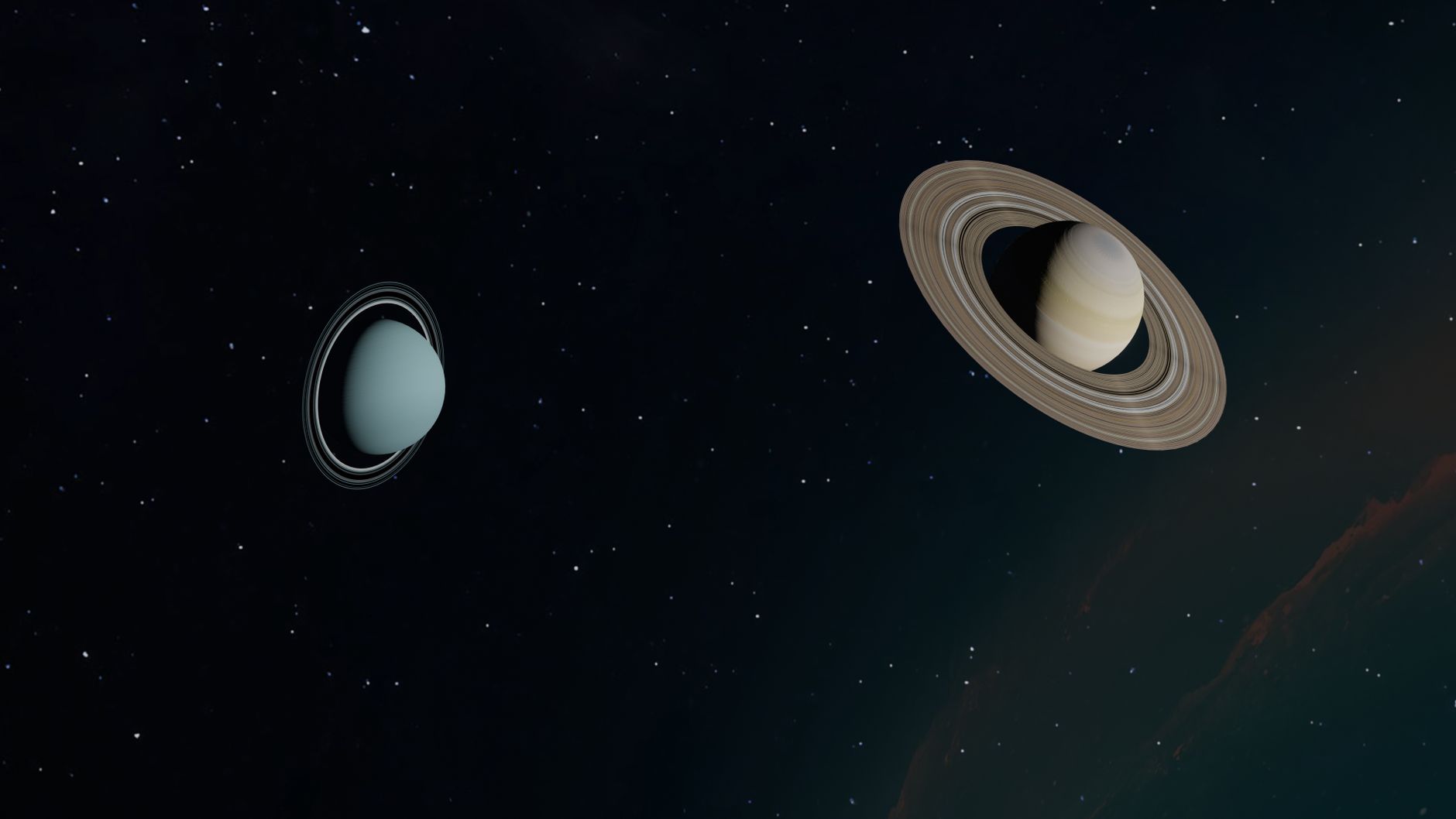
Saturn’s largest moon, Titan, possesses an abundance of hydrocarbons that could make it a crucial resource hub for future deep space missions, according to research led by NASA Goddard Space Flight Center astronomer Conor Nixon. The moon’s rich reserves of complex hydrocarbons, available in both liquid and solid forms, could potentially support the establishment of habitats and enable long-duration voyages in the outer solar system.
Abundant Resources for Space Travel
Nixon’s team explored the potential uses for Titan’s plentiful resources in a paper currently undergoing peer review. They argue that Titan’s combination of reduced carbon, nitrogen, and oxygen makes it an attractive location for producing essential materials for space exploration. These resources could be utilized to create food, fuel, and building materials, potentially serving as a valuable rest stop for spacecraft.
The concept of in situ resource utilization (ISRU) involves using local materials to reduce the cost and complexity of space missions. While ISRU has been extensively studied for the Moon and Mars, Titan has remained a less explored option despite its significant potential.
“Titan is gushing with hydrocarbons — what we call oil and natural gas on Earth,” Nixon stated. The paper highlights that the vast reservoirs of hydrocarbons and other organic compounds on Titan could be ideal for fabricating rocket fuel and plastic products, processes that would be more complex on the Moon or Mars.
Potential Uses and Challenges
Nixon explained that heavier hydrocarbons like propane, butane, kerosene, and gasoline can be found on Titan’s surface. Beyond combustion for fuel, these substances could be processed into plastics, synthetic rubber, and feedstocks for solvents, pharmaceuticals, and even food.
Establishing a presence on Titan would face considerable challenges. The moon experiences extremely low temperatures, averaging around negative 290 degrees Fahrenheit, which allows methane and ethane to exist as liquids. Its atmospheric pressure is 50 percent higher than Earth’s, and its gravity is only one-seventh of Earth’s. Additionally, obtaining oxygen for human survival would require production via electrolysis.
Despite these difficulties, Nixon suggested that even if a permanent habitat is not feasible, Titan could serve as an excellent stopover point for spacecraft to refuel and resupply a variety of raw materials, from printer ink to fertilizer.
Future Implications
The research concludes that while current and planned robotic missions like NASA’s Dragonfly do not require resources from Titan, more ambitious future missions will likely necessitate the use of local materials. The unique resources available on Titan in the outer solar system imply that missions designed to exploit them will eventually be developed.

Steve Lopez is a Senior Editorial Columnist and Health & Public Policy reporter for News Raise. Steve focuses on healthcare advancements, medical technologies, and public health policies.