China’s Tiangong space station could emerge as the sole permanently crewed outpost in Earth orbit around 2030, should the International Space Station (ISS) retire as scheduled and no commercial successors are operational by that time. This scenario highlights a shifting landscape in low Earth orbit, driven by the planned decommissioning of the ISS and the ongoing transition to commercial space stations.
Background and the Wolf Amendment
The current situation is often simplified to China building its own station after being excluded from the ISS. While China was never a formal partner in the ISS, U.S. objections to its participation predated 2011. However, the passage of the Wolf Amendment in 2011 by the U.S. Congress made direct bilateral cooperation between NASA and China legally challenging. This amendment, codified in Public Law 112-10, Section 1340, prohibited NASA and the White House Office of Science and Technology Policy from using appropriated funds for bilateral programs with China or Chinese-owned companies without specific legal authorization. It also restricted official Chinese visitors at NASA facilities.
While not an outright ban on all contact, the amendment significantly complicated standard agency-to-agency cooperation. For a complex, interdependent program like the ISS, this had substantial implications. The ISS partnership involves five primary agencies: NASA, Roscosmos, the European Space Agency (ESA), the Japan Aerospace Exploration Agency (JAXA), and the Canadian Space Agency. China’s exclusion from this framework, solidified by the Wolf Amendment, removed any immediate pathway for its human spaceflight program to integrate with the ISS.
Tiangong’s Operational Status
Tiangong is no longer a concept but an operational space station. Its core module, Tianhe, was launched in 2021, followed by the Wentian and Mengtian laboratory modules in 2022. Since the crew handover between Shenzhou 14 and Shenzhou 15 missions, China has maintained a continuous human presence on the station. Despite being considerably smaller than the ISS, Tiangong features a regular crew rotation, resupply missions via Tianzhou spacecraft, and a Shenzhou crew vehicle system.
The station has demonstrated resilience, notably in 2025 and 2026, when it navigated challenges with a return spacecraft, requiring adjustments to crew rotations and rescue plans. Although China’s mission decision-making processes are less transparent than NASA’s, Tiangong’s continued operation through such contingencies underscores its status as an established orbital infrastructure.
ISS Retirement and Commercial Alternatives
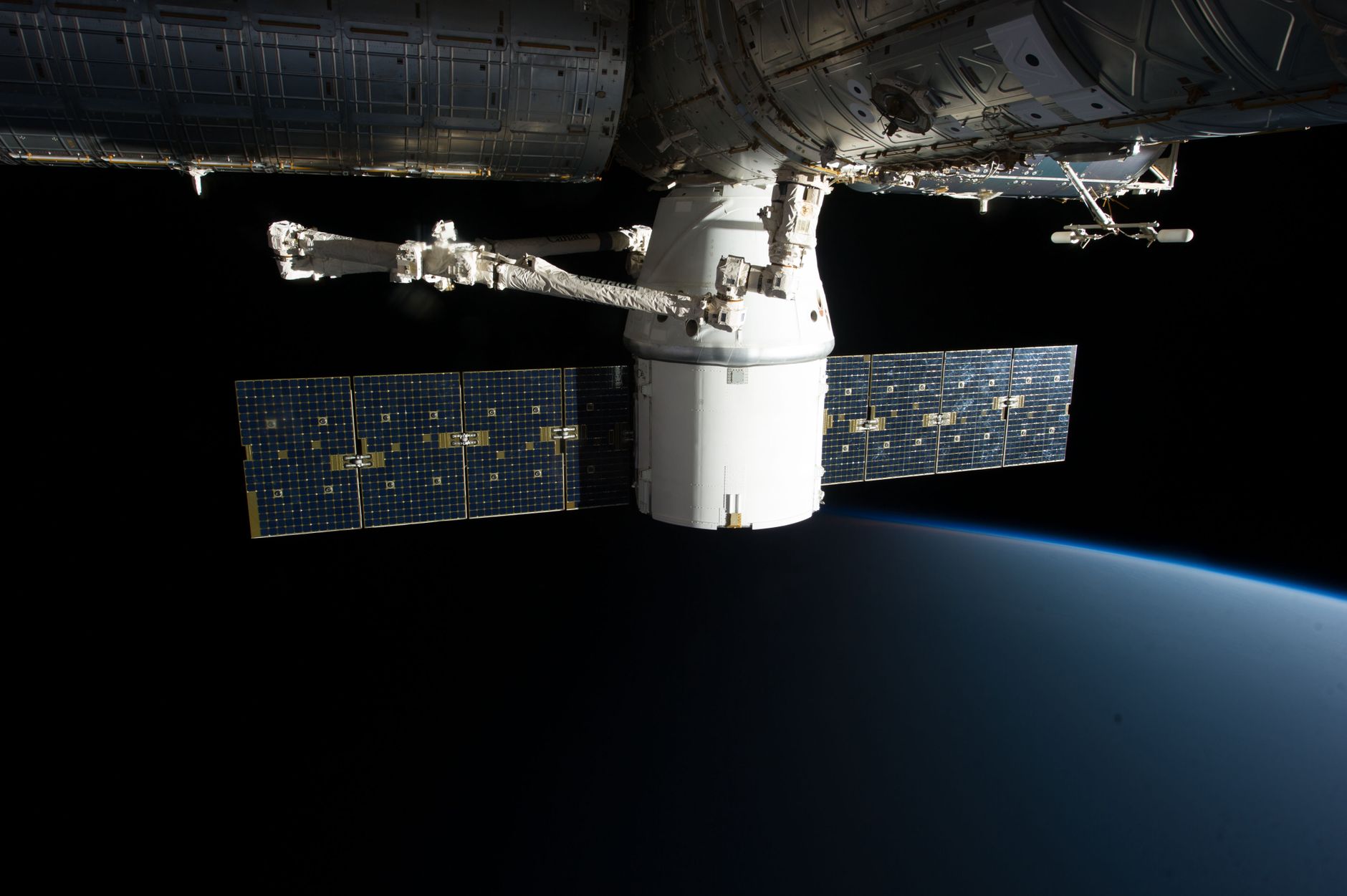
NASA’s current plan is to operate the ISS until the end of the decade, with a controlled deorbit in 2030. In June 2024, SpaceX was selected to develop the U.S. Deorbit Vehicle. While NASA, Japan, Canada, and ESA member countries have committed to ISS operations through 2030, Russia’s commitment extends to at least 2028. The station’s end-of-life depends on partner commitments, its condition, political decisions, the deorbit vehicle’s readiness, and the availability of alternatives.
NASA’s strategy for maintaining a human presence in low Earth orbit post-ISS relies on a market of privately owned and operated space stations. The agency is supporting the development of several commercial station concepts, including those from Axiom Space, Starlab, Orbital Reef, and Vast. However, as of mid-2026, no commercial station is yet operational and crewed as a free-flying platform. The development of commercial crew and cargo services shows NASA’s ability to transition functions to private providers, but the certification, hardware development, and logistical requirements for a full space station are complex and time-consuming.
Potential Implications of an Orbital Gap
If commercial stations are not ready before the ISS retires, Tiangong could become the sole continuously inhabited orbital outpost. This would represent a significant symbolic shift, ending the unbroken human presence on the ISS that began in November 2000 and altering the center of gravity in low Earth orbit. Practically, it would mean fewer options for countries and companies seeking to conduct human-tended experiments in orbit, potentially shaping research schedules, astronaut training, and diplomatic partnerships.
While Tiangong is smaller and has a different governance structure and approach to international access than the ISS, its continued operation could position it as a key platform. The evolution of the orbital landscape hinges on the success and timing of commercial space station development against the ISS’s planned retirement and China’s ongoing capability development.

Helene Elliott is the Lead Science & Space Reporter at News Raise. She reports on aerospace missions, astrophysics discoveries, quantum research, and environmental technology.