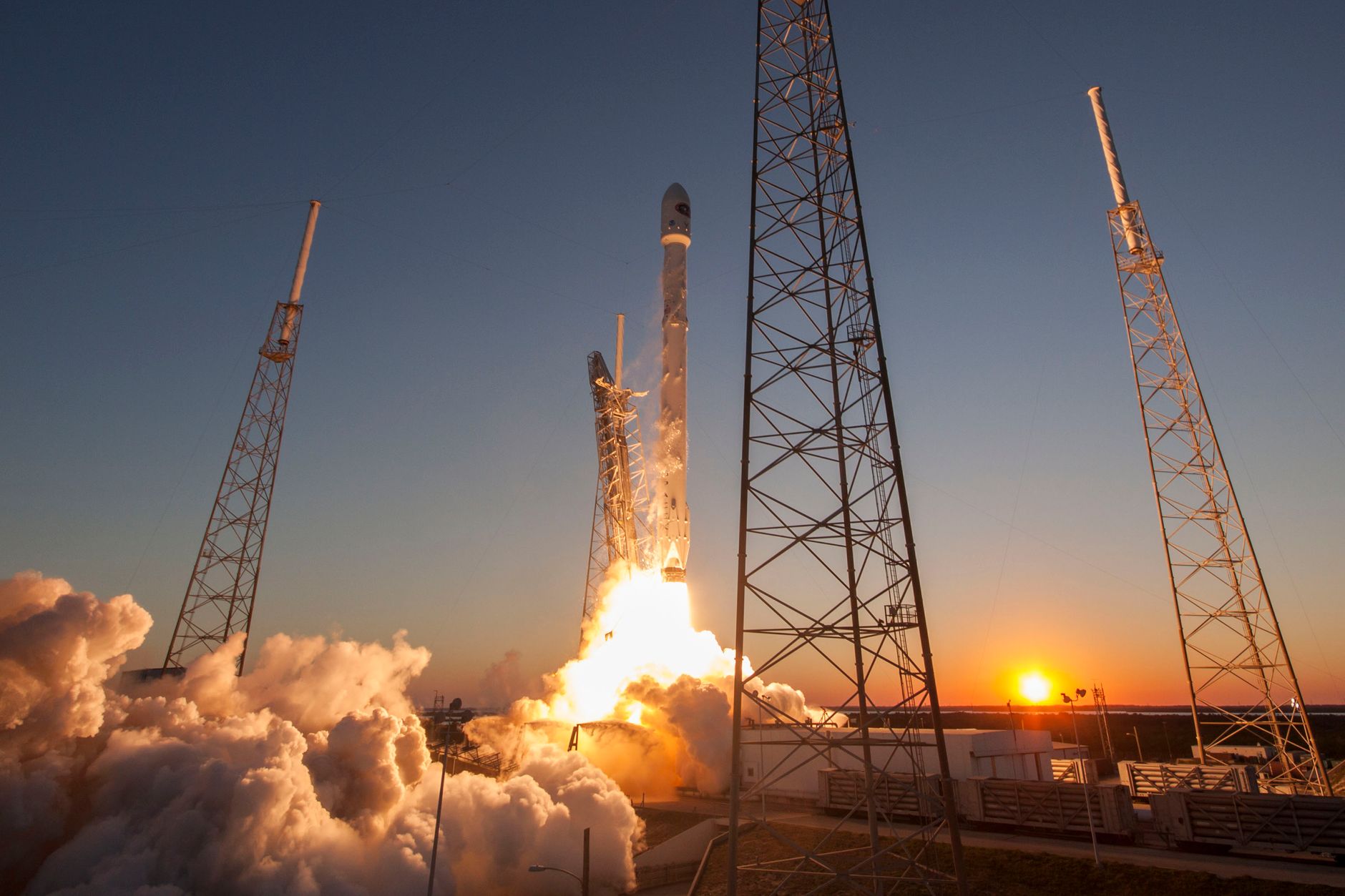
A SpaceX Falcon 9 rocket successfully lifted off Sunday evening from Cape Canaveral Space Force Station, carrying the 7.5-ton SXM-11 satellite for SiriusXM. The launch, which occurred at 10:25 p.m. EDT (0225 UTC) from Space Launch Complex 40, is part of an effort to refresh SiriusXM’s constellation of radio-broadcasting satellites in geostationary Earth orbit.
Satellite Deployment and Mission Objectives
The SXM-11 satellite, weighing approximately 15,000 pounds, was deployed from the Falcon 9’s upper stage about 30 minutes after liftoff. Manufactured by Lanteris Space Systems, a subsidiary of Intuitive Machines, the satellite is designed to replace two older SiriusXM satellites, XM-5 and Sirius FM-5, which launched in 2010 and 2009, respectively. SiriusXM stated on LinkedIn that SXM-11 is the most powerful satellite in its fleet and is intended to improve signal reception, expand coverage to Alaska, and support its audio entertainment and information services across the United States, Canada, and the Caribbean.
The satellite is built on the IM-1300 bus and measures 230 feet tall (70.1 m). With its solar panels extended, the spacecraft spans 106 feet (32.3 m). According to SiriusXM, about 60% of the satellite’s mass is attributed to onboard fuel. The company anticipates that SXM-11 will remain in service until 2040, similar to its predecessor SXM-10, which launched in June 2025 and is expected to operate until the same year.
Launch Operations and Booster Performance
The Falcon 9 booster used for this mission was tail number B1085, marking its 17th flight. Its previous missions included launches for NASA, the U.S. Space Force, Firefly Aerospace, and multiple Starlink deployments. Approximately 8.5 minutes after liftoff, booster B1085 successfully landed on the drone ship ‘A Shortfall of Gravitas’ in the Atlantic Ocean. This marked the booster’s 158th successful landing, equaling the record of the retired vessel ‘Just Read the Instructions’.
Weather conditions for the launch were favorable, with an 80% chance of good weather at the opening of the launch window, improving to 90% as time progressed. Launch weather officers monitored for potential interference from cumulus and anvil clouds, noting that while storm motion could be erratic, remnant clouds were expected to diminish throughout the night.

Helene Elliott is the Lead Science & Space Reporter at News Raise. She reports on aerospace missions, astrophysics discoveries, quantum research, and environmental technology.