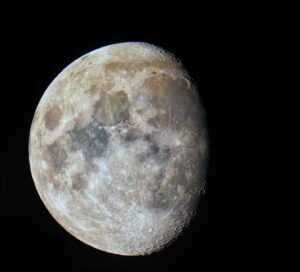
NASA is advancing its ambitious plans for a permanent lunar presence by awarding nearly $600 million in new contracts to private companies for lunar landers. These landers are slated to deliver science payloads to the moon’s surface in late 2028.
This latest round of contracts is part of a larger initiative to prepare for establishing a base on the moon. Over the next few years, NASA aims to send a series of uncrewed missions to test technologies and identify suitable locations. These efforts are intended to inform the agency’s long-term lunar construction plans. Last month, NASA announced funding awards totaling nearly $1 billion for initial uncrewed missions.
Accelerating Lunar Presence
Lori Glaze, NASA’s associate administrator for the Human Spaceflight Mission Directorate, stated that the new awards underscore the agency’s commitment to expediting its efforts to build a long-term presence on the lunar surface. She emphasized that these missions will provide more opportunities to develop the necessary skills for lunar habitation.
The three companies selected for these lunar lander contracts are Astrobotic, Firefly Aerospace, and Intuitive Machines. Astrobotic, based in Pennsylvania, will build two additional landers for the 2028 missions under a contract valued at $297.9 million. This brings NASA’s total award to Astrobotic to over $600 million in the past six years for its lunar hardware development.
Texas-based Firefly Aerospace received $144.2 million, while Intuitive Machines, also based in Texas, was awarded $148.3 million. These companies are developing upgraded versions of previously flown vehicles rather than designing new landers from scratch, according to NASA.
Potential Rover Deployment
In addition to the lander contracts, there is consideration for repurposing a test version of a NASA Mars rover, named Promise, for lunar deployment. Isaacman indicated that discussions are underway to send Promise to the lunar south pole to study locations and search for resources. This approach could expedite deployment compared to developing a new project.
Separately, Firefly Aerospace had previously secured $75 million from NASA’s Jet Propulsion Laboratory to develop four drones for identifying sites of interest at the moon’s south pole. The mission for Blue Origin, which was selected alongside Astrobotic for an uncrewed mission this year, is likely to be postponed to next year following a recent engine test failure.
NASA plans to provide monthly updates on its moon base missions and will solicit proposals in the coming months for science and technology payloads to ride along on future missions. Potential experiments could focus on lunar energy infrastructure or communication systems.

Norman Pearlstine is the Executive Editor and Co-Founder at News Raise. With over two decades of experience across financial journalism, corporate governance, and market analysis, Norman leads the editorial direction and ensures strict adherence to journalistic accuracy and ethics.