A team of scientists led by David Kuridze and Friedrich Wöger of the National Solar Observatory has confirmed the existence of Kelvin-Helmholtz instabilities on the surface of the Sun. The Kelvin-Helmholtz instability is a phenomenon that occurs when two fluids with different speeds interact, causing the boundary between them to buckle and curl into vortexes.
This instability is responsible for the formation of ripples on the surface of water and the shearing of clouds into rows of curves. For decades, scientists have argued that the same phenomenon must occur with plasma on the surface of the Sun, but they were unable to confirm it due to the small scale of the vortexes.
The Challenge of Observing Plasma Whirlpools
The reason plasma whirlpools on the Sun remained hidden for so long is that they are very small, with a scale that is below the resolution of telescopes with mirrors smaller than 2 meters. This meant that most telescopes on Earth were not capable of observing them.
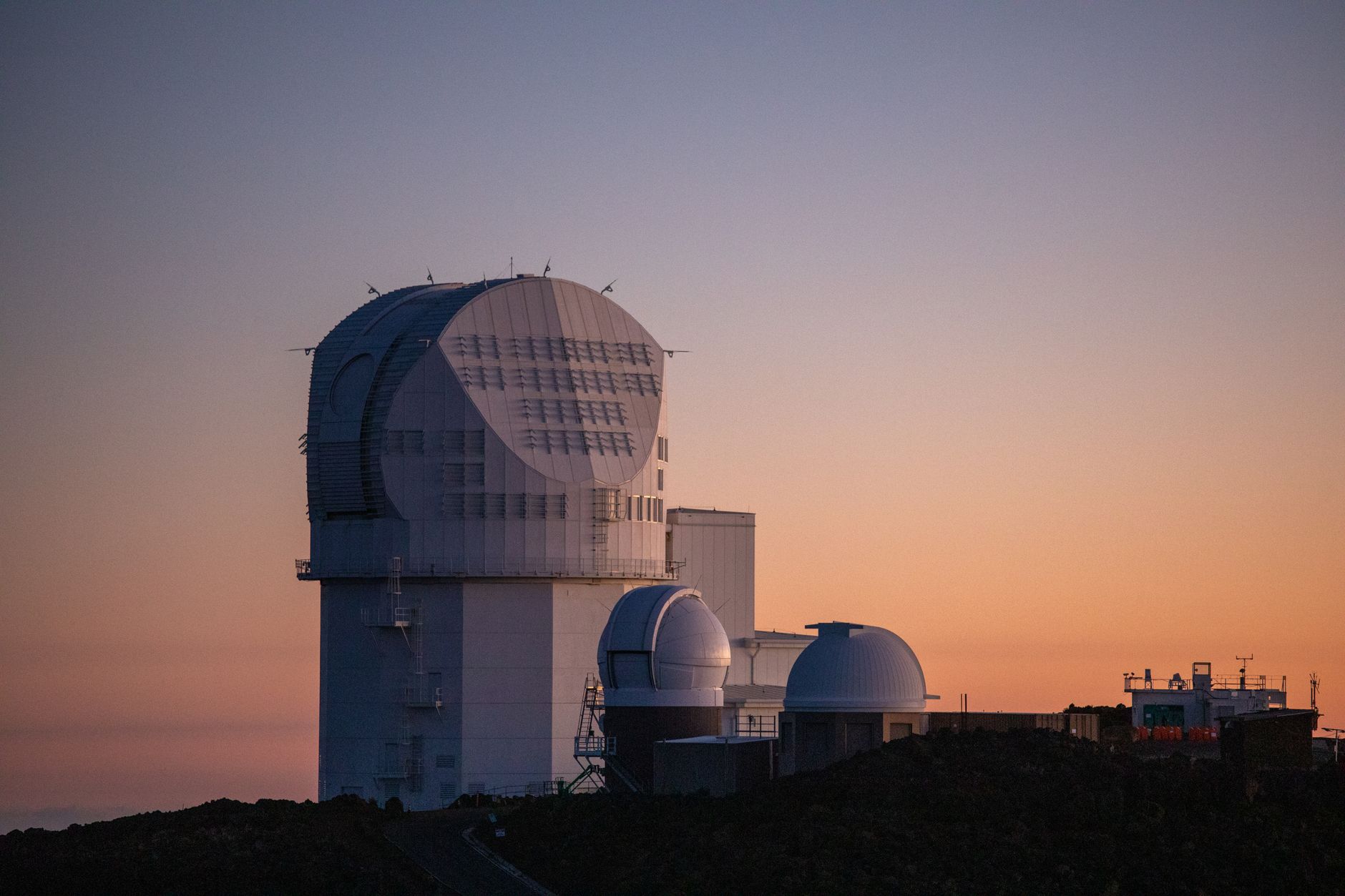
However, the situation changed with the opening of the Daniel K. Inouye Solar Telescope, a 4-meter instrument in Hawaii and the largest solar telescope in the world. The telescope entered its operational phase in November 2021 and has been used to study the Sun’s surface in unprecedented detail.
Observing the Sun’s Surface
On April 14, 2025, Kuridze’s team used the Daniel K. Inouye Solar Telescope to observe an active region near the center of the solar disk. They recorded images at a wavelength of 416 nanometers using a diagnostic camera setup built jointly by the National Solar Observatory and the Max Planck Institute for Solar System Research.
Although the team was not specifically looking for vortexes, they were able to observe them during a three-minute window. The main goal of the observation was to achieve diffraction-limited performance with the telescope, according to Kuridze.
Implications of the Discovery
The discovery of Kelvin-Helmholtz instabilities on the Sun’s surface may change the way scientists think about how heat, mass, and magnetic energy move through the Sun’s atmosphere. The study proposes that these vortexes are ubiquitous and play a significant role in the dynamics of the Sun’s surface.
The team’s findings are a significant breakthrough in the field of solar physics and demonstrate the capabilities of the Daniel K. Inouye Solar Telescope. The discovery of Kelvin-Helmholtz instabilities on the Sun’s surface is an exciting development that will likely lead to further research and a deeper understanding of the Sun’s behavior.

Norman Pearlstine is the Executive Editor and Co-Founder at News Raise. With over two decades of experience across financial journalism, corporate governance, and market analysis, Norman leads the editorial direction and ensures strict adherence to journalistic accuracy and ethics.