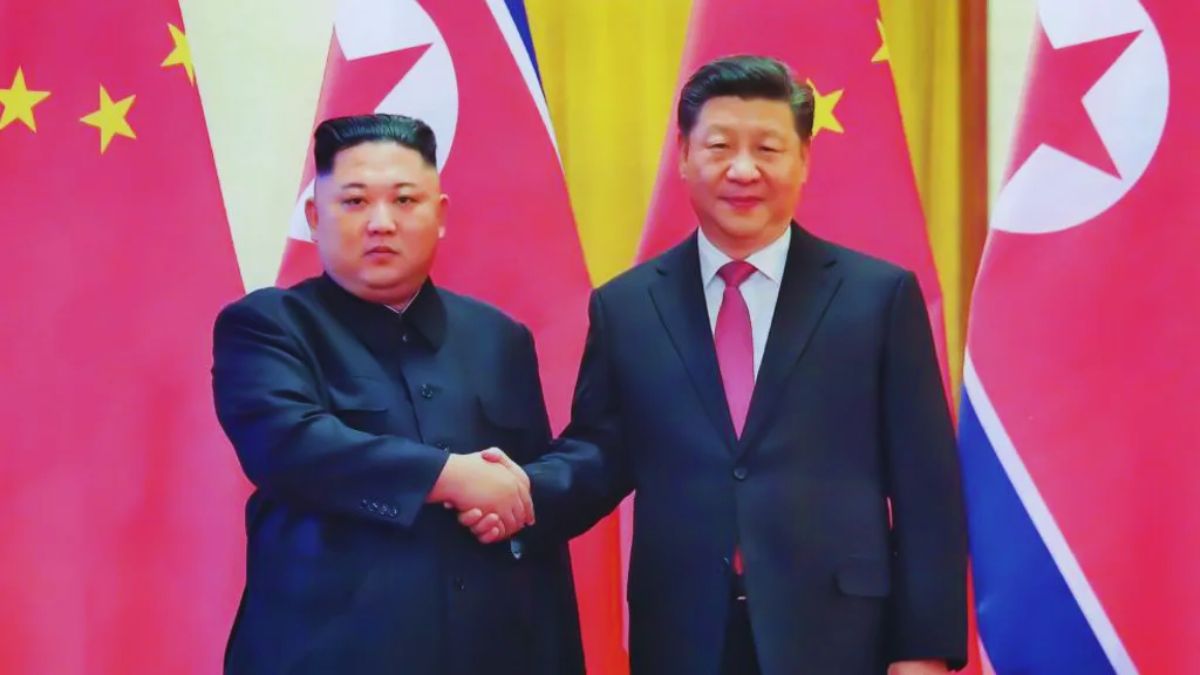
North Korean leader Kim Jong Un will travel to Beijing in the upcoming week to participate in China’s ‘Victory Day Celebrations’, commemorating the 80th anniversary of Japan’s surrender in World War II. The visit, confirmed by North Korea’s state media KCNA, marks Kim’s first major international appearance in years and highlights the shifting power dynamics in Asia.
Strengthening North Korea–China Relations
Kim’s attendance comes at the invitation of Chinese President Xi Jinping, who will oversee a large-scale military parade in Tiananmen Square. Beijing and Pyongyang have historically maintained close ties, with China serving as North Korea’s most important economic partner and political ally. However, relations cooled in recent years due to sanctions over North Korea’s nuclear program and pandemic-related border closures.
The upcoming visit signals a possible revival of cooperation between the two neighbors. In a press briefing, China’s foreign ministry emphasized the ‘traditional friendship’ between Beijing and Pyongyang and expressed confidence that both countries would continue working together to maintain regional stability and security.
Putin Also Expected at the Parade
The parade is also likely to see the presence of Russian President Vladimir Putin, further underscoring China’s role as a diplomatic hub. Putin’s participation follows closer military cooperation between Moscow and Pyongyang, with reports of North Korea providing armaments to support Russia’s ongoing war in Ukraine.
With Kim, Xi, and Putin appearing together, the event will project an image of solidarity among countries often at odds with Washington and its allies. Analysts say this visual display of unity could provide Xi with a key diplomatic advantage as he positions China as a central power broker in global affairs.
Military Parade Showcasing China’s Power
China’s Victory Day parade is expected to last around 70 minutes and feature tens of thousands of military personnel. The event will showcase China’s latest weaponry, including advanced aircraft, tanks, and anti-drone systems, as well as veterans of past wars. Troops from dozens of military echelons will march through central Beijing in what experts predict will be a highly choreographed display of national strength.
This year’s celebration will be the first time China fully unveils its new military force structure in such a public setting, a move likely to draw close scrutiny from Western governments.
Global Reactions and Regional Implications
While 26 heads of state are expected to attend, most Western leaders will be absent, citing differences with Russia over its actions in Ukraine. Japan has also voiced opposition, warning that the event carries “anti-Japanese overtones.”
One of the biggest questions remains whether South Korean President Lee Jae Myung will join the gathering. Although invited, Lee is yet to confirm his attendance and is reportedly considering sending a lower-level delegate instead. His presence would mark the first face-to-face meeting between the leaders of North and South Korea since 2019.
Lee has repeatedly expressed interest in opening dialogue with Kim and has asked U.S. President Donald Trump, whom he met earlier this week in Washington, to act as a mediator for peace on the Korean peninsula.
A Strategic Moment for Xi Jinping
For Xi, hosting both Kim and Putin at such a symbolic event enhances China’s diplomatic standing ahead of a potential summit with President Trump later this year. By bringing together two of Washington’s most difficult counterparts, Beijing is demonstrating its ability to influence the future of Northeast Asian security and the broader balance of power.

Helene Elliott is the Lead Science & Space Reporter at News Raise. She reports on aerospace missions, astrophysics discoveries, quantum research, and environmental technology.