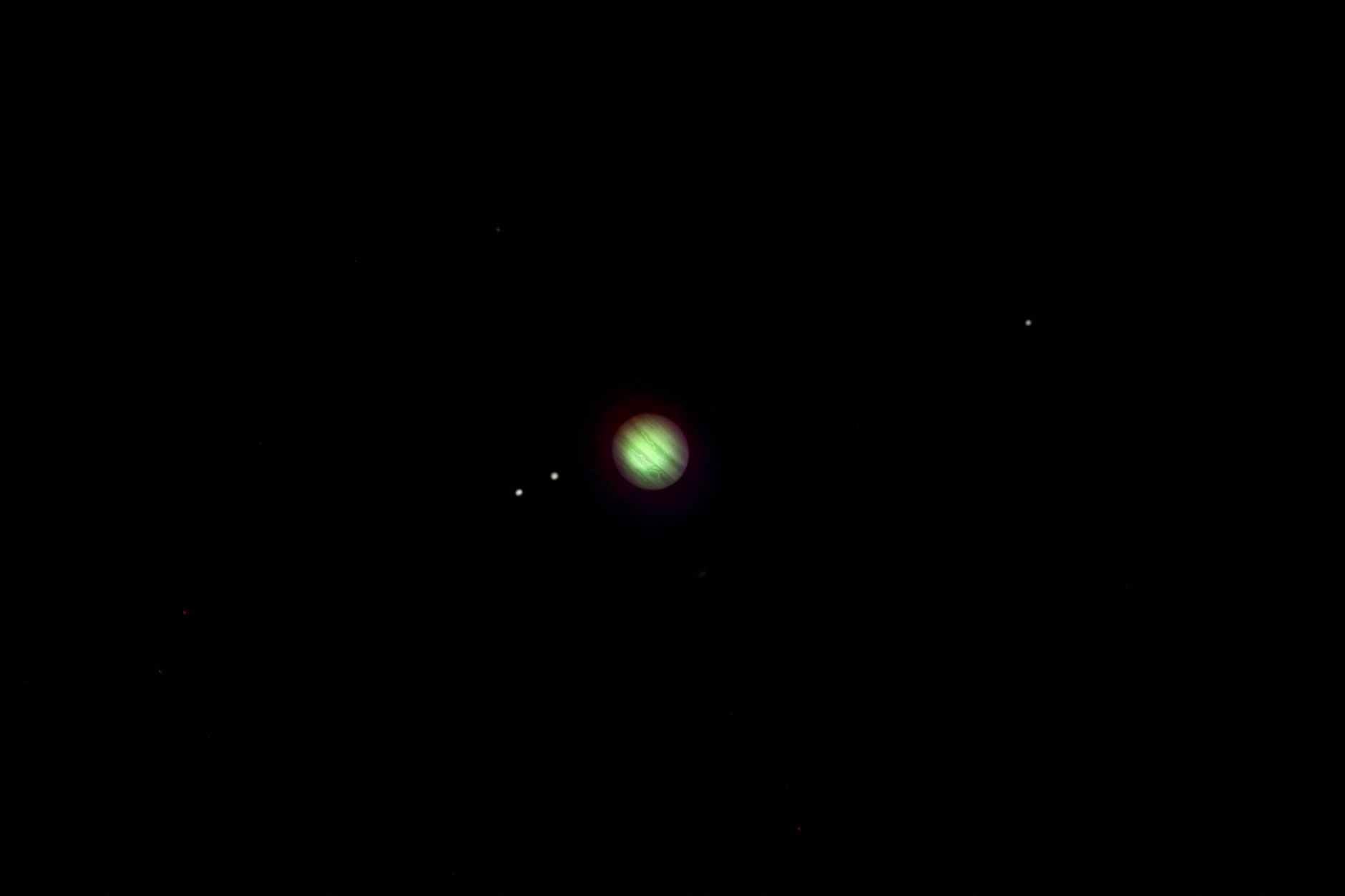
Jupiter and Venus recently performed a close planetary conjunction, appearing less than 2 degrees apart in the constellation Gemini on June 9. The celestial event, which also included Mercury in the vicinity, has been unfolding over recent weeks as Venus moved towards Jupiter in the western sunset sky.
Global Astrophotography Captures Conjunction
The planetary trio has been visible in the sunset sky, with Venus steadily approaching Jupiter. The climax of this cosmic dance occurred on June 9, offering a spectacular sight for observers on Earth.
Astrophotographer Josh Dury captured an image of Venus and Jupiter above the Avebury stone circles in Wiltshire, U.K., on June 8. The bright stars Castor and Pollux were also visible. Dury noted that the angle of the stones appeared to mirror the angle of the planets, comparing it to a couple gazing at the universe.
In Shenzhen, Guangdong Province, China, Cheng Xin photographed the planetary duo. The planets were close enough to fit within the field of view of 10×50 binoculars.
Riste Spiroski documented the conjunction over Skopje, the capital of North Macedonia. His image showed Jupiter and Venus above the city’s rooftops, with hints of Jupiter’s four Galilean moons visible. Spiroski commented on the apparent closeness of the planets from Earth’s perspective, despite their vast spatial separation, calling it one of the year’s most beautiful celestial sights. He was particularly inspired by the contrast between people focused on their phones and the astronomical event overhead.
Yasser Al-Zayyat’s photograph featured Jupiter and Venus above the Kuwait City skyline on June 9, with skyscrapers illuminated by artificial light against the twilight sky during the conjunction’s peak.
Osama Fathi captured the planets over the volcanic mountains of Egypt’s Black Desert on June 6. Fathi used a Nikon Z6 camera with a 24mm lens. He explained that the foreground was photographed during the blue hour, while the sky was created by stacking multiple short exposures to capture faint background stars without overexposing the bright planets.
The recent conjunction offered a stunning display for skywatchers, with photographers around the world sharing their unique perspectives of the celestial alignment.

Helene Elliott is the Lead Science & Space Reporter at News Raise. She reports on aerospace missions, astrophysics discoveries, quantum research, and environmental technology.