In late September, Pavel Rabtsevich, an artificial‑intelligence specialist based in Spain with no formal training in astronomy, directed an AI model to search for undiscovered worlds. Using Claude, an AI coding tool from Anthropic, he instructed the system to examine a specific set of data from NASA’s Transiting Exoplanet Survey Satellite (TESS). Within two weeks, the AI returned two promising signals that appear to originate from a star located about 116 light‑years from Earth.
AI tools empower amateur planet hunters
Citizen scientists have long contributed to exoplanet discovery by leveraging publicly available software and databases. The recent surge in sophisticated AI assistants, however, has lowered the technical barrier even further. Rabtsevich asked Claude to parse observations of more than 120,000 stars collected by TESS during late 2025 and early 2026. The AI was guided to employ a widely used planet‑detection algorithm that searches for periodic dips in stellar brightness—an indicator that a planet may be transiting the star.
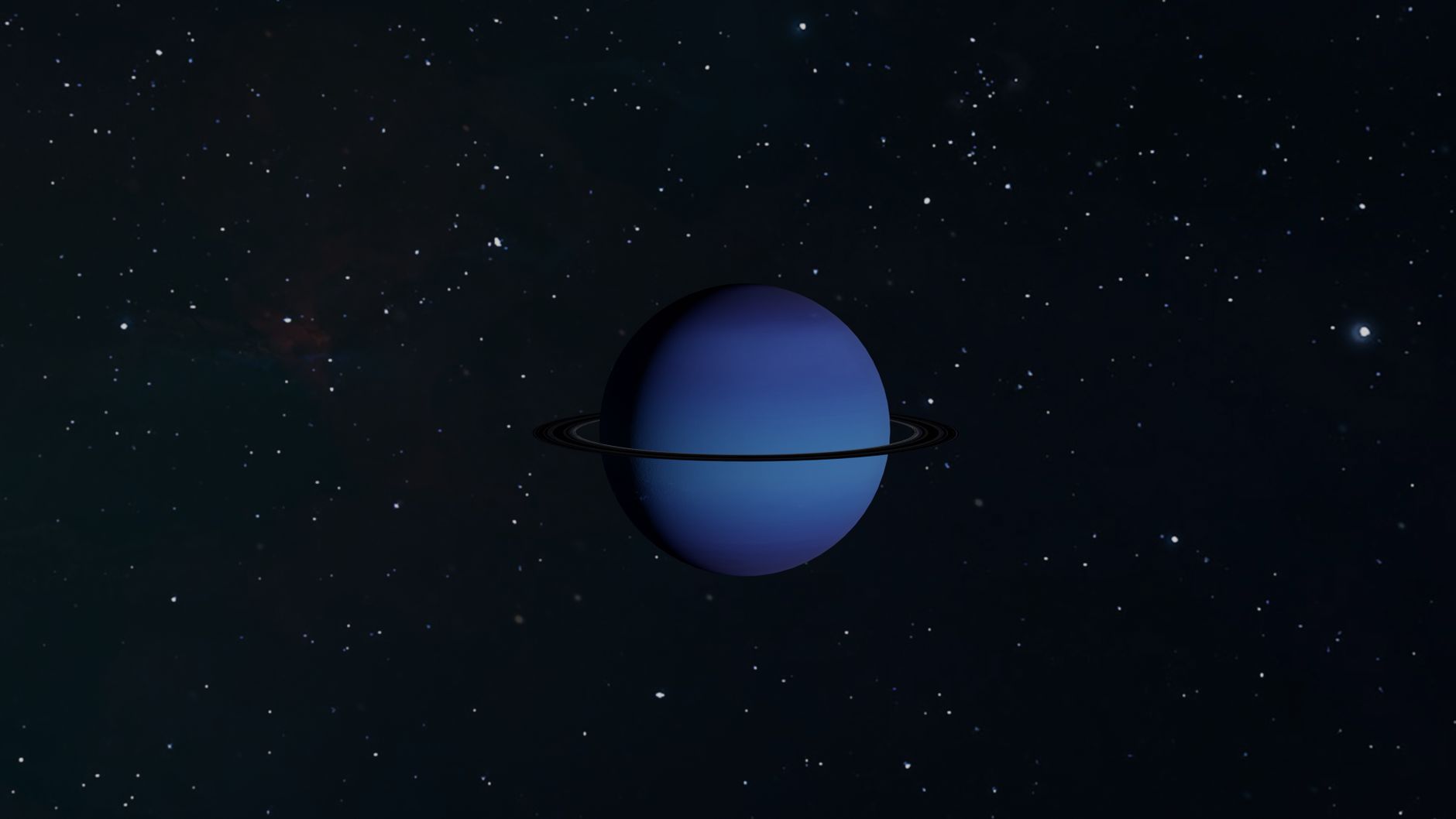
Claude identified a star catalogued as TIC 4206066 that displayed two distinct dimming cycles, one roughly every three days and another about every eleven days. Such regular, repeated drops in luminosity suggest the presence of two orbiting bodies, each casting a shadow as it passes between the star and the observer.
Discovery of two candidate planets
To verify the pattern, Rabtsevich instructed Claude to revisit archival TESS observations. The AI found matching dimming events in data collected in 2018 and 2020, reinforcing the consistency of the signal. Following this, Claude located a publicly released planet‑detection code authored by exoplanet researcher Michelle Kunimoto and executed it on the same dataset. The algorithm confirmed the two periodic signals, leading Rabtsevich to upload his results to the open‑access repository Zenodo on 25 September as a preprint.
Although the work has not undergone peer review, professional astronomers working with TESS have independently examined the signals and added the candidates to the official list of potential exoplanets. The star’s distance—116 light‑years—places the system within the range of interest for future observational campaigns.
Caution from the professional community
While the discovery highlights the promise of AI‑driven citizen science, experts warn that the rapid proliferation of AI‑generated research can strain quality control mechanisms. Michelle Kunimoto, an exoplanet researcher at the University of British Columbia, noted that many hobbyists may lack a deep understanding of the underlying algorithms, making it difficult for them to validate their own findings. “There’s been a huge, overwhelming surge of AI‑driven papers, which tend to have [planet] candidates that are not the best quality,” she said, adding that the influx is overwhelming existing dissemination systems.
Kunimoto’s remarks underscore the need for rigorous verification when AI tools are employed outside traditional research settings. Nonetheless, the successful identification of two candidate planets by an amateur using AI demonstrates a new avenue for expanding the search for worlds beyond our Solar System, provided that appropriate checks and collaborations with professional astronomers are maintained.
The episode illustrates both the transformative potential of artificial‑intelligence assistants in democratizing scientific discovery and the responsibility that comes with their use. As AI continues to evolve, the partnership between seasoned researchers and motivated amateurs may become an increasingly valuable component of exoplanet science.

Mitchell Landsberg is a Senior Technology Correspondent at News Raise. He covers consumer electronics, artificial intelligence, software developments, and digital privacy trends.