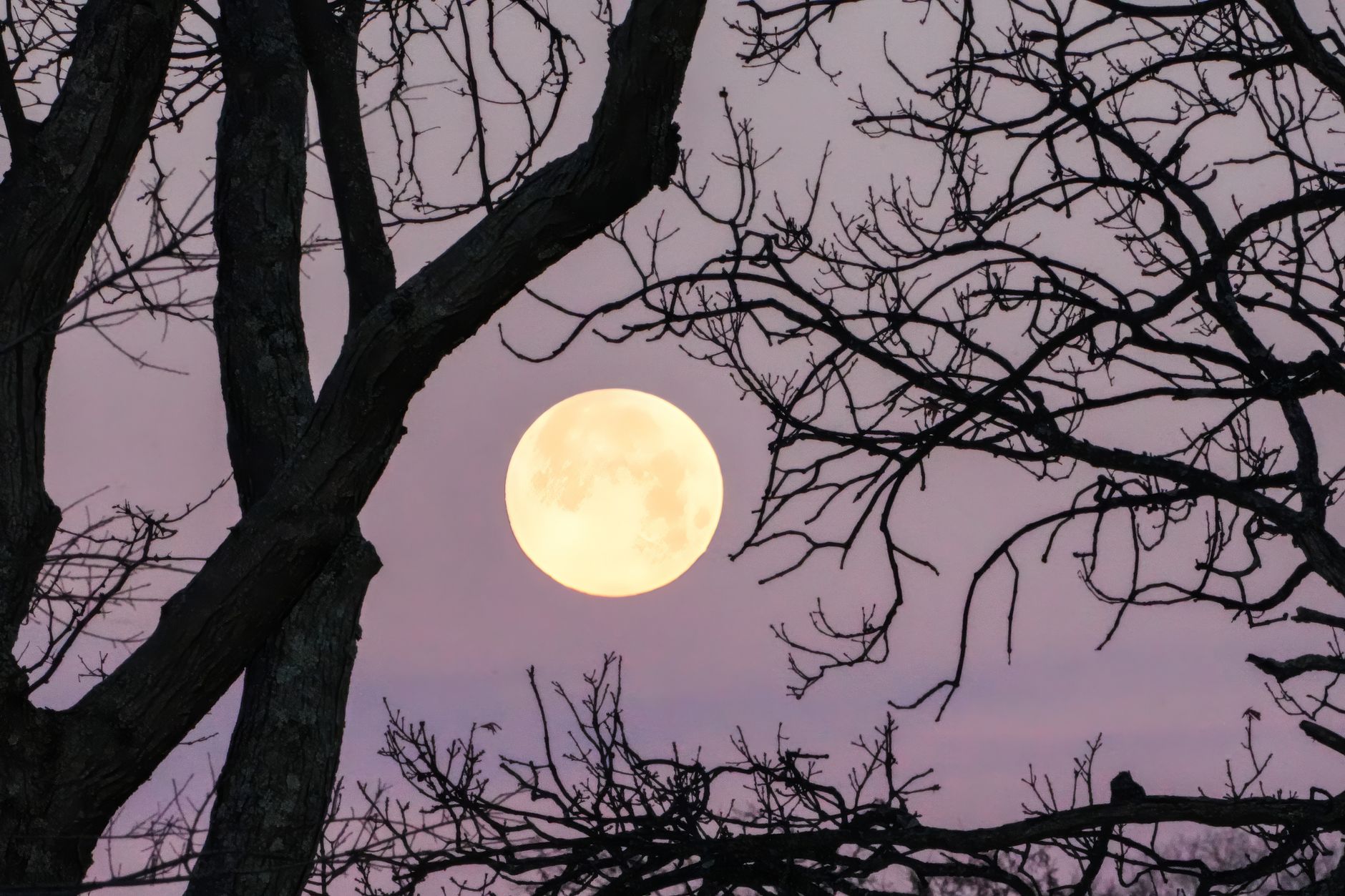
On November 24, sky‑watchers across the globe were treated to a striking astronomical display: the Moon rose directly opposite the setting Sun. The phenomenon, easily spotted in the soft light of twilight, offered a vivid illustration of the Moon’s full phase combined with its position near the closest point to Earth in its orbit.
A Twilight Spectacle
Observers reported that the Moon appeared large and luminous against the deepening sky, making it simple to locate from a variety of everyday settings. Whether standing in open fields, leaning against fences, watching from a backyard, or even glancing up from a stone wall, the Moon’s brightness and size were unmistakable. The timing of the rise, directly opposite the Sun, created a dramatic contrast that highlighted the celestial body’s fullness and clarity.
Why This Full Moon Was Special
The November full Moon carries the traditional name “Beaver Moon,” a moniker that has been used for centuries to mark the time of year when beavers are most active in preparing their lodges. In addition to its cultural label, this particular full Moon was notable for its proximity to perigee—the point in the Moon’s elliptical orbit when it is nearest to planet Earth. The source description defines perigee as “the closest point in its elliptical orbit around planet Earth.” When a full Moon coincides with perigee, the resulting visual effect is often referred to as a “supermoon,” a term that denotes a Moon that appears larger and brighter than average.
Because of its perigee position, the November 24 Beaver Moon ranked among the biggest and brightest full moons of the year. The source notes that this event marked “the first in a series of four consecutive Full Moons near perigee,” establishing a short‑term sequence of supermoon‑like appearances that will unfold over the coming weeks.
Looking Ahead to the Next Supermoon
For those who missed the November display or who wish to experience a similar event again, the next opportunity arrives with the December full Moon, traditionally called the “Cold Moon.” According to the source, the Cold Moon will rise on December 23 and will also occur near perigee, offering another chance to view a supermoon. The pattern of consecutive perigee moons underscores a brief period in which the Moon’s orbit aligns closely enough with Earth to produce repeated, noticeably enlarged lunar appearances.
While the source does not provide specific viewing times, the general guidance that the Moon rose opposite the setting Sun suggests that the best viewing window occurred shortly after sunset, when the sky remained bright enough to see the horizon but dark enough for the Moon’s illumination to dominate. Those interested in future observations can plan to watch the horizon for the Moon’s emergence, using familiar landmarks such as fences, stone walls, or open fields as reference points.
In sum, the November 24 Beaver Moon offered a rare combination of cultural significance, orbital mechanics, and visual impact. Its status as a supermoon, coupled with the ease of spotting it from everyday outdoor locations, made it a memorable event for both amateur astronomers and casual observers alike. The upcoming Cold Moon on December 23 promises to extend this period of heightened lunar visibility, inviting the public to once again look up and appreciate the dynamics of Earth’s nearest celestial neighbor.

Norman Pearlstine is the Executive Editor and Co-Founder at News Raise. With over two decades of experience across financial journalism, corporate governance, and market analysis, Norman leads the editorial direction and ensures strict adherence to journalistic accuracy and ethics.