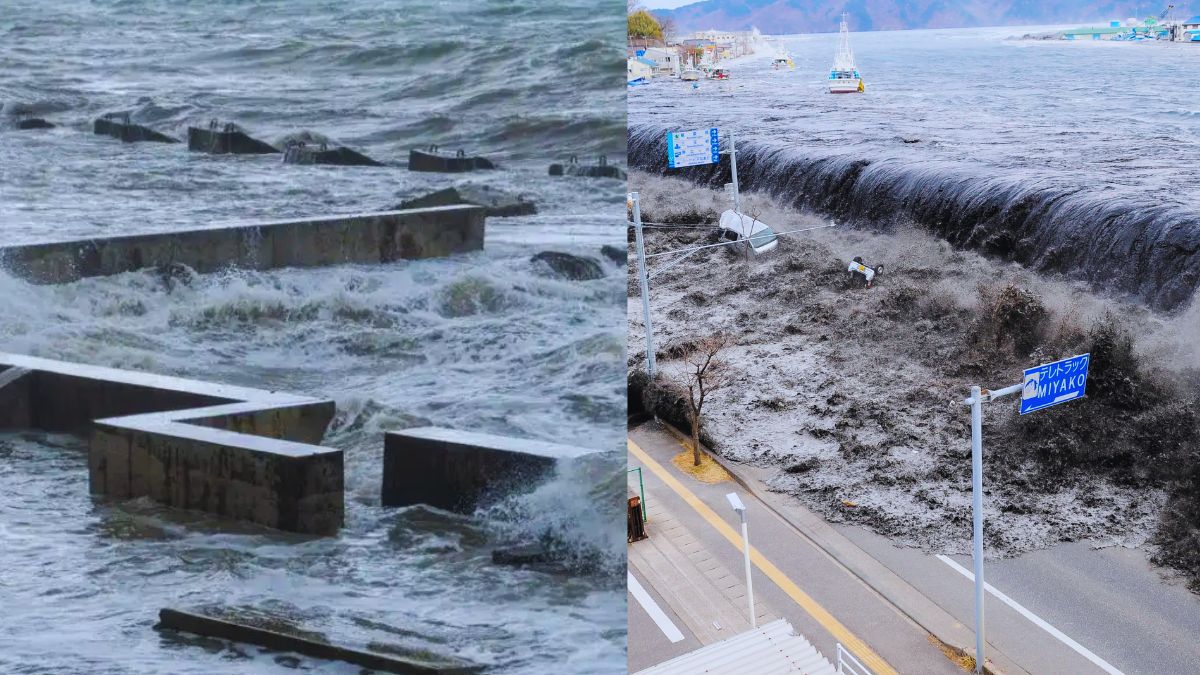
On July 30, the world woke up to a rather disturbing news, one that has shaken the countries across. In the wee hours of Wednesday morning, an intense earthquake rocked parts of Russian far east coast, with a powerful 8.8 magnitude figure on the Richter scale. Since then, this earthquake has triggered tsunamis in several regions and put many neighbouring nations on high alert too.
One of the countries that has been impacted is Hawaii, which continues to remain in an alarming position. The Pacific Tsunami Warning Center reported waves as high as 4 ft in the Kahului area of Maui. While airports were unaffected, all Maui flights have been cancelled as a precautionary measure. The resultant tsunami in the northern Pacific belt has prompted alerts from Alaska and Hawaii to coastal regions as far south as New Zealand.
Near the earthquake’s epicentre in Russia, waves reportedly reached up to 4 meters, flooding a town of around 2400 residents in the Northern Kuril Islands, according to media reports. However, no injuries or fatalities have been reported so far.
What is a Tsunami?
Tsunami in geographical terms is a massive ocean wave, triggered by sudden vertical movements of the seafloor, often typically caused by shallow faults slipping during powerful earthquakes or by the movement of large underwater landslides. As these waves travel into shallower waters near coastlines, they increase in height, as per the citation given by the United States Geological Survey (USGS).
Updates So Far
- West Coast: Regions across Canada’s British Columbia, as well as US areas of Washington and California were issued tsunami advisories in response to the quake aftermath.
- Earthquake Details: The tremor occurred around 8:25 am Japan time (04:55 am IST), with early readings placing the magnitude at 8.0. The US Geological Survey later revised the figure to 8.8, locating the epicentre about 119 km southeast of Russia’s Kamchatka Peninsula.
- Impact in Russia: The quake caused building damage, power outages, and mobile service disruptions in the Petropavlovsk-Kamchatsky circuit (inhabiting a population of approx. 180,000). Some natives were provided medical help, though no major injuries were confirmed, as per the international press reports available so far.
- Historic Scale: This earthquake is believed to be the strongest globally since the March 2011 Japan earthquake (9.0 magnitude) that caused a devastating tsunami and nuclear disaster. Only a handful of recorded quakes worldwide have exceeded this one in strength.
- Japan Impact: The tsunami warning disrupted transport links in Japan. Ferry services between coastal cities as well as routes connecting Tokyo to nearby islands, were suspended.
- Nuclear Safety: Japanese nuclear plants reported no safety issues. Tokyo Electric Power, which is the prime operator of the Fukushima Daiichi plant, confirmed that about 4000 workers had moved to higher ground as a precaution and were continuing to monitor the situation remotely.
- Philippines: Philippine officials warned coastal provinces facing the Pacific Ocean about a potential tsunami arrival with waves of under 1 meter (3 feet). People were issued an advisory to strictly avoid beaches and coastal waters.
As per Al-Jazeera’s news report, the officials of Japan Meteorological Agency have warned that the threat of a high tsunami will last for at least one more day, and the effects may even continue to be observed over a long period. People across the pacific water-body side have been cautioned to remain alert as tide levels could be higher than at present if tsunamis occur at high tide.






Be First to Comment