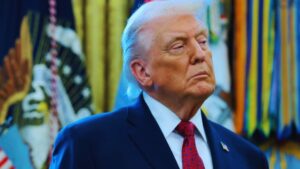
Trump has already implemented 50% tariffs on Indian imports, including a 25% penalty for continued purchase of Russian oil.
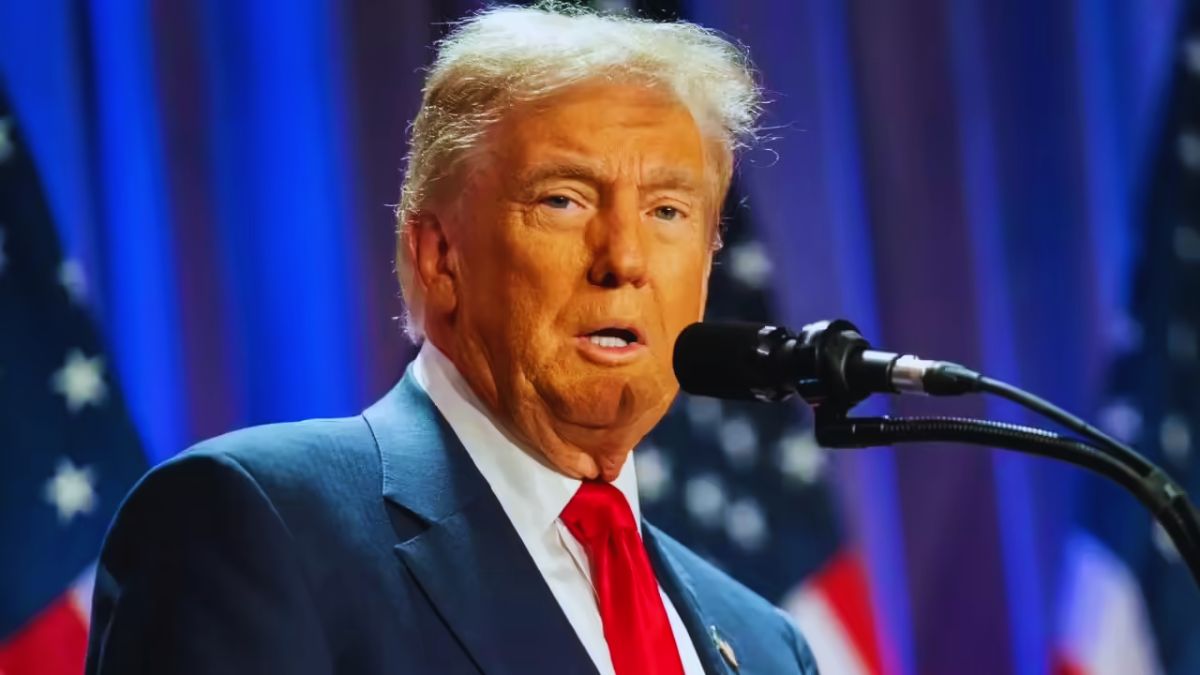
On September 25, the incumbent U.S. President Donald Trump further escalated his tariff campaign by announcing that, beginning October 1, 2025, he will impose a 100% tariff on imports of branded or patented pharmaceutical products, unless the producing company already is under construction building a manufacturing facility in the United States.
Trump justifies the new drug tariffs as measures needed for “national security and other reasons,” and ties exemptions to active U.S. construction. Products from companies where U.S. plant building has started will be spared.
How India’s Pharma Sector Could Be Hit
India’s pharmaceutical industry is heavily integrated with the U.S. market. In fiscal year 2024, India exported roughly USD 27.9 billion worth of pharma products, of which 31% went to the United Sates, as per data from the Pharmaceuticals Export Promotion Council.
Major Indian drugmakers—such as Dr. Reddy’s, Sun Pharma, Aurobindo, Zydus, and Gland derive a significant share (almost 30-50%) of revenues from the U.S. market. India also supplies a large proportion of the U.S. generics and biosimilars market: estimates suggest Indian firms account for over 45% of U.S. generics and around 15% of biosimilars in circulation.
While Trump’s tariff announcement is explicitly aimed at branded and patented medicines, there is uncertainty on whether complex generics or specialty formulations might eventually be swept under the same regime.
Possible Consequences
- Price Inflation and Supply Pressures in the U.S.
U.S. patients and insurers rely heavily on well-priced generics coming from India. A 100% tariff on branded drugs could lead to price hikes, supply shortages, or pressure on U.S. manufacturers to absorb costs. - Margin Squeeze for Indian Firms
Many Indian pharma players already operate under tight margins in the U.S. generics space. Facing steep import duties, they may either cut profits or pass costs to end users—both of which strain competitiveness. - Stock Market and Investor Sentiment Shock
Indian pharma stocks have already reacted negatively; the sector is viewed as vulnerable to exogenous tariff risk. - Strategic Reorientation & Diversification
In light of tariff uncertainty, Indian exporters are reportedly looking to diversify into markets in Africa, Latin America, Southeast Asia, and even China to reduce dependence on the US. - Built-in Incentive to Onshore Manufacturing
The exemption clause (requiring “breaking ground” or “under construction”) pressures multinationals and Indian firms to invest in U.S.-based facilities if they want to preserve duty-free access.
What India Can Do?
- Accelerate market diversification: Target semi-regulated or emerging markets in Africa, Latin America, and Southeast Asia to reduce U.S. exposure.
- Push for diplomatic and trade negotiations: The Indian government should lobby for carve-outs, minimal disruption, and better terms in bilateral trade talks.
- Promote backward integration and value-add segments: By investing in APIs, niche biologics, and specialty generics, Indian pharma can create higher-value products less vulnerable to tariffs.
- Encourage U.S. investment: For key players, forming or acquiring U.S.-based manufacturing plants could be the only route to maintain tariff-free entry.
- Strengthen regulatory and compliance frameworks: Ensuring U.S. and global quality compliance will make Indian pharma more resilient to protectionist pressures.
As it stands, India’s pharma industry faces one of its sternest headwinds in recent memory. While the focus of the tariffs is branded drugs, the ripple effects could destabilize exports, strain global supply chains, and force a dramatic recalibration of strategy. Time is short—both for policymakers and industry leaders—to respond.

Helene Elliott is the Lead Science & Space Reporter at News Raise. She reports on aerospace missions, astrophysics discoveries, quantum research, and environmental technology.