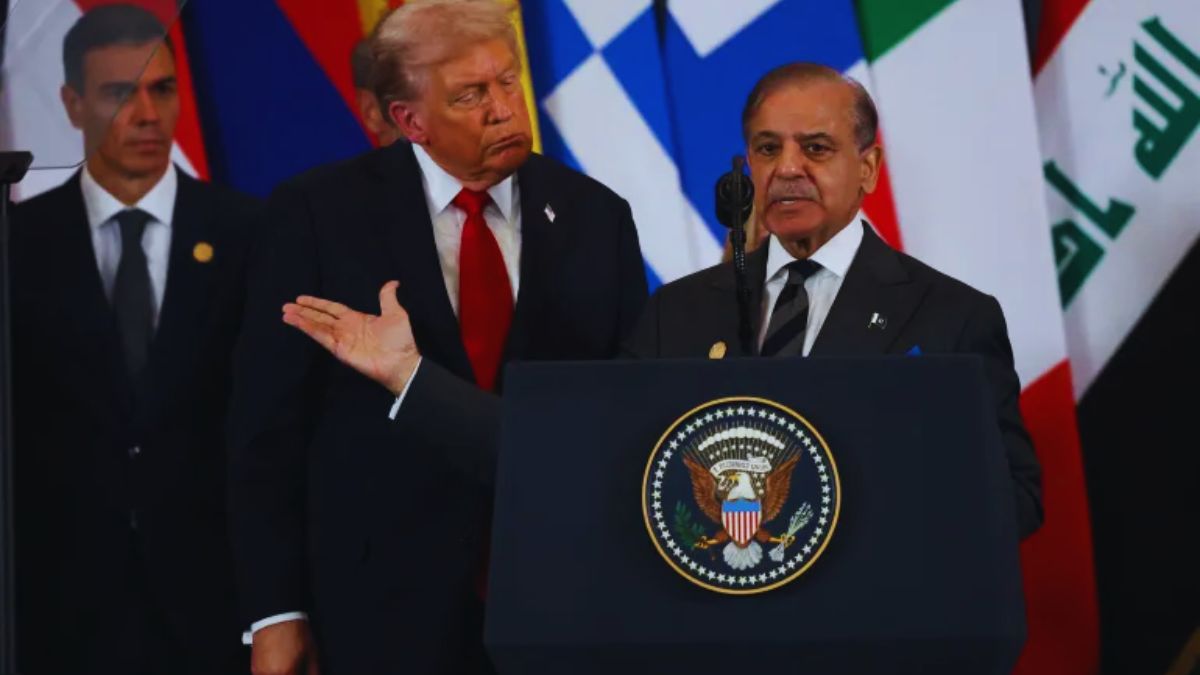
Recent diplomatic gains should not be mistaken for a major shift in global standing. Rather, they reflect a pivot under pressure.
In the past few months, Pakistan’s foreign policy has drawn global attention, with several high-profile developments signaling a new phase of engagement. Yet, while some interpret these moves as a bold resurgence on the world stage, they are better understood as a calculated pivot under pressure, not a fundamental shift in global standing.
A New Defence Pact with Saudi Arabia
In September 2025, Pakistan signed a defence agreement with Saudi Arabia that significantly raises the stakes in regional security. Under this pact, an attack on one nation would be treated as an attack on both — a remarkable expansion of mutual defence commitments in a region already rife with rivalries. This deal has been celebrated in Islamabad and Riyadh as a turning point, reinforcing Pakistan’s relevance in the Muslim world.
Adding to the momentum, Pakistan has quietly sent rare earth mineral samples to the United States and is pursuing deeper export and investment deals. Washington, in turn, appears more receptive to re-engaging with Islamabad as a strategic partner rather than a peripheral player. Prime Minister Shehbaz Sharif’s appearance at the Gaza Peace Summit further underscored Pakistan’s re-entry into high-level diplomatic conversations in the Middle East.
Pakistan’s Diplomatic Push
Despite the resurgence, Pakistan’s latest foreign policy moves stem from necessity and shifting regional alignments rather than a sudden rise in influence.
- The United States’ withdrawal from Afghanistan remain a central factor. The abrupt exit left Washington searching for leverage in a volatile region marked by an assertive Iran and an entrenched Taliban regime.
- Pakistan’s geographic position and intelligence networks have once again made it indispensable to American regional strategy.
- Another factor is the growing strain between Washington and New Delhi. Though India remains a cornerstone of America’s Indo-Pacific strategy, tensions over trade, visas, and Moscow ties have strained relations.
- Prime Minister Narendra Modi’s outreach to China highlighted by his August visit to Beijing has only widened Washington’s unease. In this shifting balance, Pakistan is once again viewed by Washington as a potential counterweight to India’s China tilt.
- Perhaps the most dangerous element of Pakistan’s new outreach is mineral diplomacy. Islamabad has assured the United States with access to rare earth minerals from Balochistan, one of the richest yet most unstable regions in the country.
- The Balochistan Mines and Minerals Act 2025, which centralizes decision-making in Islamabad, has triggered widespread opposition. Critics – from nationalist groups to right-wing religious parties — argue that it undermines provincial autonomy and continues a pattern of exploiting Balochistan’s resources without local benefit.
A Pivot Born of Pressure
Pakistan’s diplomatic surge is not a renaissance but a strategic response to geopolitical pressure. The US’s regional realignment, India’s firm stance on its independent policy and Pakistan’s economic vulnerabilities have forced Islamabad to reposition itself. Washington’s renewed interest may prove temporary, India’s global influence remains strong, and Balochistan’s unrest could destabilize future investment plans.
Ultimately, Pakistan’s latest foreign policy direction underscores both its strategic utility and its vulnerability — a reminder that in geopolitics, necessity often masquerades as resurgence.

Helene Elliott is the Lead Science & Space Reporter at News Raise. She reports on aerospace missions, astrophysics discoveries, quantum research, and environmental technology.