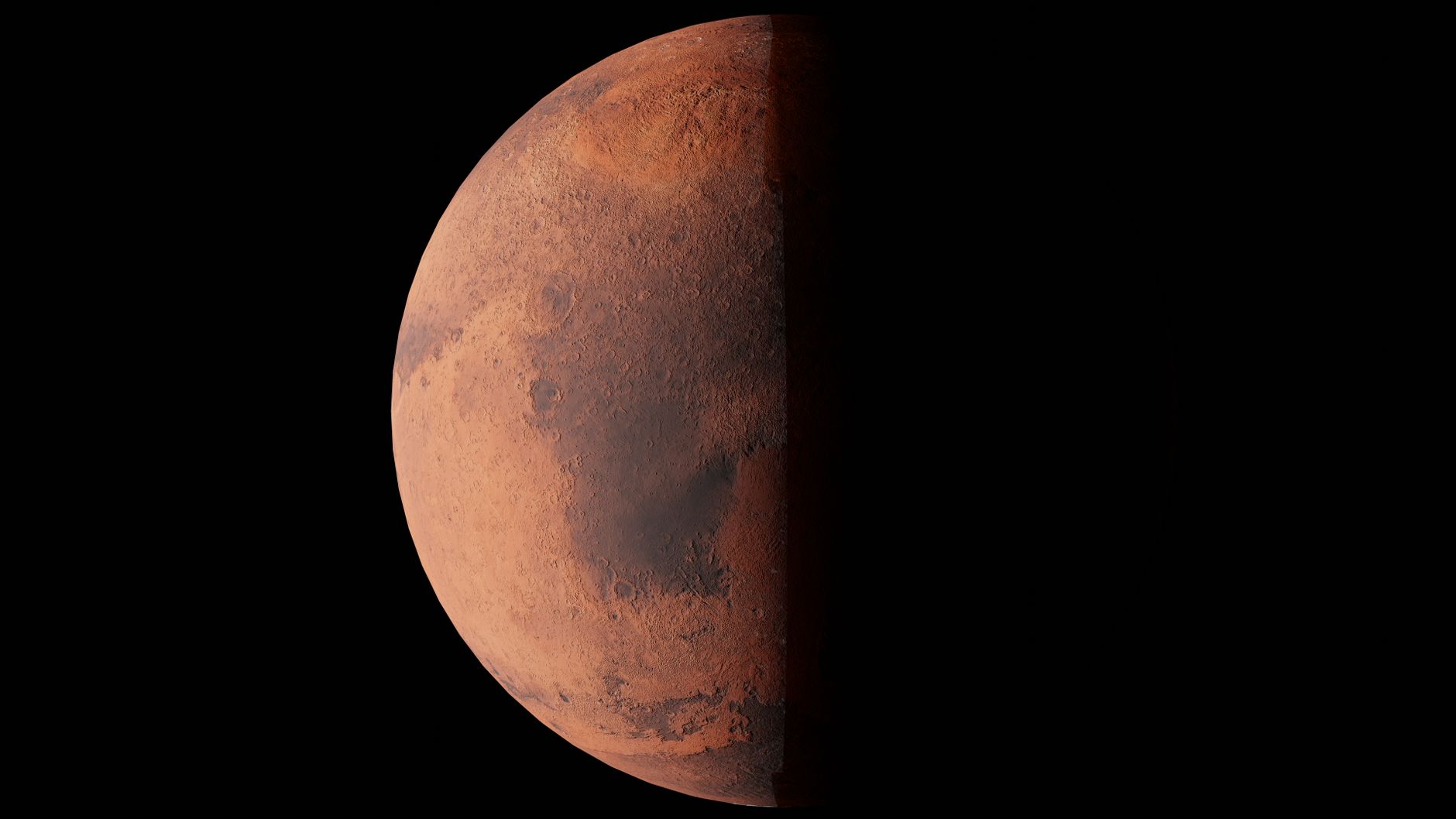
NASA announced Wednesday a new public-private partnership aimed at accelerating Mars science by integrating the agency’s scientific expertise with commercial capabilities. Under this agreement, NASA will supply the Aeolus atmospheric science instrument suite, while Relativity Space will provide the necessary spacecraft, rocket, and cruise operations for its delivery to Mars.
This collaboration reflects NASA’s strategy to foster discovery, increase mission frequency, and build a stronger foundation for future human exploration of the Red Planet. By leveraging commercial investment and development, NASA can allocate resources to high-value scientific objectives and create more opportunities to collect crucial data about Mars. This information is considered essential for safely navigating the Martian atmosphere and, ultimately, for enabling human landings.
Advancing Martian Understanding with Aeolus
The Aeolus instrument suite, slated for a 2028 launch, is a collection of four complementary instruments developed by NASA. Its objective is to provide the first daily, global overview of Martian winds, temperatures, dust, and clouds. By refining models of these atmospheric elements and seasonal behaviors, Aeolus is expected to generate detailed environmental knowledge that will reduce risks for future crewed and uncrewed landings. The measurements gathered will directly inform the design of entry, descent, and landing systems, contributing to safer and more predictable mission planning for astronauts.
Aeolus builds upon decades of NASA’s Mars atmospheric research, including data from orbiters such as MAVEN, the Mars Reconnaissance Orbiter, and Mars Odyssey. Researchers at NASA’s Ames Research Center in California will be responsible for the design, construction, and integration of the Aeolus payload. Relativity Space will manage the spacecraft development and all mission operations.
“Public-private partnerships like this are a force multiplier for science,” said NASA Administrator Jared Isaacman in a statement. “By pairing NASA’s world-class instruments with commercial innovation and investment, we can deliver more science, more often, and reduce the time it takes to get essential data into the hands of researchers preparing for future human missions to Mars.”
Instrument Capabilities and Collaboration Framework
The Aeolus payload suite comprises four NASA-built instruments: the Doppler Wind and Temperature Sounder (DWTS-Ozone) to measure wind and temperature profiles up to approximately 37 miles (60 km); the Thermal Limb Sounder (TLS) for vertical temperature profiles and observations of dust and water-ice clouds; the Surface Radiometric Sensor Package (SuRSeP) to measure surface energy balance, dust, and cloud properties; and the Wide-Field Context Camera (WFCC) for daily global images of atmospheric activity.
NASA will support the operation of the science instruments for at least one Martian year, while Relativity Space will maintain the spacecraft. As part of the agreement, NASA will also develop the data-processing pipeline required to convert raw measurements into high-quality, usable data products for the scientific community. This collaborative effort is structured under NASA’s first six-year reimbursable Space Act Agreement, establishing a stable framework for sustained collaboration, predictable development, and mission continuity.

Helene Elliott is the Lead Science & Space Reporter at News Raise. She reports on aerospace missions, astrophysics discoveries, quantum research, and environmental technology.