
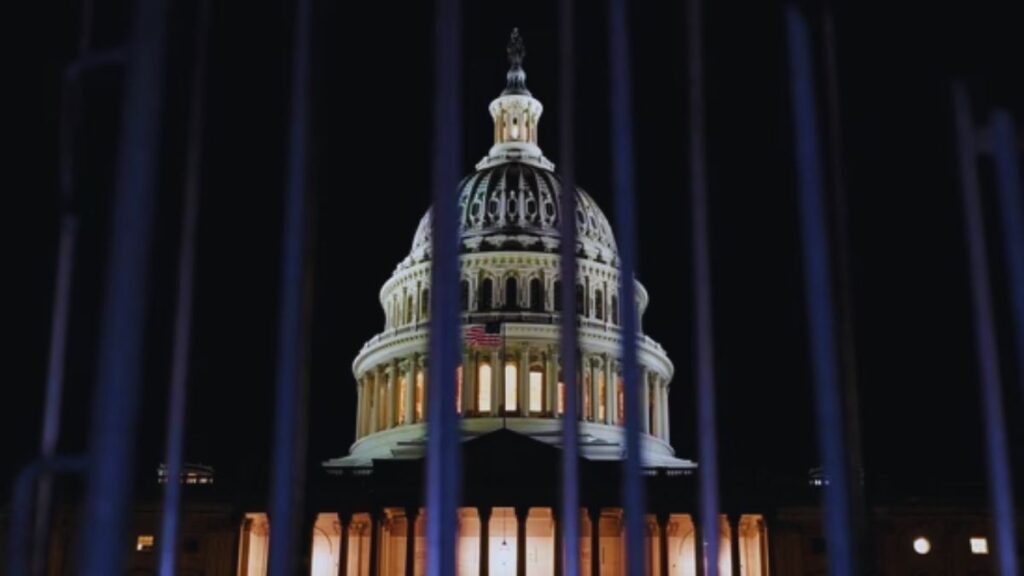
The US government has officially entered a shutdown after lawmakers failed to resolve a bitter budget impasse, marking the nation’s 15th funding lapse since 1981.
The shutdown began on October 1, Wednesday after Senate Democrats blocked a Republican-backed short-term funding bill that aimed to keep government operations running through November 21.
Why Did the US Government Shut Down?
The immediate cause of the shutdown was the rejection of a Republican spending bill. Democrats opposed the measure because it excluded provisions to extend health-care subsidies and reverse proposed Medicaid cuts. Republicans, however, argued that the bill was a ‘clean‘ funding proposal and accused Democrats of politicizing a non-controversial measure.
The failed vote — 55 to 45, falling short of the 60 votes needed — exposed deep divisions in the US Congress. With neither side willing to compromise, the federal government has now entered a funding freeze. The shutdown is expected to furlough around 750,000 federal workers, while essential employees such as troops and air traffic controllers will continue working without pay. Analysts estimate that the closure will cost nearly $400 million per day.
The ripple effects will be significant. Air travel could slow down due to reduced staffing, scientific research may be suspended, and the release of key economic reports, including the upcoming jobs data, will be delayed. Everyday services across the nation are also set to face major disruptions.
US President Donald Trump further escalated tensions by declaring that the shutdown could lead to ‘irreversible cuts in federal programs and jobs. He has previously advocated shrinking the federal workforce by almost 3,00,000 positions by year’s end. According to Trump, the shutdown could help reduce ‘wasteful spending’ and primarily affect Democratic strongholds.
Republican vs Democrats: The Healthcare Spending Clash
At the heart of the standoff is healthcare funding. Democrats insist on including healthcare subsidies and reversing Medicaid cuts in the funding package, while Republicans have refused to make those concessions. Democratic leaders have accused Republicans of trying to bully their way into passing a stripped-down bill, while Republicans argued on the opposition needlessly prolonging the crisis.
With $1.7 trillion in agency funding at stake, nearly a quarter of the federal budget, analysts warn that this shutdown could last longer than previous ones. Given the polarized political climate and both parties’ refusal to concede, there is little optimism for a swift resolution.
The 2018–2019 shutdown lasted 35 days — the longest in US history — and experts caution that the current impasse could rival or even surpass it if negotiations remain stalled. The Senate is expected to hold further votes in the coming days, but with both sides dug in, there is no clear path as of now into reopening the government.

Helene Elliott is the Lead Science & Space Reporter at News Raise. She reports on aerospace missions, astrophysics discoveries, quantum research, and environmental technology.