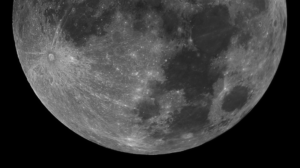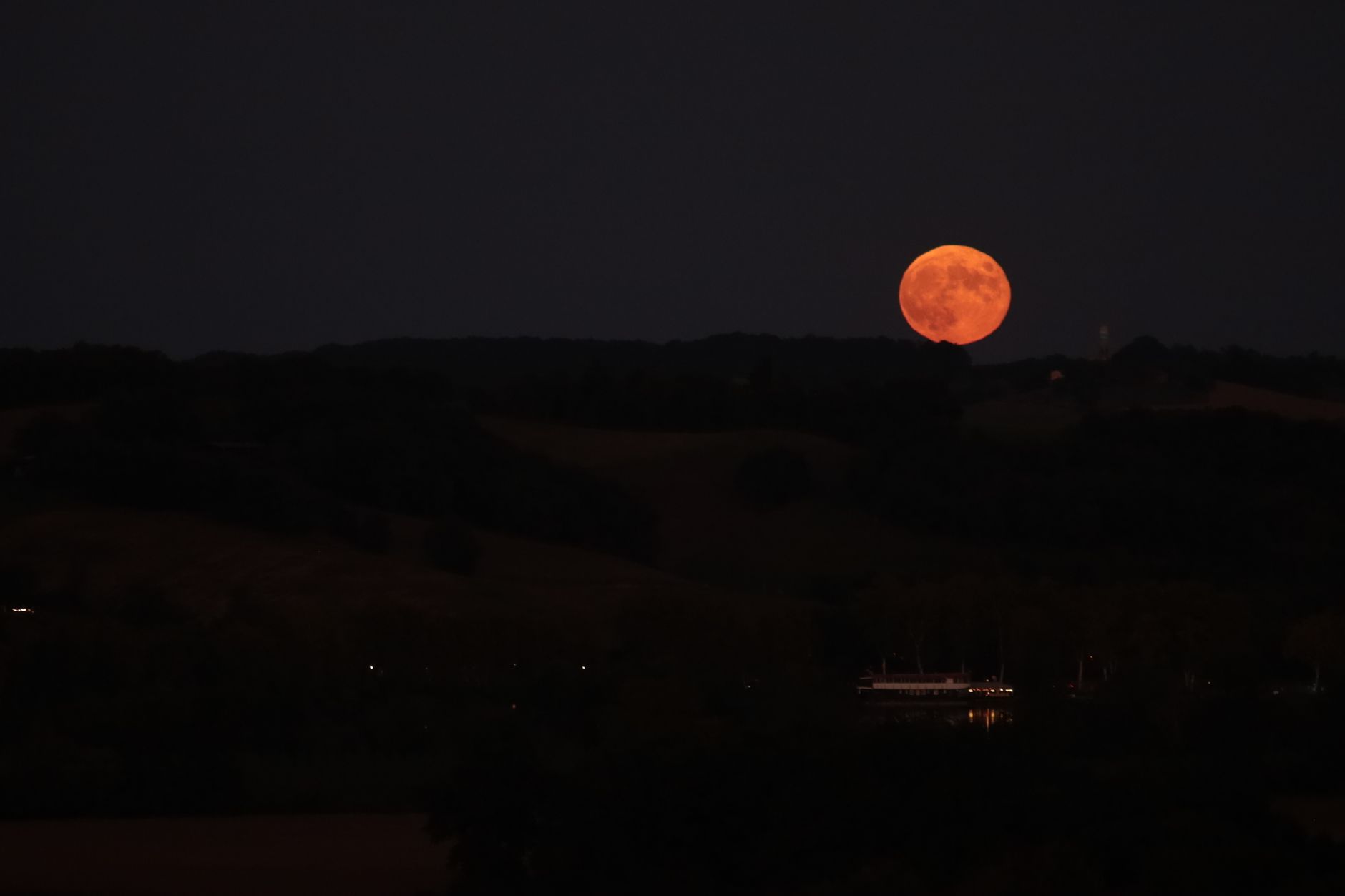
June’s full moon, widely recognized as the Strawberry Moon, will rise in the southeastern sky shortly after sunset on Monday evening. While the astronomical full phase occurs at 7:56 p.m. on June 29, the moon will appear full throughout the night.
Lunar Naming Traditions
The name Strawberry Moon originates from Native American traditions, particularly those of Algonquian-speaking peoples of the northeastern United States and eastern Canada. For these communities, the June full moon marked the short season when wild strawberries ripened, signaling the time for the annual harvest. European settlers later adopted many of these seasonal names, with “Strawberry Moon” becoming the most commonly recognized term today.
It is important to note that the name does not indicate the moon’s color. While it may appear yellow, orange, or even take on a subtle pinkish hue when near the horizon, this is due to the scattering of light through a thicker layer of Earth’s atmosphere. Tiny particles and water molecules scatter shorter blue light wavelengths, a phenomenon known as Rayleigh scattering, allowing longer red and orange wavelengths to reach observers.
Different Indigenous nations assigned names to the June full moon that reflected their local environments and activities. The Dakota and Lakota peoples used names associated with ripening berries. In the Southeast, the Cherokee called it the Green Corn Moon, observing the stage of corn growth. The Western Abenaki referred to it as the Hoer Moon, relating to crop tending, while the Haida named it the Berries Ripen Moon. Among the Cree, it was known as the Egg Laying Moon or Hatching Moon, marking the bird nesting season.
Astronomical Perspective
This June’s full moon will also appear lower in the night sky compared to earlier in the year. Because the sun reaches its highest point in the sky around the June solstice, the full moon, which is always opposite the sun, follows one of its lowest paths across the night sky.
The next full moon, the Buck Moon, is set to arrive on July 29. This name references the time when male white-tailed deer begin to grow new antlers, illustrating how ancient cultures used lunar cycles to track seasonal changes.

Steve Lopez is the Editorial Page Editor for News Raise. He covers Health. He has won more than a dozen national journalism awards for his reporting and column writing at seven newspapers and four news magazines.