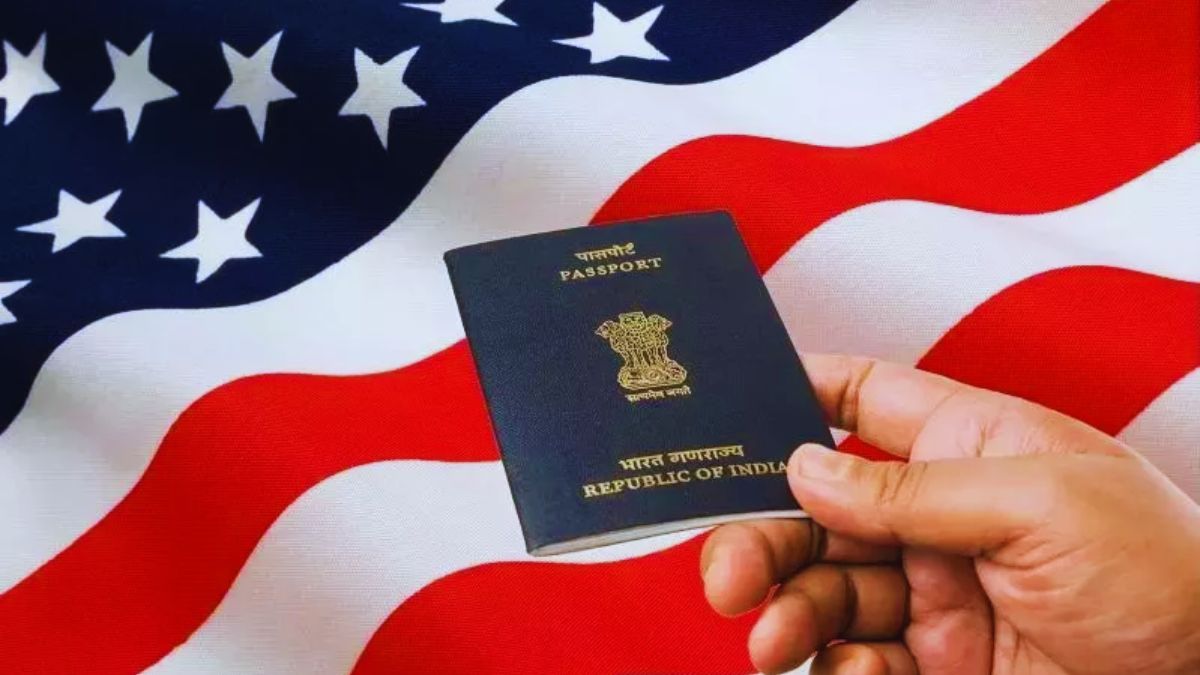
In a significant policy shift, the Trump administration has reversed an immigration rule, ending the automatic extension of EADs for foreign workers in the United States.
The move, announced by the US Department of Homeland Security (DHS) on October 30, 2025, will impact thousands of non-immigrant professionals, particularly Indian workers employed across the US technology and service sectors.
What Has Changed?
The new rule eliminates the automatic renewal of work permits – the EADs for eligible foreign non-immigrant visa holders. Previously, those who applied for EAD renewal could continue working while their applications were under review. Under the new policy, however, all applicants will be subject to mandatory re-vetting and background screening before their work permits are extended.
According to DHS, this decision is part of a broader effort to ensure ‘proper screening and vetting of foreigners before extending employment authorization validity.’ The interim rule, however, clarifies that it “does not affect EADs automatically extended before October 30, 2025.”
US Citizenship and Immigration Services (USCIS) Director Joseph Edlow stated that the administration is re-establishing a robust system of review to prioritize national security. He added that this change aims to eliminate policies that favored convenience for foreign nationals over the safety and interests of American citizens.
What is an Employment Authorization Document (EAD)?
An Employment Authorization Document (EAD) is a crucial permit that allows non-immigrant visa holders to legally work in the United States for a specific period. It serves as official proof of work eligibility for individuals who do not hold permanent residency or citizenship.
EADs are typically valid for one to two years, though certain categories may receive up to five-year validity. Applicants must file Form I-765 with USCIS, and eligibility is determined by their immigration category and current visa status.
Who Needs EADs in the US?
Several groups of foreign nationals rely on EADs to maintain lawful employment in the US. These include:
- Dependents of diplomatic employees and members of international organizations.
- Refugees, asylum seekers, and certain humanitarian visa holders.
- Spouses of H-1B or L-1 visa holders.
- Dependents of employment-based immigrant visa applicants.
- International students (F-1 visa holders) seeking Optional Practical Training (OPT) or STEM OPT extensions, which allow them to gain practical experience related to their field of study.
How Will This Affect Indian Workers?
The decision is expected to hit Indian professionals particularly hard, as they represent a large share of foreign talent in the US. Many Indian nationals on H-1B, L-1, or F-1 visas depend on EADs to maintain uninterrupted employment while awaiting green card processing. This comes just weeks after the Trump administration reportedly increased H-1B visa renewal fees to as high as $100,000 annually, further tightening immigration rules for skilled workers.
For thousands of Indian families, the end of automatic EAD extensions could mean longer processing delays, job uncertainty, and potential work interruptions while awaiting renewed authorization. As the new rule takes effect on October 30, 2025, foreign workers are advised to file renewals early and stay updated with USCIS notifications to avoid disruptions in employment.

Helene Elliott is the Lead Science & Space Reporter at News Raise. She reports on aerospace missions, astrophysics discoveries, quantum research, and environmental technology.